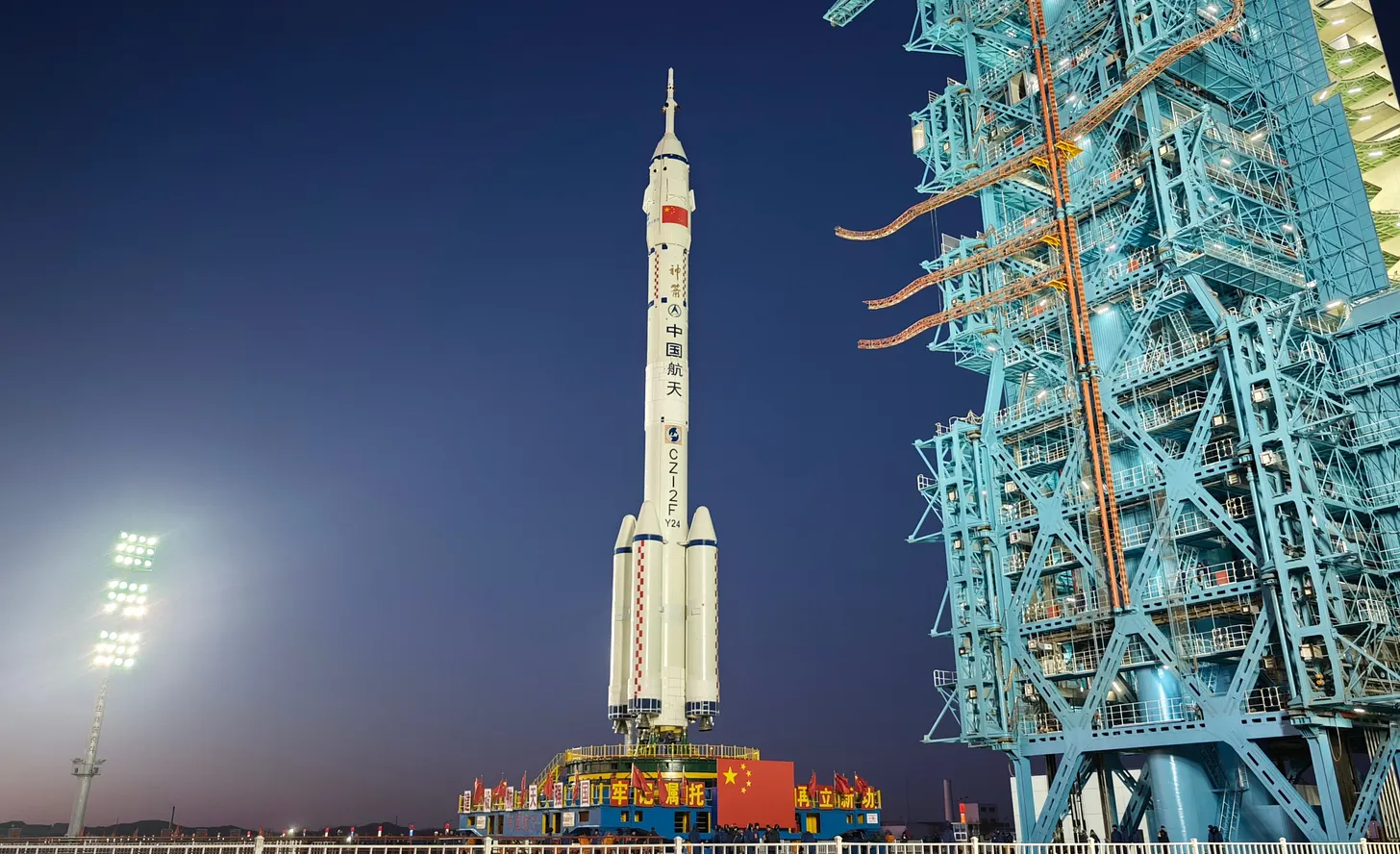
China launches Shenzhou-24 crewed spacecraft to Tiangong space station on Nov. 25 at 00:18 UTC from the Jiuquan Satellite Launch Center aboard a Chang Zheng 2F/G rocket. The mission marks the first joint flight with international astronauts and the first time a foreign national will board the station.
Pakistani astronauts Muhammad Zeeshan Ali and Khurram Daud trained since April at the China Astronaut Research and Training Center in Beijing following a February 2025 agreement between the two nations. Ali will serve as payload specialist and become the first Pakistani astronaut to reach orbit, returning after about a week aboard Shenzhou-23. Daud serves as backup.
Commander Tang Hongbo will lead the three-person crew. He previously flew on Shenzhou-12 and Shenzhou-17 missions and will become the first astronaut to visit Tiangong three times. Wu Yi, a Flight Engineer from China's third astronaut group, will make his inaugural flight.
During his stay, Ali will conduct Sino-Pakistani experiments in microgravity and install sample and experiment units. Shenzhou-23 Commander Zhu Yangzhu will remain aboard for six months total, becoming China's first astronaut to spend a year in orbit in a single visit.
The Chang Zheng 2F/G rocket's first stage features four boosters with eight engines each providing combined thrust of approximately six meganewtons. The Shenzhou-24 spacecraft is expected to dock to Tianhe module's forward port around three and a half hours after launch using the fast rendezvous mode adopted since Shenzhou-21.
The launch site implemented cold-weather preparations including environmental climate control for the launch gantry and thermal insulation. The site's UDMH propellant loading pump was fully replaced after more than 20 years of service, and 19 voltage stabilization units were installed to improve power supply reliability.
Shenzhou-24 marks China's 18th crewed spaceflight and the eighth mission of the station's application and development phase.