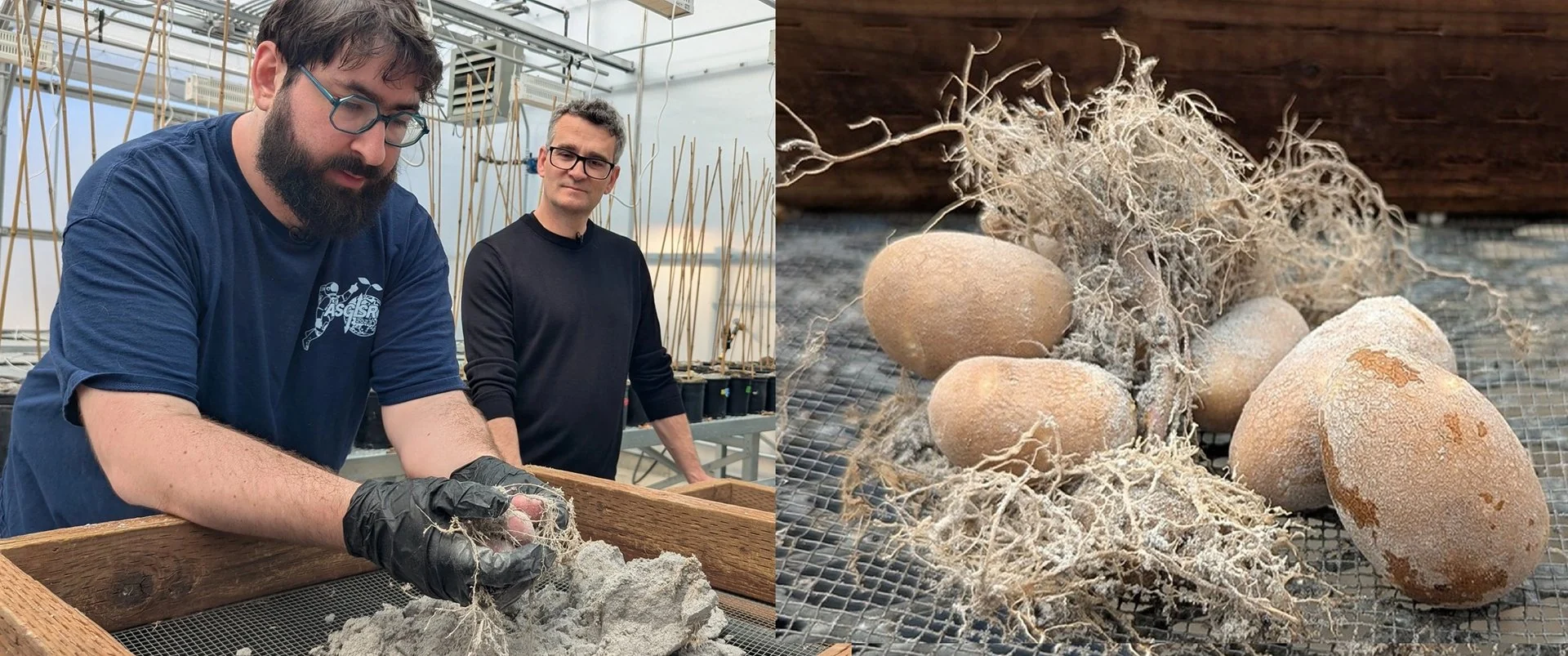
Oregon State University researchers have grown potatoes in lunar soil simulant and found them safe to eat with yields matching Earth crops. The team, led by professor Aymeric Goyer, tested five lunar regolith simulants representing different regions of the Moon, combined with varying amounts of vermicompost, a nutrient-rich organic soil. Plants grown in simulant containing 30% vermicompost matched the growth of potatoes cultivated in Earth soils. Those without vermicompost were severely stunted.
The potatoes maintained their nutritional quality with no statistically significant increase in naturally occurring toxins. Lunar regolith presents challenges including extremely fine-grained dust and elevated heavy metals, but the researchers found that organic matter helps bind heavy metals and prevent them from damaging roots or leaching into the potatoes.
Goyer explained the findings: "We found that potatoes can complete their entire life cycle in simulated lunar soil when supplemented with organic matter. That's an important step toward developing reliable food production systems that could support long-term human exploration of the Moon."
NASA's Artemis Program plans to land astronauts around the South Pole-Aitken Basin and construct a permanent base with regular missions planned. China's National Space Agency and Roscosmos also plan to build the International Lunar Research Station in the same region by decade's end. Resupply missions to the Moon take at least three days to arrive, making in-situ resource utilization essential for sustained exploration. Future astronauts could bring compost and earthworms to the Moon to create their own fertilizer from collected soil.
The results appear in the paper "Growth and molecular responses of potato to lunar regolith simulants" in npj Microgravity.