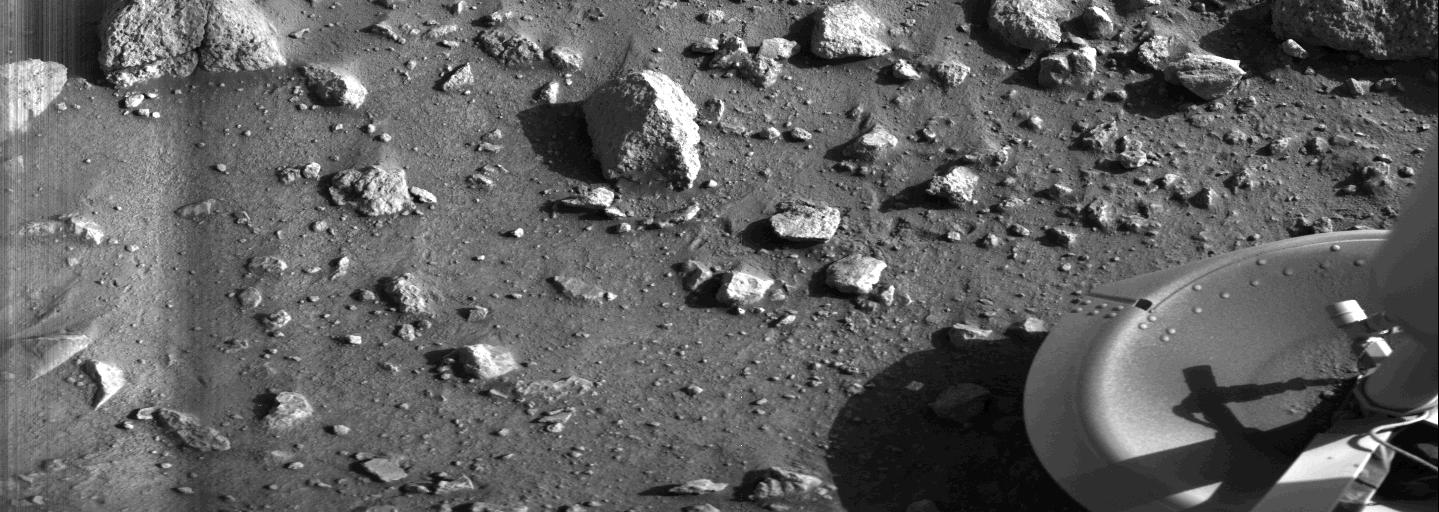
On July 20, 1976, Viking 1 became the first spacecraft to successfully land on Mars and transmit images from the surface. The lander touched down at 5:12 a.m. PDT, with NASA's Jet Propulsion Laboratory mission controllers confirming the achievement as they watched data arrive from 140 million miles away. Forty minutes after touchdown, the first photograph began streaming to Earth, revealing the rusty Martian terrain in grainy but unmistakable detail.
Viking 1 carried cameras, weather instruments, and a robotic arm equipped with soil analysis tools. The lander's primary mission was to search for signs of life in the Martian soil and study the planet's geology and atmosphere. Its cameras captured panoramic views of the landing site in Chryse Planitia, showing rocks scattered across a desert landscape under a butterscotch-colored sky. The color was unexpected and puzzled scientists until they realized Martian dust particles in the thin atmosphere were scattering light differently than Earth's sky.
The mission's biological experiments yielded ambiguous results. The lander's instruments detected chemical activity in soil samples that could indicate microbial life, but follow-up tests suggested non-biological chemical reactions were responsible. Despite not finding life, Viking 1 revolutionized planetary science by providing the first direct data about Mars' surface chemistry, temperature variations, and wind patterns.
Viking 1 operated for more than six years, far exceeding its planned mission duration. Its twin, Viking 2, landed two months later and continued operations for four years. Together, the Viking missions fundamentally transformed Mars from a distant, mysterious world into a place where humans could see rocks, measure temperatures, and sample soil. The images and data they returned shaped decades of Mars exploration strategy and remain scientifically relevant today as NASA and international space agencies plan human missions