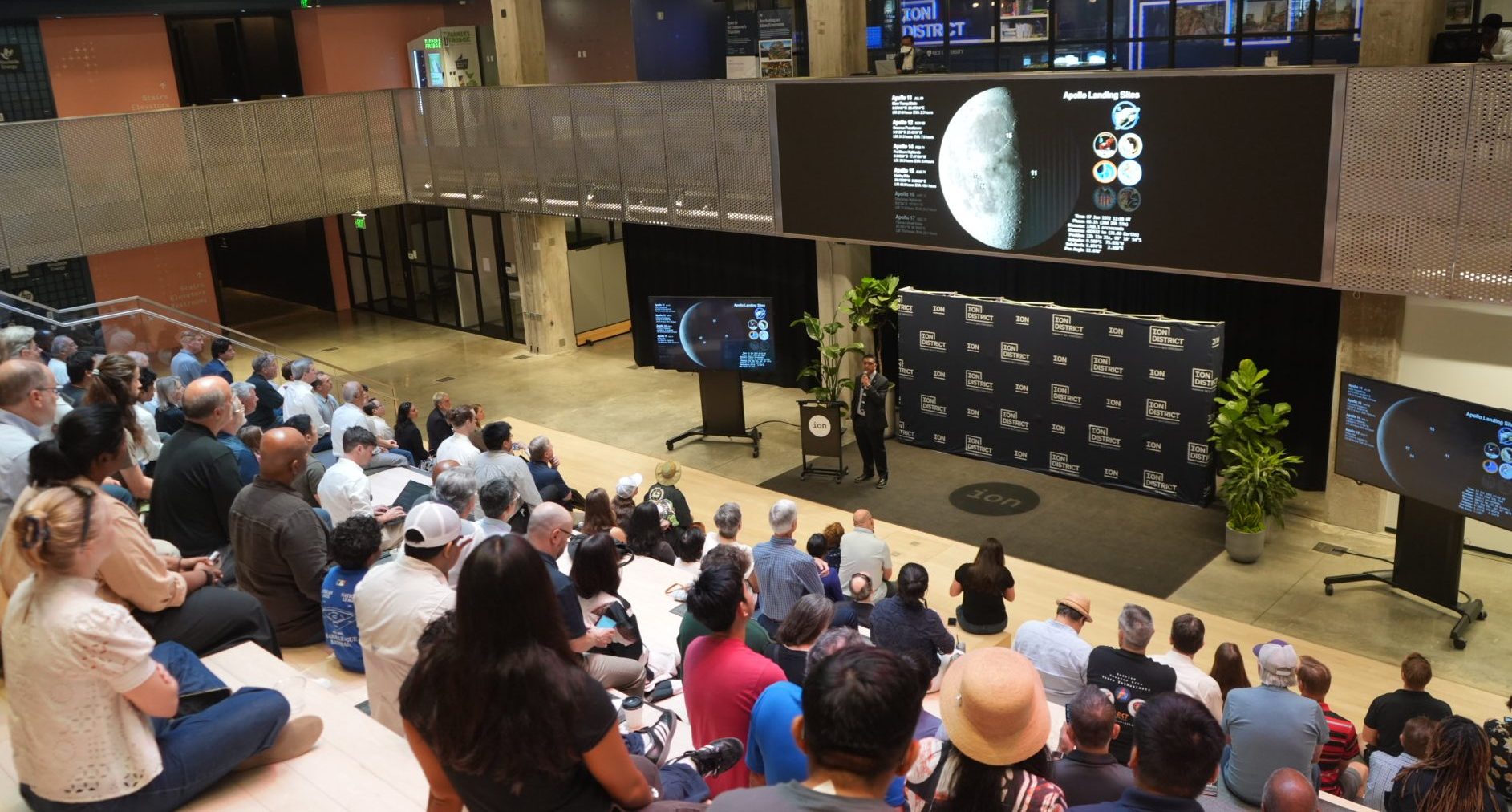
NASA's Moon Base Program faces engineering challenges that demand innovation across multiple technical disciplines as the agency prepares sustained human presence at the lunar south pole. Shatel Bhakta, principal systems engineer for the Moon Base Program, outlined the scope of work during NASA Stories at the Ion on July 30.
The lunar south pole presents distinct advantages and obstacles for establishing permanent infrastructure. The region contains permanently shadowed craters holding water ice, a resource essential for drinking water, oxygen production, and rocket fuel. Yet this same terrain demands advanced life support systems, power generation solutions capable of surviving extended darkness, and habitat designs that withstand extreme temperature swings between sunlit and shadowed zones.
Building the Moon Base requires expertise spanning habitat engineering, power systems, thermal management, communications infrastructure, and in-situ resource utilization. NASA must develop technologies that operate reliably in the harsh lunar environment while minimizing resupply missions from Earth. The program also demands solutions for radiation protection, dust mitigation, and mobility systems that perform across unpredictable terrain.
The initiative represents a strategic departure from brief Apollo-style visits. Extended lunar operations enable scientific research impossible during short missions, including geology studies, atmospheric analysis, and testing technologies needed for eventual Mars exploration. The Moon Base serves as a testbed for life support systems, habitat construction methods, and autonomous operations that astronauts will need beyond Earth orbit.
Bhakta's presentation addressed not just technical obstacles but opportunities for innovation. Commercial partnerships, advanced robotics, and autonomous systems reduce crew workload and extend operational capabilities. International collaboration brings diverse engineering approaches to shared challenges.
NASA targets the lunar south pole as humanity's next foothold in space exploration. The Moon Base program represents the most complex sustained human presence beyond Earth ever attempted, demanding solutions that push engineering boundaries while enabling decades of scientific discovery and preparation for deeper space exploration.