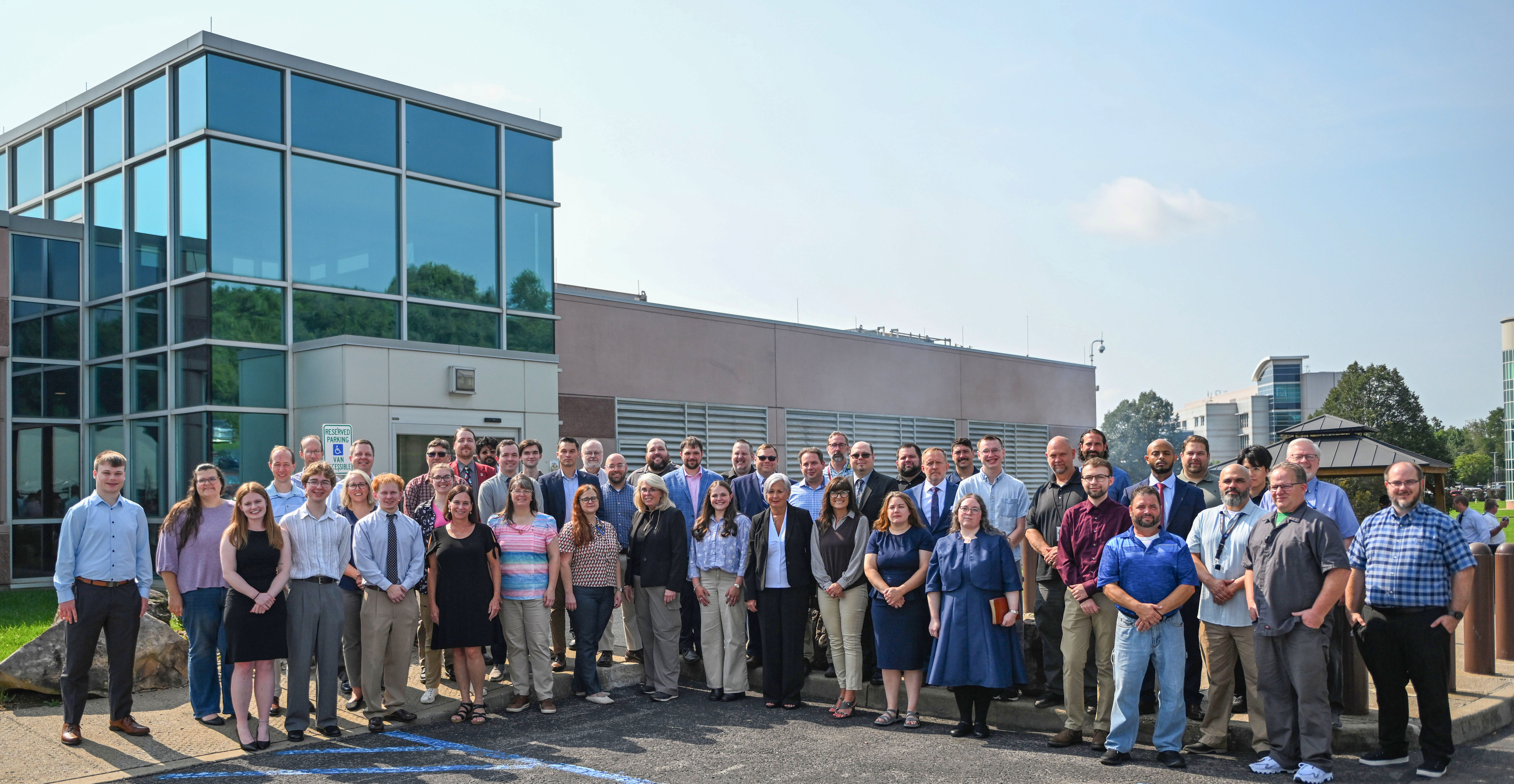
Fletcher Newell discovered his life's calling on a fourth-grade field trip to NASA's Katherine Johnson Independent Verification and Validation Facility in nearby Fairmont, West Virginia. That 2013 visit transformed a Star Wars-obsessed kid from rural Grafton into an engineer now working for the agency that captured his imagination over a decade ago.
The facility itself carries historical weight. Named after the legendary Black mathematician Katherine Johnson, whose calculations proved essential to the Apollo program and whose story inspired the 2016 film "Hidden Figures," the center conducts critical independent testing and verification work for NASA's software and systems. Johnson's legacy extends beyond her groundbreaking mathematics. She broke barriers in a segregated era at NASA's Langley Research Center, and the naming of this West Virginia facility honors both her contributions and the agency's commitment to inclusive excellence in engineering and science.
For Newell, the field trip was transformative. Seeing the work happening inside those walls shifted an abstract childhood fascination with space into concrete professional possibility. A kid in West Virginia, far from traditional tech hubs, suddenly understood that NASA work existed within driving distance of his home. That proximity proved decisive. Rather than relocating to Houston or Florida or California, Newell stayed rooted in Appalachia while pursuing a career at the intersection of space exploration and his own backyard.
His trajectory reflects a broader NASA strategy. The agency maintains facilities across the country, distributed beyond the Kennedy Space Center and Johnson Space Center, to tap talent wherever it emerges and to anchor scientific work in communities beyond the coasts. West Virginia's presence in the NASA network matters. The Katherine Johnson facility performs work on some of the agency's most demanding projects, including verification of software for human spaceflight missions, deep space exploration systems, and autonomous vehicles. The engineers there do not simply test code. They identify failure modes, validate safety-critical systems, and ensure that the physics and mathematics underlying space missions function as designed.
Newell's path also underscores the power of direct exposure. A single field trip connected a curious child to mentors, role models, and professional communities he might never have encountered otherwise. That model of engagement, repeated across school districts and communities, builds the pipeline of American engineers and scientists that sustains exploration programs for decades.
The Katherine Johnson facility sits at the intersection of legacy and future. Johnson herself, who died in 2020 at age 101, worked during an era when women and Black Americans faced systemic barriers to scientific careers. Her vindication came late but decisively. The naming of the verification facility recognizes that vindication while serving as a daily reminder to current and future engineers like Newell that NASA values talent wherever it appears and that home, for some, includes a trajectory toward the stars.
Newell's story reflects what happens when opportunity meets preparation and when institutions make their work visible to young people in places beyond major metropolitan centers. West Virginia gained an engineer. NASA gained someone whose commitment to space exploration runs as deep as his roots.