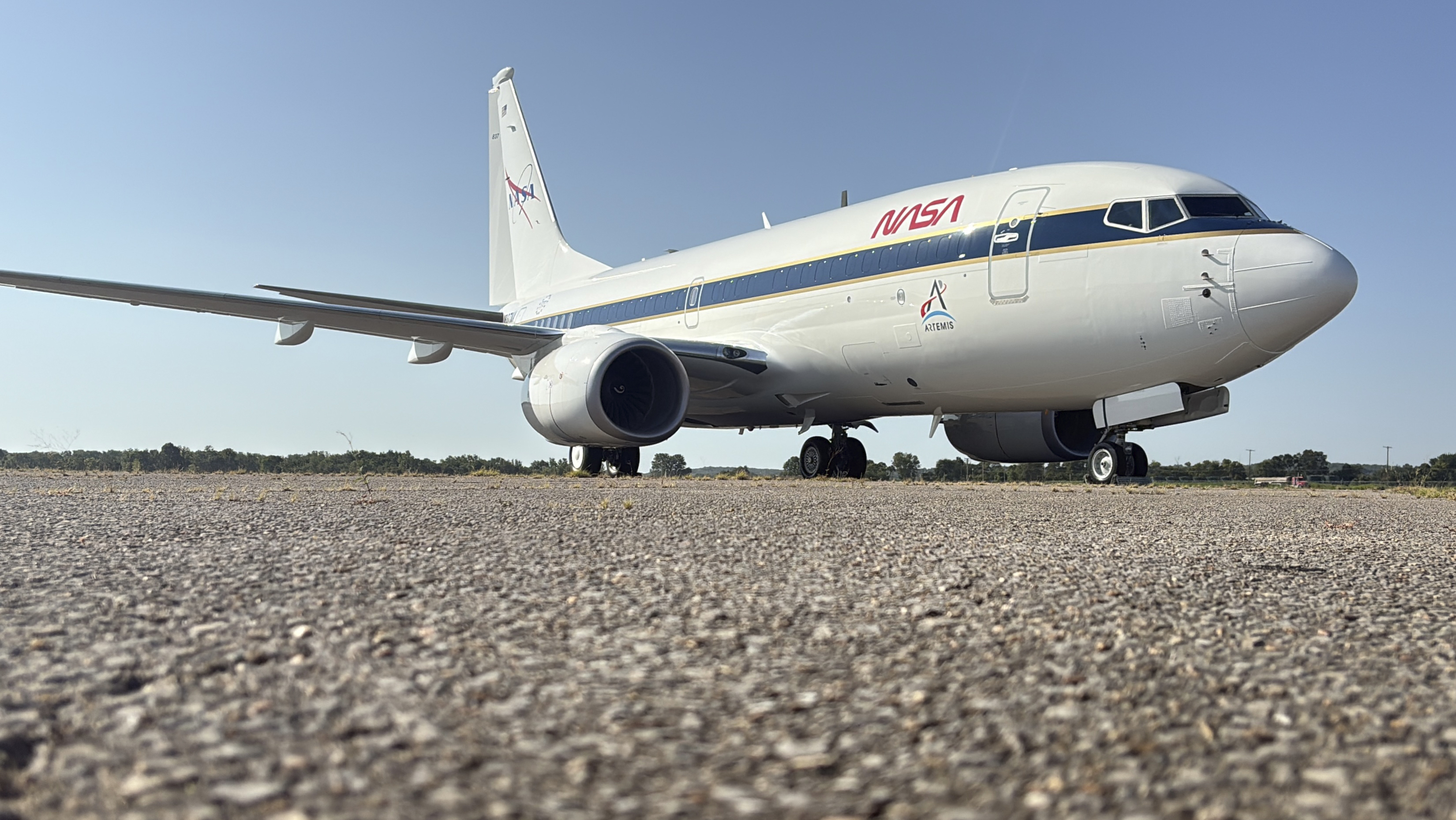
NASA has begun final preparation of a modified Boeing 737 aircraft that will serve as the agency's next reduced-gravity research platform. The aircraft received a fresh paint job this week at a facility in Oklahoma while undergoing continued modifications at NASA's Armstrong Flight Research Center in Edwards, California.
The Air Force transferred the 737 to NASA in June. The agency plans to use the aircraft for parabolic flights that simulate lunar gravity environments. These flights represent a critical step in validating hardware, procedures, and crew operations ahead of lunar missions under the Artemis program.
Reduced-gravity aircraft operate by flying parabolic arcs, climbing and descending in precise patterns that create brief periods of weightlessness or partial gravity. A single parabolic flight can generate dozens of 20 to 30-second intervals of microgravity or lunar-gravity conditions. This allows astronauts, engineers, and scientists to test equipment and techniques in environments that approximate actual mission conditions without the expense and logistical complexity of spaceflight.
NASA has relied on reduced-gravity flights for decades. The agency's original KC-135 Stratotanker, nicknamed the "Vomit Comet," conducted parabolic flights for over 50 years before retirement. The 737 represents a modern replacement with longer flight duration, larger cabin space, and improved comfort for crews and test subjects.
The 737 modifications include installation of specialized flooring, safety equipment, and data acquisition systems. The aircraft will eventually carry experiment packages, hardware prototypes, and crew members on test flights. Armstrong Flight Research Center engineers have been refitting the interior to support research operations across multiple payload configurations.
Lunar-gravity parabolic flights specifically prepare astronauts for surface operations on the Moon. The Moon's gravity measures approximately one-sixth of Earth's gravity. By flying parabolic arcs that produce one-sixth gravity conditions, the 737 allows crews to practice walking, running, tool handling, and equipment deployment in conditions that closely match what they will experience during Artemis lunar landing missions.
NASA plans to use the aircraft for general microgravity research as well, supporting academic institutions, commercial companies, and international partners conducting experiments in weightlessness. The expanded research capability serves fields including materials science, fluid dynamics, combustion research, and biological studies.
The paint job marks visible progress toward operational status. Armstrong staff continue work on interior modifications and systems integration. The timeline for first parabolic flights remains under development as the team completes remaining technical work and conducts necessary testing and certification.
The 737 acquisition reflects NASA's commitment to hands-on preparation for Artemis missions. As the agency works toward establishing sustained lunar exploration, validating equipment and procedures in ground-based and airborne environments reduces risk for actual lunar missions. The aircraft joins other training and testing facilities that support the agency's path to returning astronauts to the Moon and establishing infrastructure for long-term lunar presence.