# The Lunar Domain: Space Powers Navigate Moon's Future Legal Framework
The Moon stands at an inflection point. As NASA prepares Artemis missions to return humans to lunar surface and China advances its Chang'e program, the question of who owns what on the Moon has moved from science fiction to urgent policy.
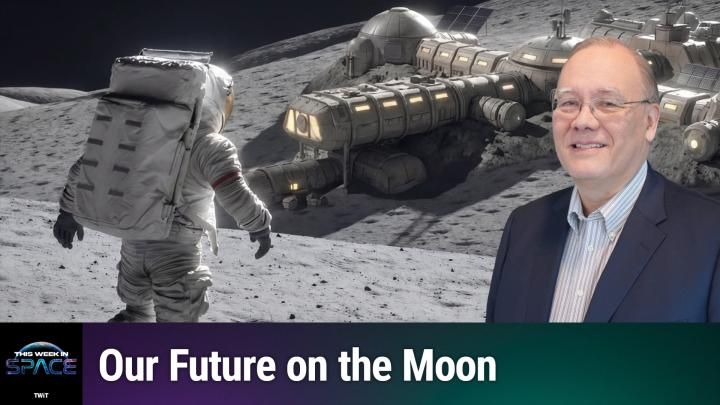
Episode 223 of "This Week In Space" brought together Rod Pyle and Dale Skran with Dr. Scott Pace, the executive secretary of the National Space Council under the Trump administration and a leading space policy expert. The conversation centered on lunar governance, resource extraction rights, and how competing national interests will shape the next era of Moon exploration.
The legal foundation for lunar activity rests on the Outer Space Treaty of 1967, which prohibits any nation from claiming sovereignty over the Moon or celestial bodies. No country can own the Moon. But the treaty's language on resource extraction remains ambiguous. Can a private company or nation mine helium-3 from lunar regolith? Extract water ice from permanently shadowed craters? The answer determines whether the Moon becomes a commons or a contested frontier.
Dr. Pace's role at the National Space Council placed him at the center of American lunar strategy. The council coordinates space policy across NASA, the Department of Defense, the Department of Commerce, and intelligence agencies. His involvement in this episode signals the depth of government attention now focused on establishing rules for lunar activity before competing nations and companies stake claims.
NASA's Artemis program provides the practical context for these policy discussions. Artemis I demonstrated the Space Launch System and Orion capsule in an uncrewed lunar orbit test. Artemis II aims to send four astronauts around the Moon in 2026. Artemis III targets a crewed lunar landing, likely in 2026 or 2027, with missions focused on the lunar south pole where permanently shadowed craters contain water ice.
China's Chang'e program moves in parallel. Chang'e 5 successfully returned lunar samples to Earth in December 2020, the first sample return mission since the Soviet Luna 24 in 1976. China has announced plans for a crewed lunar landing by 2030 and is building a lunar research station. The European Space Agency, Japan's JAXA, and India's ISRO all pursue lunar exploration. Russia continues its Luna program despite geopolitical isolation.
This convergence creates pressure for new agreements. The Artemis Accords, developed by NASA and the State Department, offer one framework. More than 40 nations have signed the accords, which establish safety zones around lunar activity and affirm support for the Outer Space Treaty. But not all spacefaring nations have signed. China and Russia notably absent, develop their own lunar strategies.
The Lunar Domain episode explored how these competing visions resolve. Will the Moon follow the Antarctica model, with the Antarctic Treaty System preserving the continent for scientific research? Or will commercial interests drive extraction and settlement that requires new property rights frameworks? Can the Outer Space Treaty adapt to technologies and ambitions its 1967 drafters never imagined?
These questions shape whether the Moon remains a place of discovery or becomes a flashpoint for resource competition. The answers will emerge through policy decisions made now, not through treaties negotiated decades from now when disputes arise. That makes conversations like the one on "This Week In Space" more than academic. They chart the path forward.