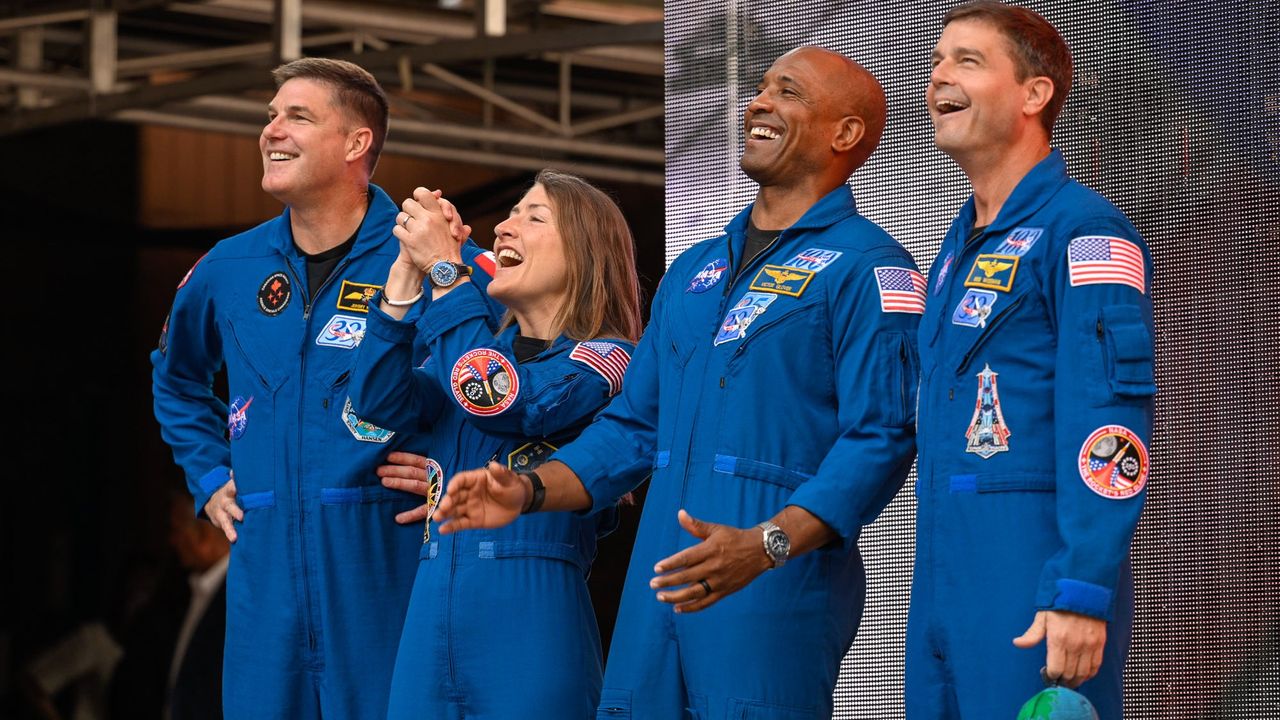
Astronaut Reid Wiseman, pilot of NASA's Artemis II mission, expressed his gratitude for the agency's confidence in allowing him manual control of the Orion spacecraft during the upcoming lunar mission. Speaking before a crowd exceeding 8,000 people at Red Rocks Amphitheatre in Colorado on August 3, 2026, Wiseman highlighted the significance of this operational responsibility.
Wiseman's role as pilot grants him hands-on command authority over Orion's systems during critical phases of the mission, a designation that reflects NASA's assessment of his capabilities and the maturity of the spacecraft's design. This trust underscores the shift in human spaceflight philosophy, where crew expertise complements extensive automation rather than replacing it.
Artemis II represents NASA's second crewed test of the Space Launch System and Orion vehicle, following the uncrewed Artemis I mission. The mission will carry four astronauts beyond the Moon's orbit without landing, serving as a crucial validation step before the Artemis III landing attempt. Wiseman commands confidence built through decades of spaceflight experience, including prior Space Shuttle and International Space Station missions.
The public event at Red Rocks demonstrated NASA's commitment to transparency and community engagement around its lunar exploration program. The crew's gratitude toward the agency and its contractors, including Boeing and Lockheed Martin, reflected the collaborative engineering required to advance human spaceflight capabilities.
Orion's manual control systems enable pilots to execute corrections, manage contingencies, and demonstrate operational proficiency that automated systems alone cannot replicate. This capability becomes essential in scenarios requiring real-time decision-making during ascent, trans-lunar injection, or emergency procedures. Wiseman's statement captures both the technical achievement and the human element central to exploration, where trained judgment remains irreplaceable.