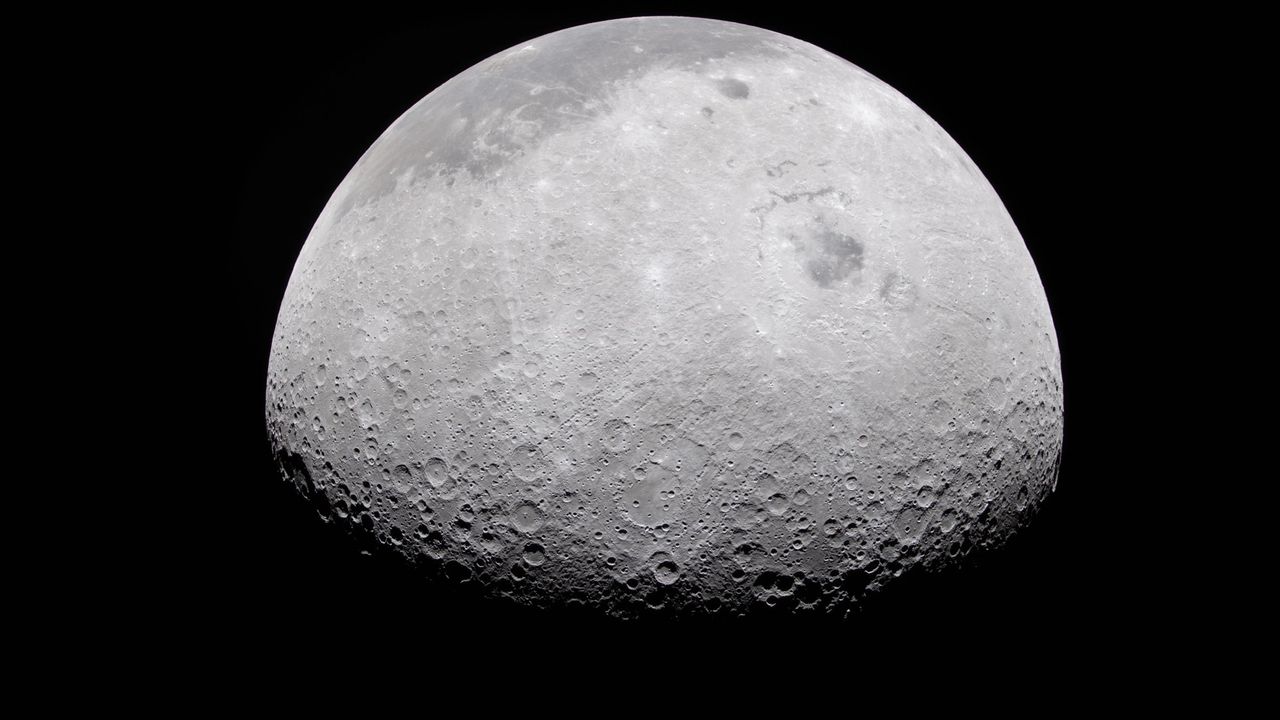
The lunar surface faces an unprecedented threat as commercial space companies accelerate their missions to the moon. Experts now warn that without enforceable international regulations, Earth's nearest neighbor could become a repository for spent rockets, discarded equipment, and other orbital debris.
The concern stems from a fundamental gap in space law. The 1967 Outer Space Treaty, which governs activities beyond Earth's atmosphere, contains no specific prohibitions against leaving hardware on celestial bodies. As SpaceX, Blue Origin, Axiom Space, and other commercial operators race to establish lunar presence ahead of NASA's Artemis program, the velocity of missions has intensified. Companies face financial pressures to complete objectives quickly, and the moon offers a convenient destination for expended rocket stages and worn-out equipment.
SpaceX's Starship program exemplifies the scale of the problem. Each lunar landing attempt generates hardware that remains on the surface indefinitely. Booster cores, fuel tanks, and landing gear accumulate with each successive mission. Blue Origin's Blue Moon lander and similar commercial cargo systems will compound this issue as competition for lunar contracts intensifies.
The scientific and historical implications run deep. The Apollo landing sites, now protected informally by international consensus, contain irreplaceable evidence of humanity's first steps on another world. Concentrations of modern debris around these locations would compromise their integrity as archaeological sites. Beyond the emotional weight, accumulated hardware could interfere with future scientific instruments designed to study lunar geology, subsurface ice, and the moon's evolution.
Practical hazards emerge from orbital mechanics as well. Debris scattered across the lunar surface creates navigation obstacles for future landers. Impact craters from fallen equipment could alter the terrain in scientifically important regions. On a body with no weather to erode structures or disperse particles, discarded hardware remains exactly where it lands, accumulating indefinitely.
The regulatory landscape remains fragmented. The International Space Station operates under strict protocols requiring all debris removal or deorbiting. No equivalent framework exists for lunar operations. Nations participating in the Artemis Accords, including the United States, Japan, Canada, and Australia, have agreed to safety zones around their landing sites, but these represent voluntary guidelines rather than binding law.
Some propose solutions. Mandatory debris removal requirements could force companies to either retrieve equipment or design systems for controlled descent into designated impact zones. Insurance mechanisms could penalize operators who leave hardware on the surface. Licensing agreements could make debris mitigation a condition of receiving landing approval from national space agencies.
The urgency intensifies as lunar activity scales up. NASA's Artemis II mission, targeting 2025 or 2026, will place humans back on the moon for the first time in fifty years. This accomplishment will catalyze broader commercial interest. Without preventive action now, the lunar surface will bear the scars of humanity's newest exploration chapter within a decade. The moon deserves better protection than silence offers.