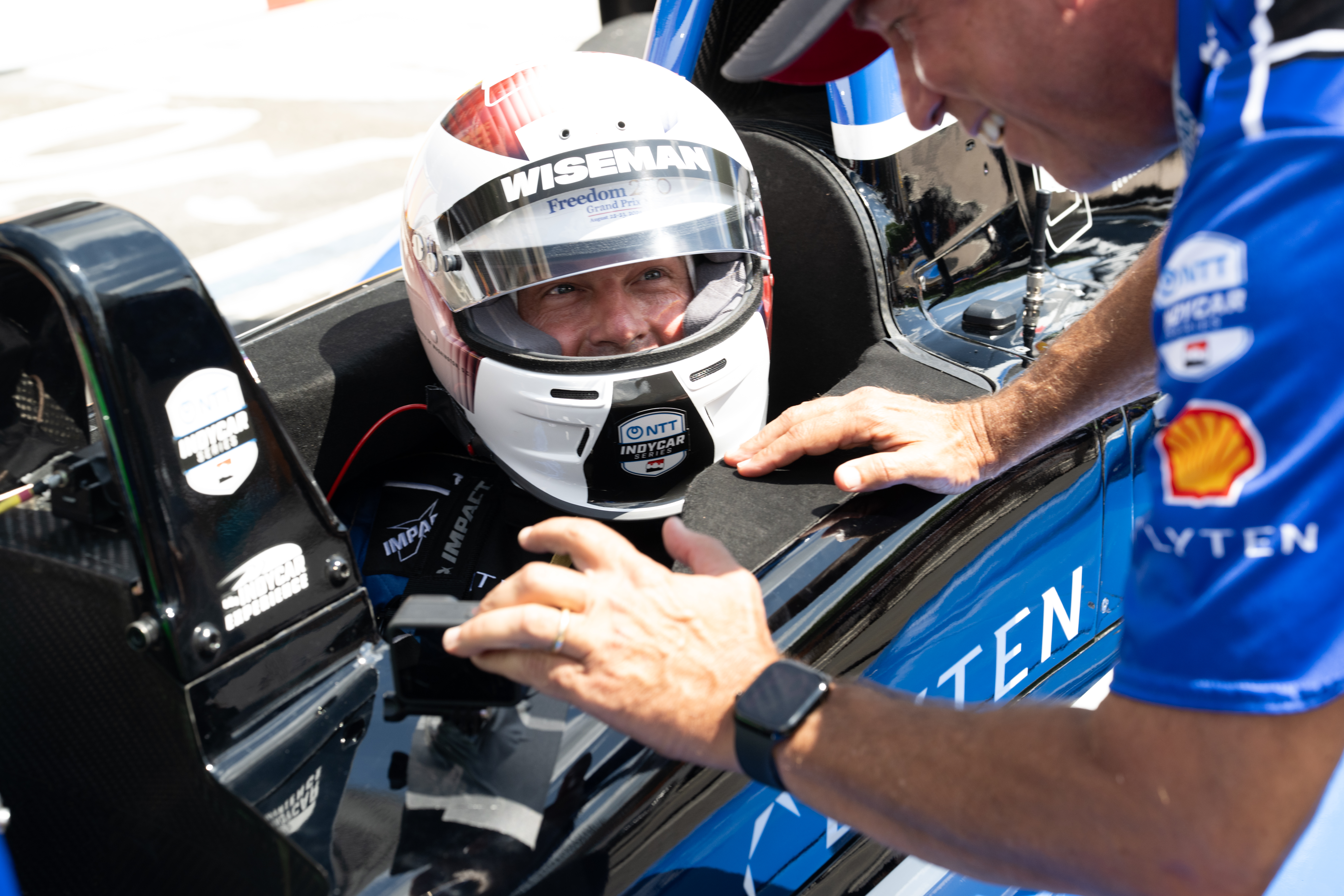
Reid Wiseman, NASA's commander for the Artemis II lunar mission, experienced high-speed racing firsthand when he rode along with IndyCar driver Conor Daly at the Freedom 250 Grand Prix in Washington, D.C. on August 23, 2026. The two-seat IndyCar lap preceded the race's start, offering Wiseman a taste of acceleration and G-forces outside the typical training environment of a spacecraft simulator.
Wiseman holds one of the most demanding assignments in human spaceflight. As commander of Artemis II, he will lead the next crewed lunar mission following the uncrewed Artemis I test flight. The mission targets a lunar orbit trajectory that will bring Wiseman, pilot Christina Koch, mission specialist Victor Glover, and specialist Kayla Barron closer to the Moon than any astronaut since the Apollo 17 mission in 1972. Artemis II represents NASA's bridge toward sustained lunar exploration and eventual human Mars missions.
The IndyCar experience showcases the cross-disciplinary appeal of space exploration within American culture. High-performance racing and human spaceflight both demand precision, split-second decision-making, and physical endurance under extreme conditions. Astronauts routinely train in centrifuges that produce up to nine times Earth's gravitational pull. The acceleration experienced during an IndyCar lap, while intense, represents only a fraction of the forces Wiseman and his crew will encounter during Artemis II's launch and return phases.
Wiseman's presence at a major motorsports event in the nation's capital reflects NASA's broader strategy to maintain public engagement with its lunar program. The Artemis campaign carries deep political and scientific weight. By returning humans to the Moon, NASA aims to establish infrastructure for long-term habitation while conducting science that was impossible during the Apollo era. Artemis missions will search for water ice in permanently shadowed lunar craters, test new technologies for life support and power generation, and prepare for deep-space exploration beyond Earth orbit.
As commander, Wiseman bears responsibility for mission success and crew safety. He brings extensive spaceflight experience to the role. His previous missions include two expeditions to the International Space Station, where he logged more than 405 days in space and conducted numerous extravehicular activities. That background makes him ideal for navigating the complexities of a lunar-bound flight that will push both human and hardware capabilities.
The timing of this public appearance, ahead of Artemis II's targeted launch window in 2026 or 2027, underscores NASA's commitment to keeping the public aware of its exploration timelines. Artemis II will not land on the Moon, but Artemis III, currently scheduled for later in the decade, will return humans to the lunar surface for the first time since Apollo. The progression of these missions represents a deliberate strategy to validate systems and build confidence in NASA's ability to execute complex spaceflight operations.
Wiseman's IndyCar lap blends American space exploration with American motorsports culture, reinforcing the idea that bold achievement across multiple domains captures the public imagination.