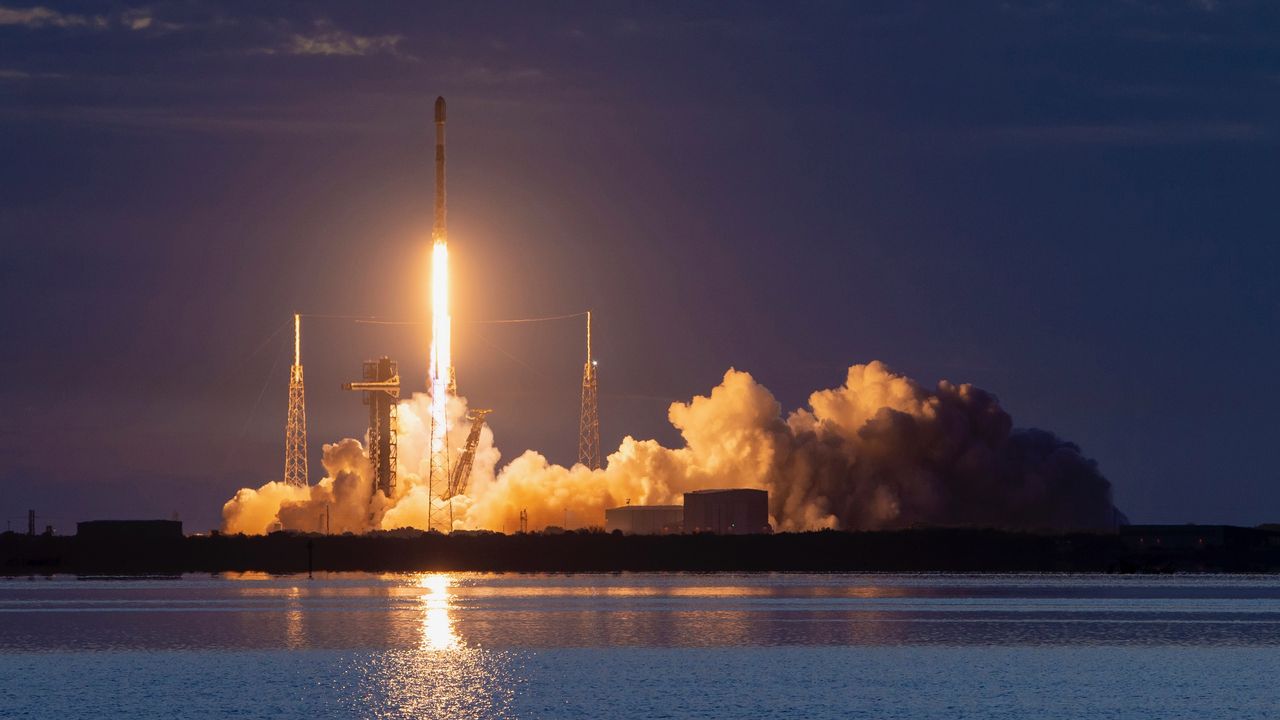
SpaceX will achieve a dual milestone on August 25 when it launches its 100th Falcon 9 mission of 2024 while simultaneously setting a new record for rocket reusability. The launch window opens early Tuesday morning, marking an unprecedented pace of spaceflight operations that reflects the company's operational maturity and the growing demand for orbital access.
The 100th Falcon 9 launch this year underscores how dramatically SpaceX has scaled its operations. Achieving triple-digit launch counts in a single calendar year represents a fundamental shift in space transportation. For context, the entire global launch industry conducted far fewer orbital missions annually just a decade ago. SpaceX now operates as the dominant launch provider for satellite deployments, resupply missions to the International Space Station, and national security payloads.
The rocket-reuse record component reveals even more about the company's technical achievements. Each Falcon 9 first stage that returns and lands successfully becomes available for refurbishment and relaunch within weeks. By August 25, SpaceX will have demonstrated that multiple boosters have completed more flight cycles than any previous orbital rocket. This capability directly reduces launch costs and accelerates schedule for customers. A reused booster costs significantly less to launch than manufacturing a new one, economics that Elon Musk's company leverages for competitive advantage.
The Falcon 9 itself remains the world's most frequently launched orbital rocket. Its two-stage design combines a reusable first stage with an expendable upper stage. The first stage, approximately 150 feet tall and powered by nine Merlin engines, performs the heavy work of reaching the boundary between Earth's atmosphere and space before executing a precision landing on an autonomous drone ship or concrete pad. From there, turnaround time has dropped to roughly 14 days with modern SpaceX operations.
SpaceX operates multiple landing zones across the United States and operates drone ships in the Atlantic and Pacific oceans. This distributed infrastructure enables the company to conduct parallel missions and maintain launch cadence even when individual facilities undergo maintenance.
The 100 launches encompass varied missions. SpaceX has deployed Starlink internet satellites for its global broadband constellation, carried cargo to the ISS, launched national reconnaissance satellites for the U.S. government, and deployed commercial payloads for customers worldwide. This diversity reflects how SpaceX has woven itself into space infrastructure across multiple sectors.
Achieving 100 launches by late August required sustained engineering excellence. Each mission involves thousands of components, complex software systems, and rigorous safety protocols. The rate demonstrates that SpaceX's manufacturing processes, launch facilities, and ground infrastructure have reached operational stability.
For the broader space industry, SpaceX's metrics reshape economics and timelines for space access. Competitors developing next-generation launch vehicles benchmark their designs against Falcon 9's reliability and cadence. Government agencies planning multi-year missions now expect rapid, affordable launch slots rather than waiting years for dedicated flights.
Viewers can stream the August 25 launch live through SpaceX's official channels and Space.com. The webcast will capture both the Falcon 9's climb to orbit and the first stage's powered descent and landing, events that have become routine yet remain technically complex operations at scale.