# How the Sun's Ancient Fury Shaped Earth's Climate
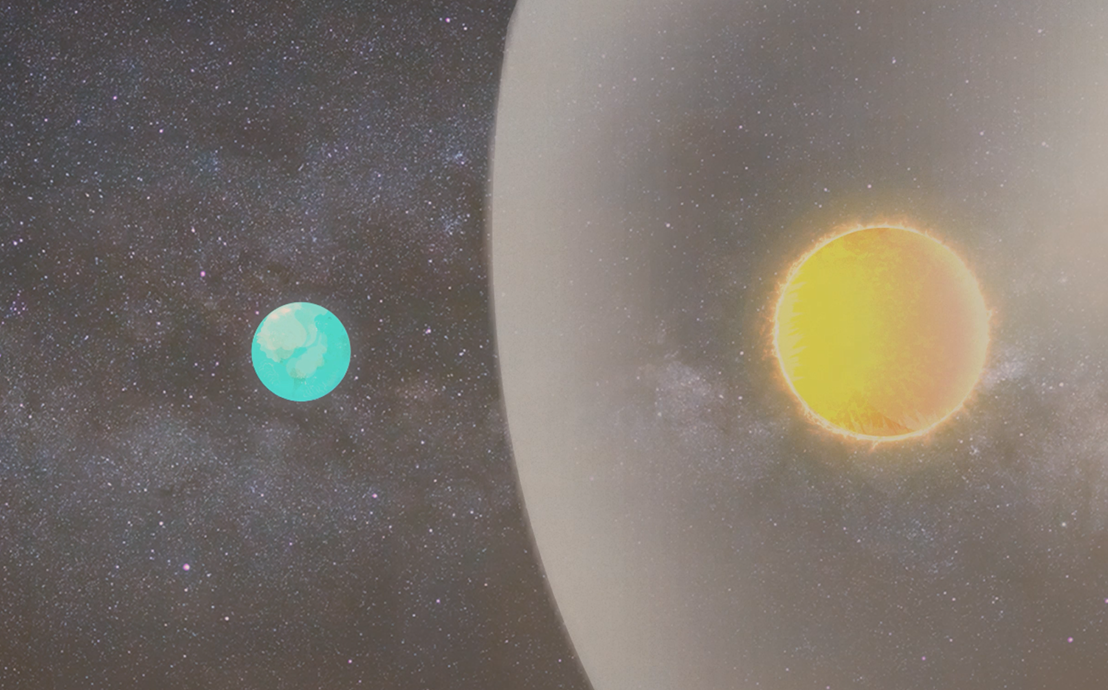
NASA-funded research reveals that powerful solar events billions of years ago fundamentally altered Earth's atmospheric composition and climate trajectory. Two independent studies from NASA's SHIELD center (Solar Wind with Hydrogen Ion charge Exchange and Large-Scale Dynamics) demonstrate that ancient solar activity directly shaped the conditions that allowed life to emerge and evolve on our planet.
The studies focus on the Sun's early history, when it emitted far more intense stellar winds and radiation than it does today. During the first billion years of solar system formation, the young Sun was dramatically more volatile. This extreme solar activity stripped hydrogen and other light elements from planetary atmospheres across the inner solar system. Earth, positioned in a protective zone with its magnetic field, retained more of its atmosphere than Mercury or Venus, but still experienced substantial atmospheric loss.
This process fundamentally altered Earth's climate in unexpected ways. The loss of hydrogen and other reducing gases changed Earth's atmospheric chemistry from one dominated by hydrogen and methane to a more oxidizing environment. This chemical shift enabled the buildup of oxygen produced by early photosynthetic microorganisms, eventually leading to the Great Oxidation Event around 2.4 billion years ago. That transition from a reducing to an oxidizing atmosphere represents one of the most dramatic environmental changes in Earth's history and directly enabled the evolution of complex life forms.
The SHIELD research team used advanced solar wind models and atmospheric chemistry simulations to reconstruct how the Sun's ancient behavior influenced planetary atmospheres. Their findings explain several long-standing mysteries in Earth's climate history. Unexplained shifts in temperature and atmospheric composition that paleoclimate models struggled to account for now align with periods of increased solar variability detected in the geological record.
Understanding this ancient solar influence carries implications for modern climate science and for assessing habitability on exoplanets. If similar solar activity shaped planetary atmospheres in our solar system, the same processes likely affected worlds orbiting other stars. NASA scientists use these findings to refine models for identifying potentially habitable exoplanets, since a planet's ability to retain an atmosphere depends partly on its host star's stellar wind strength and variability.
The research also provides context for Earth's current climate stability. Our Sun has gradually calmed over billions of years, entering a more stable phase. This relative quiescence allowed Earth's climate to develop the regulatory mechanisms that maintained habitability through oxygen fluctuations, ice ages, and other environmental changes.
These studies bridge heliophysics, planetary science, and astrobiology. They demonstrate how understanding solar physics across cosmic timescales illuminates Earth's deep past and informs the search for life elsewhere in the universe. As NASA continues studying the Sun through missions like the Parker Solar Probe and prepares for future solar observations, this research framework helps scientists connect stellar behavior to planetary evolution across multiple systems.