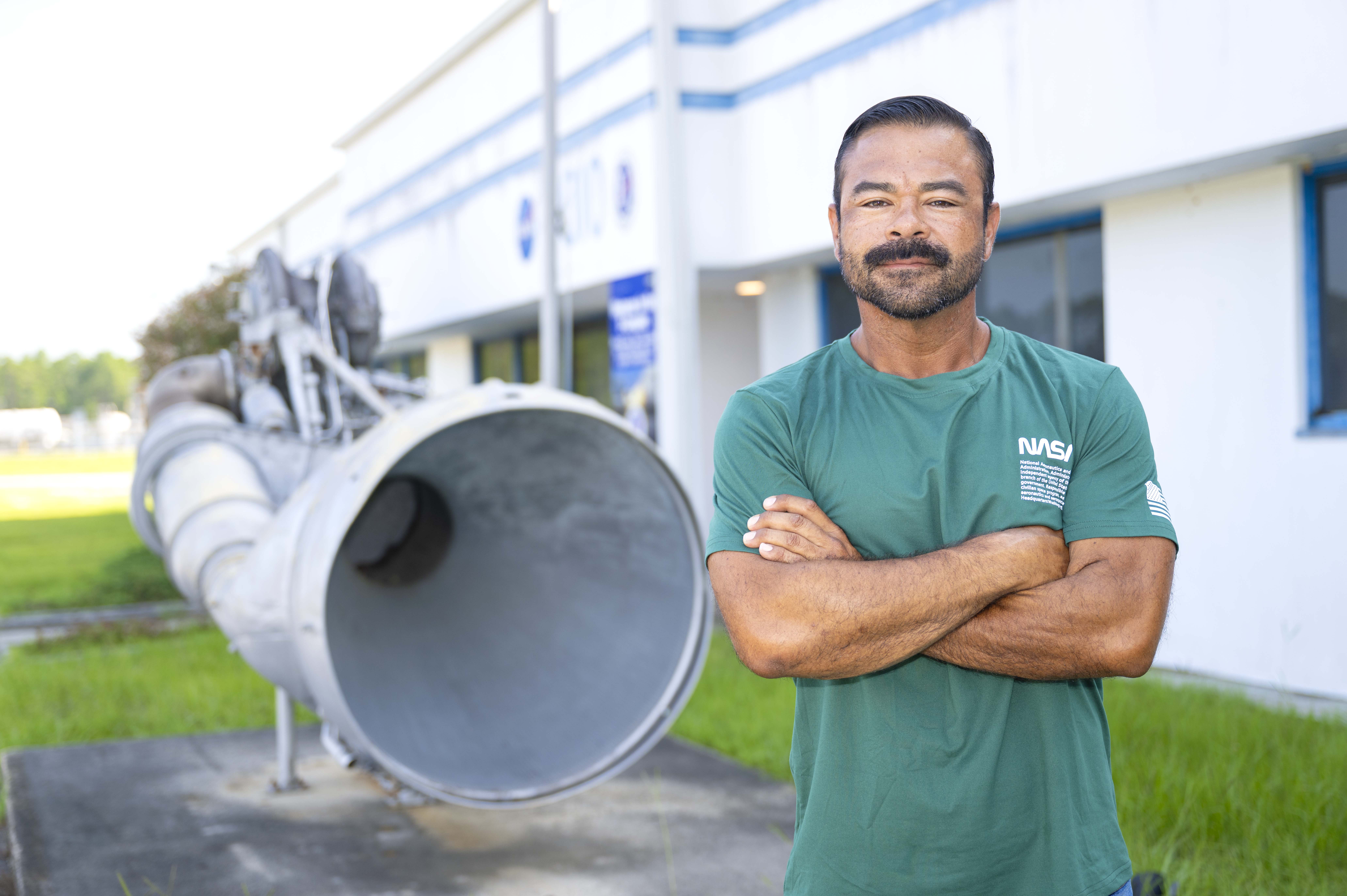
Jeret Howard's career trajectory reflects a broader shift within NASA's workforce strategy. The 17-year-old who enlisted as an Army combat medic in Iraq has now joined the agency as a civil servant at Stennis Space Center, marking a transition from military contractor work to direct government employment. This hiring follows NASA's deliberate push to rebuild institutional expertise and technical depth across its field centers.
Stennis Space Center, located near Bay St. Louis, Mississippi, operates as one of NASA's premier rocket propulsion testing facilities. The center conducts critical engine qualification testing for vehicles ranging from the Space Launch System to commercial providers. Adding personnel like Howard to the permanent civil service workforce addresses a long-standing challenge: retaining specialized knowledge and operational continuity as the agency navigates contractor dependencies.
NASA's shift toward hiring civil servants rather than relying exclusively on contractor personnel stems from lessons learned over the past two decades. The agency recognized that critical expertise—particularly in propulsion systems, structural analysis, materials science, and mission operations—risks walking out the door when contract cycles end. This creates gaps in institutional memory and slows decision-making on time-sensitive technical matters. By restoring what the agency calls "core competencies," NASA aims to strengthen its in-house capabilities and reduce single-point failures in mission-critical functions.
Howard's background as a combat medic carries unexpected relevance to aerospace work. Military medical training demands rapid problem-solving under pressure, sterile procedure discipline, and the ability to work within complex systems. These transferable skills apply directly to spacecraft assembly, test operations, and mission support where precision and reliability determine outcomes. The military-to-NASA pipeline has historically produced capable technical professionals who thrive in high-stakes environments.
Stennis Center specifically benefits from civil service growth. The facility operates as NASA's primary test site for rocket engines, where engineers subject propulsion systems to thousands of seconds of full-thrust firing before they ever leave the ground. This work requires meticulous data collection, real-time problem diagnosis, and coordination across multiple technical disciplines. Expanding the civil service workforce there means fewer delays due to contractor changeovers and more continuity in the institutional knowledge required to operate these complex test stands.
The workforce directive Howard benefited from represents a strategic recalibration. After years of outsourcing functions to contractors, NASA leadership determined that certain capabilities must reside within the agency itself. This includes positions in engineering, systems analysis, program management, and operations. The decision carries budget implications but offers long-term resilience in an era when human spaceflight timelines and deep space missions demand uninterrupted technical judgment.
Howard's swearing-in at Stennis exemplifies how NASA recruits talent. The agency attracts individuals with proven discipline and technical aptitude, regardless of background. A combat medic's ability to stay calm during crises and execute procedures flawlessly translates into the methodical work required at test facilities and launch operations centers.
As NASA expands its civil service ranks, centers like Stennis gain personnel who understand operational rigor and can sustain the institutional memory necessary for long-duration programs. Howard's appointment reflects both a personal achievement and a broader institutional strategy to ensure NASA possesses the human capital required for sustained space exploration.