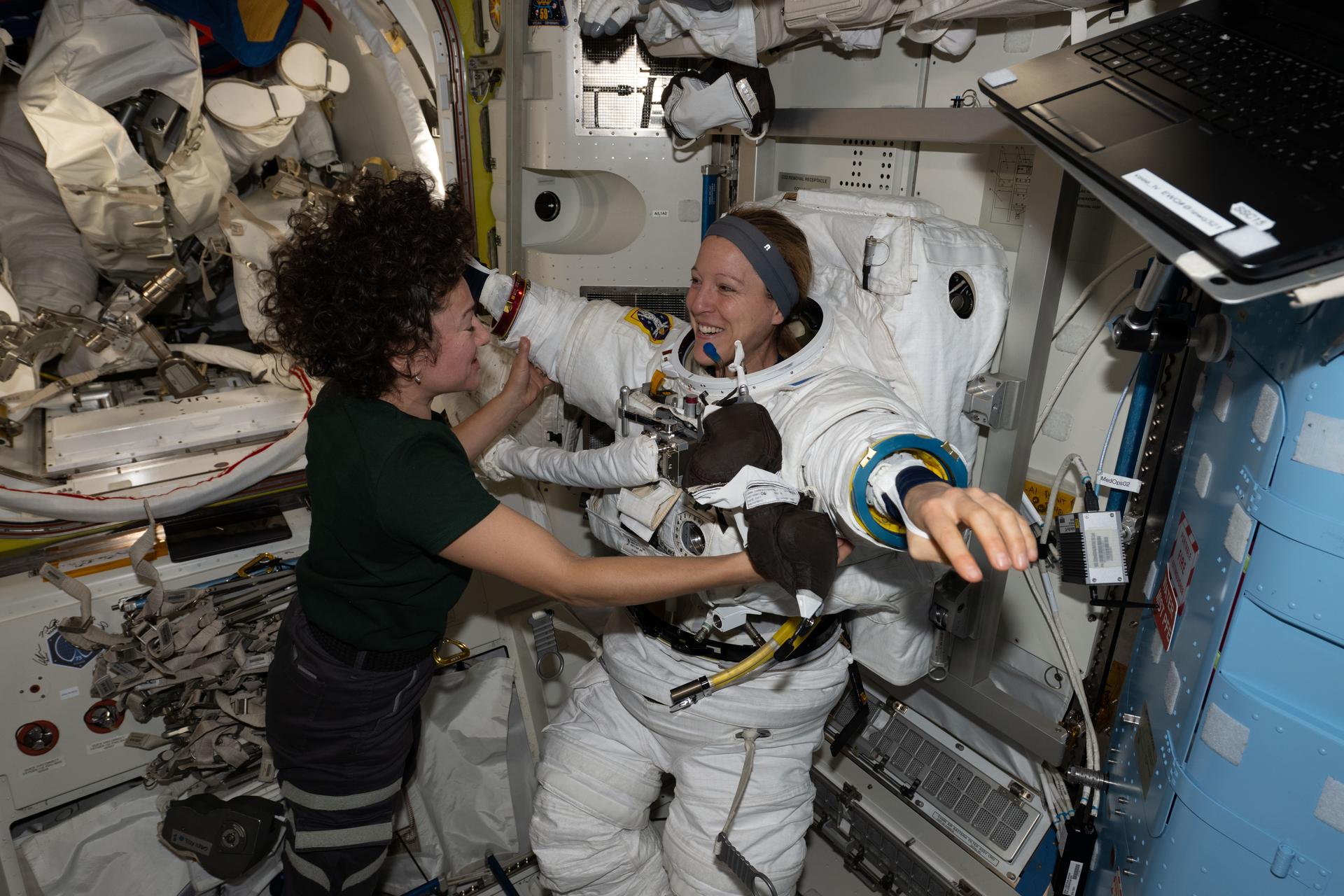
NASA astronauts will conduct a spacewalk outside the International Space Station on Tuesday, September 1, to replace critical navigational equipment and perform routine maintenance operations. The agency will broadcast live coverage beginning at 7 a.m. EDT, with the extravehicular activity scheduled to commence at approximately 8:30 a.m.
Two crew members will exit the station's airlock to address a spacecraft navigational aid that requires replacement. This equipment serves essential functions for the station's guidance and positioning systems, which remain vital to the orbiting laboratory's operational safety and mission success. Replacing navigational components on orbit prevents the need to return the entire structure to Earth for servicing and extends the functional life of individual systems.
The spacewalk also encompasses several secondary maintenance tasks that support broader station operations. These jobs typically include inspecting external hardware, replacing degraded materials, installing brackets or connectors, and repositioning equipment that may have shifted due to thermal cycling or micrometeorological impacts. Each task contributes to the long-term sustainability of the ISS, which has operated continuously as an orbiting research facility since November 1998.
Spacewalks remain among the most dangerous and technically demanding activities in human spaceflight. Astronauts must perform intricate manual work while wearing pressurized spacesuits that limit dexterity and vision. The suits themselves provide life support, thermal protection, and pressure regulation at altitudes where the vacuum of space presents immediate hazard. NASA extensively trains crews for each planned EVA, using underwater mockups of station hardware and ground-based simulations to rehearse every procedure.
The ISS orbits at an altitude of approximately 250 miles above Earth, completing a full revolution around the planet every 90 minutes. The station travels at roughly 17,500 miles per hour relative to Earth's surface. Astronauts working outside must remain tethered to the station with safety lines and handle complex tools designed specifically for use in microgravity and thermal extremes. External temperatures range from approximately 250 degrees Fahrenheit in direct sunlight to minus 250 degrees Fahrenheit in shadow.
NASA's live coverage will provide real-time views of the spacewalk, including camera feeds from helmet-mounted systems and fixed external cameras positioned around the station. The broadcast will feature mission control commentary explaining each procedure and its purpose. This transparency allows the public to witness the technical complexity of orbital maintenance and the human expertise required to sustain humanity's only permanent outpost in space.
The spacewalk supports the broader objectives of the ISS partnership, which includes NASA, Roscosmos, ESA, JAXA, and CSA. The station serves as a laboratory for microgravity research, technology development, and long-duration spaceflight demonstrations that inform future deep-space exploration missions. Maintaining the station's systems and structural integrity remains essential to conducting uninterrupted scientific investigations and preparing for crewed missions to the Moon and Mars.