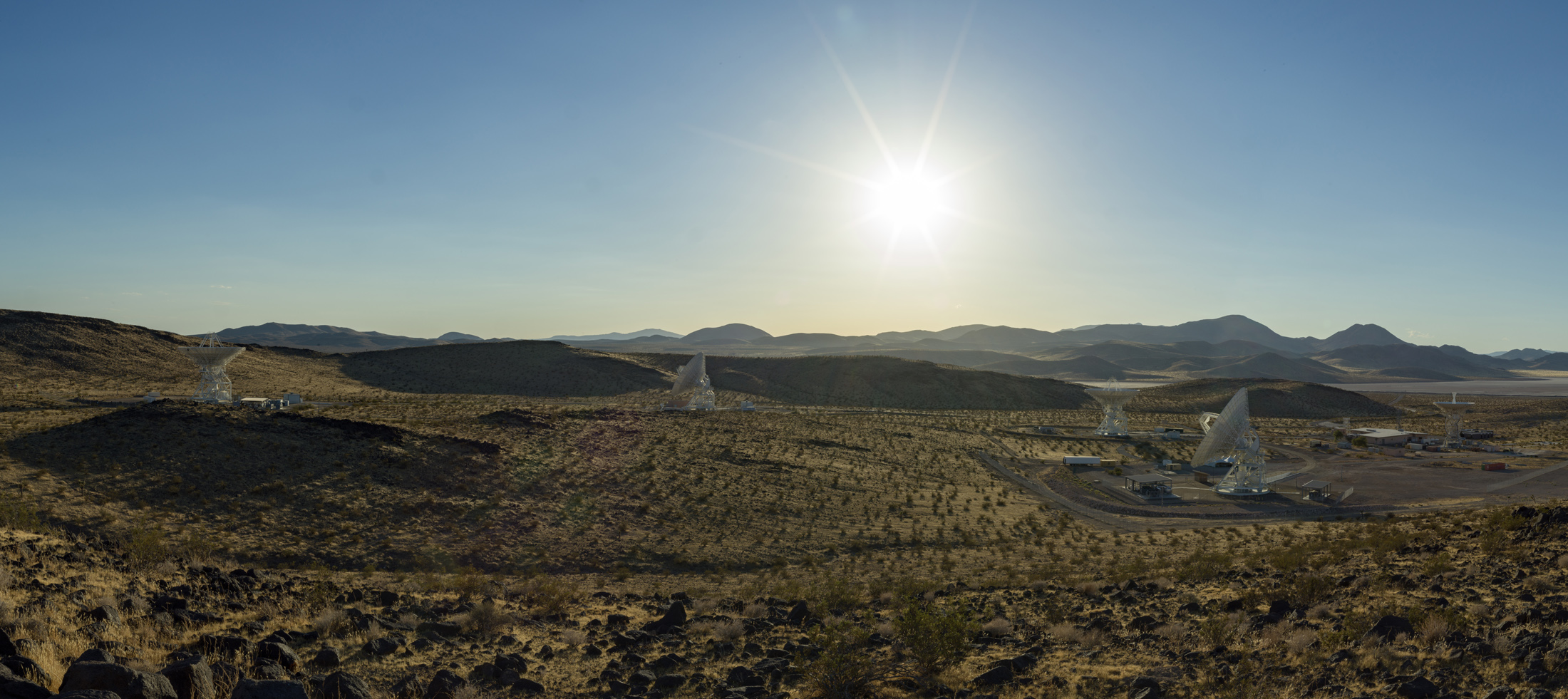
NASA has deployed a new 34-meter radio dish at its Goldstone facility in California, expanding the agency's capacity to communicate with spacecraft operating across the solar system and beyond. The addition strengthens the Deep Space Network (DSN), the backbone of NASA's ability to track, command, and receive data from more than 40 active missions at distances reaching billions of miles.
The Deep Space Network operates three major facilities strategically positioned around Earth: Goldstone in California's Mojave Desert, Madrid in Spain, and Canberra in Australia. This global distribution ensures continuous contact with distant spacecraft as Earth rotates. The new 34-meter antenna at Goldstone bolsters transmission and reception capabilities during critical mission phases and provides redundancy for the network's aging infrastructure.
The DSN handles communications for an extraordinary range of missions. It maintains contact with NASA's Mars rovers including Perseverance and Curiosity, the Voyager probes that have reached interstellar space, the James Webb Space Telescope in its L2 orbit, the Parker Solar Probe exploring the Sun's corona, and numerous lunar and planetary orbiters. Each mission demands precise command uplinks and continuous downlink reception of scientific data, telemetry, and status information.
Radio dish antennas operate at multiple frequency bands. Lower frequencies penetrate cosmic radio noise more effectively over vast distances, while higher frequencies support greater data transmission rates. The DSN's array of different-sized dishes, from 34-meter to 70-meter units, allows engineers to match antenna selection to each mission's communication requirements. Larger dishes generate stronger signals and receive fainter transmissions; smaller dishes operate at higher frequencies for broader bandwidth.
The new antenna addresses a fundamental challenge facing deep space exploration. As missions venture farther from Earth, signal strength diminishes according to the inverse square law. A radio signal from Mars loses power over roughly 140 million miles. The Parker Solar Probe, operating closer to the Sun than Mercury, requires precise frequency tracking to maintain communication through solar interference. Voyager 1, now beyond 15 billion miles away, transmits signals so faint they register in billionths of a watt at Earth.
DSN infrastructure has aged substantially. Several of the network's largest antennas were constructed in the 1960s. Modernization efforts across the three sites aim to sustain operations through the coming decades of deep space exploration. The new 34-meter dish incorporates contemporary electronics, improved cryogenic amplifiers that reduce noise, and digital systems that enhance data processing speeds.
This expansion arrives as NASA prepares for ambitious lunar exploration through the Artemis program and eventual human missions to Mars. These efforts demand reliable, high-bandwidth communications. The DSN also supports European Space Agency missions, Japan's space agency JAXA, India's space program, and China's deep space endeavors, functioning as essential shared infrastructure for humanity's expanding presence in space.
The addition of this antenna represents a tangible investment in the technological foundation that enables modern space exploration. Without robust deep space communications, the scientific discoveries from Mars rovers, planetary probes, and distant spacecraft would remain unreachable.