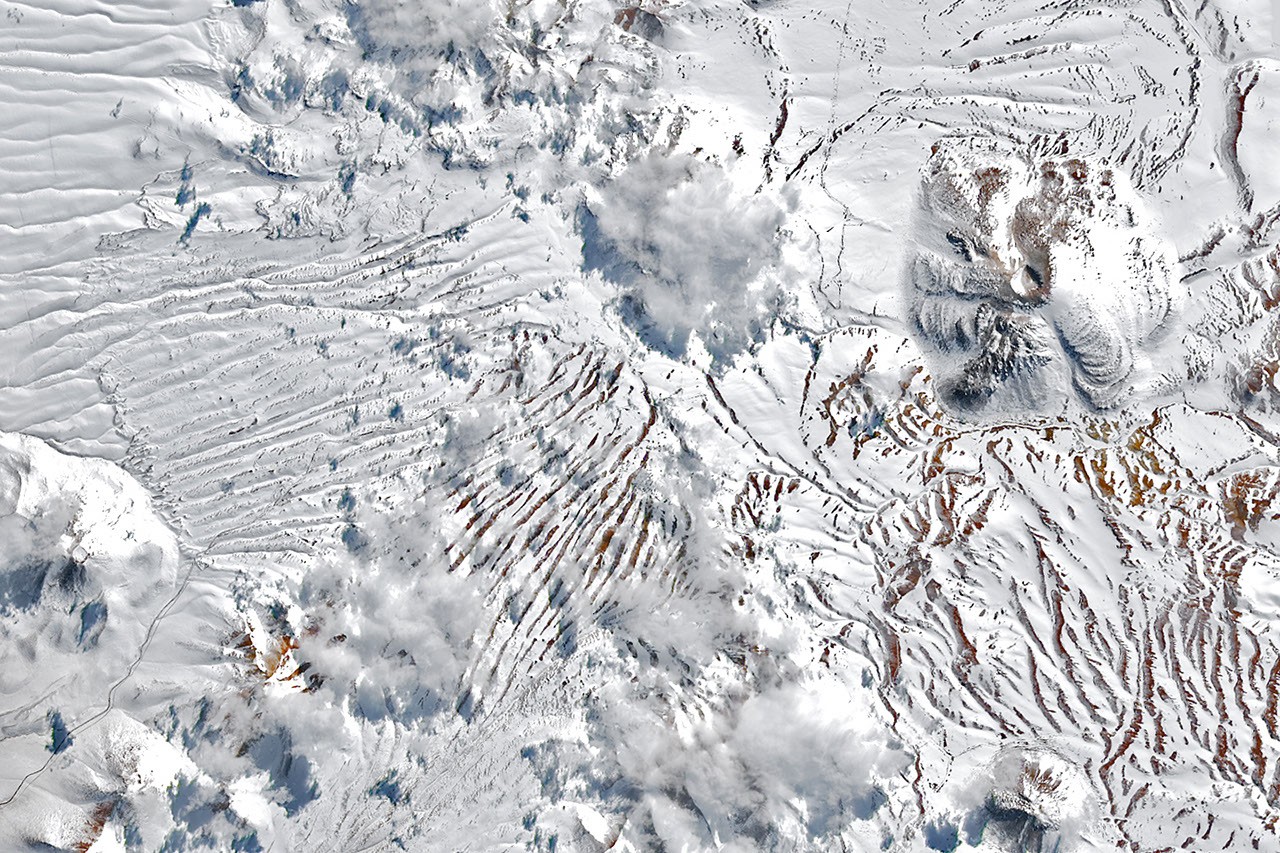
# Rare, Widespread Snow Transforms Chile's Driest Desert
Back-to-back winter storms swept across northern Chile in August 2026, depositing snow across the Atacama Desert from the Andes Mountains to within sight of the Pacific Ocean. The event marked an extraordinary meteorological occurrence in one of Earth's most arid regions.
The Atacama stretches across roughly 600 miles of Chile's northern territory and holds the distinction of being the driest place on the planet outside Antarctica. Some weather stations in the heart of the desert have recorded no measurable precipitation in decades. Snow there exists almost as myth rather than meteorology. Yet the August 2026 storms penetrated deep enough to blanket elevations across the region, transforming the landscape in ways that occur perhaps once per generation.
NASA documented the snowfall, capturing images showing white coverage extending from high-altitude Andean peaks down to lower elevations approaching the Pacific coastline. The timing in August, which marks the Southern Hemisphere's winter season, created atmospheric conditions that brought enough moisture and cold air to overcome the desert's extreme aridity. Such events require specific circumstances: moisture sources from the Pacific or Atlantic, sufficient cooling at altitude, and storm systems powerful enough to push that air inland against the desert's typical weather patterns.
The rarity of Atacama snowfall makes these events scientifically valuable. Weather and climate researchers use observations of precipitation in extreme deserts to understand atmospheric circulation patterns and long-term climate trends. Snow in the Atacama can indicate shifts in Southern Hemisphere storm tracks or changes in oceanic temperature patterns. Each documented occurrence provides data points for modeling how climate variability affects the world's driest inhabited regions.
The 2026 event also carries implications for water resources. While a single snow event does not resolve the chronic water scarcity that defines the Atacama, snow accumulation in the Andes feeds runoff that eventually reaches lower elevations. Chile's northern mining regions, including copper operations that depend heavily on water availability, monitor precipitation in the Andes closely. Winter storms that deposit snow at high elevations can extend water supply through spring and summer months as that snow melts gradually.
Local communities and ecosystems depend on these rare moisture events. The Atacama harbors specialized plant and animal life adapted to extreme dryness, and occasional wet periods trigger blooming and breeding cycles. Storms that bring snow or rain can activate dormant seeds that have waited years for conditions wet enough to germinate.
The back-to-back nature of the August 2026 storms underscores how atmospheric conditions can shift dramatically and briefly. One storm might deposit a dusting; consecutive storms can accumulate significant depth. The duration and intensity of these events determine their downstream effects on groundwater recharge, surface water availability, and biological activity across the desert.
NASA's observation and documentation of the snow event contributes to the broader catalog of climate data that researchers use to understand planetary weather systems. As climate patterns continue to shift, tracking anomalies like Atacama snowfall helps scientists assess whether such events will become more or less common in coming decades.