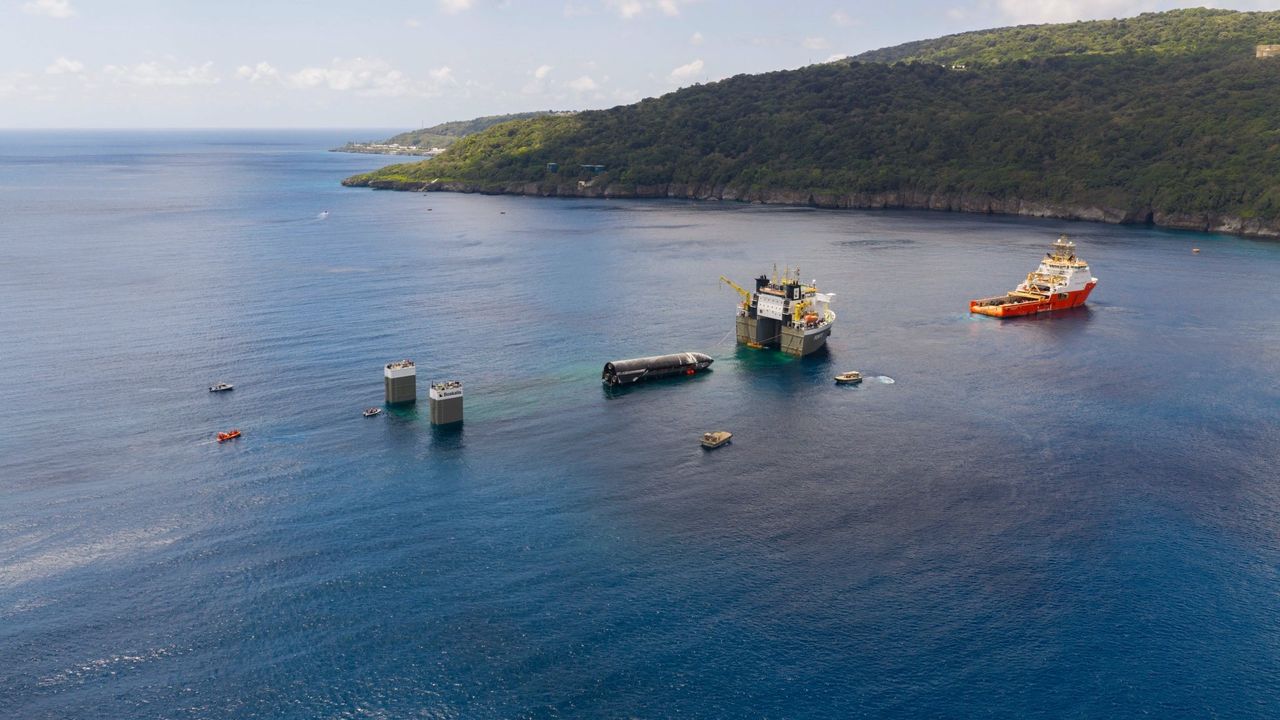
SpaceX recovered the upper stage of Starship Flight 13 from the Indian Ocean and loaded it aboard a recovery vessel for transport back to Texas, marking the completion of the retrieval operation more than a month after the spacecraft's splashdown.
The upper stage, also called the Ship, completed its test flight and entered the ocean as planned during Flight 13's mission profile. Rather than attempting immediate recovery at sea, SpaceX's teams waited for optimal conditions and staging of specialized recovery equipment before loading the 160-foot-tall stainless steel cylinder onto the transport vessel. The delay between splashdown and recovery reflects the logistical complexity of retrieving a 165-ton object from open ocean and securing it for the long voyage across the Indian Ocean to the Gulf of Mexico.
This recovery operation underscores a core element of SpaceX's Starship development strategy. The company views repeated testing, recovery, and refurbishment of hardware as central to achieving reusability. By bringing Flight 13's upper stage back to SpaceX's Starbase facility in Boca Chica, Texas, engineers can conduct detailed analysis of how the vehicle performed during ascent, in the near-vacuum environment of space, and during reentry. Data from post-flight inspections informs design refinements for subsequent flights.
Starship consists of two stacked stages: the Super Heavy booster and the Ship upper stage. Both vehicles employ full-flow staged combustion Raptor engines and use methane and liquid oxygen propellant. The architecture aims to enable rapid reusability, with both stages designed to return to the launch site for turnaround and rapid reflights. Early test flights have achieved successive booster catches with the launch tower's mechanical arms, nicknamed "chopstick" arms, while upper stage ocean splashdowns remain part of the current testing cadence as the program works toward controlled booster landing and upper stage turnaround capabilities.
Flight 13 represented another step in Starship's incremental test campaign. Each successive flight tests specific aspects of the vehicle's performance, from engine operation in vacuum to thermal protection system (TPS) tile integrity during reentry. The upper stage's condition upon recovery and examination will provide engineers with data on how the heat shield withstood atmospheric reentry forces and temperatures exceeding 3,000 degrees Fahrenheit.
SpaceX aims to eventually fly Starship routinely and affordably. The company has secured NASA contracts for lunar lander variants called Starship HLS, while also developing the vehicle for Earth-orbital refueling and deep space missions. Recovery of flight hardware shortens development timelines by providing immediate data and reducing the cost of manufacturing entirely new test articles for each flight.
The journey from Indian Ocean recovery to Boca Chica will take several weeks by sea. Once the upper stage arrives at Starbase, SpaceX technicians will disassemble components, conduct nondestructive testing, evaluate reentry damage, and catalog findings for the ongoing development effort. This cycle of flight, recovery, analysis, and refinement drives Starship toward operational maturity.