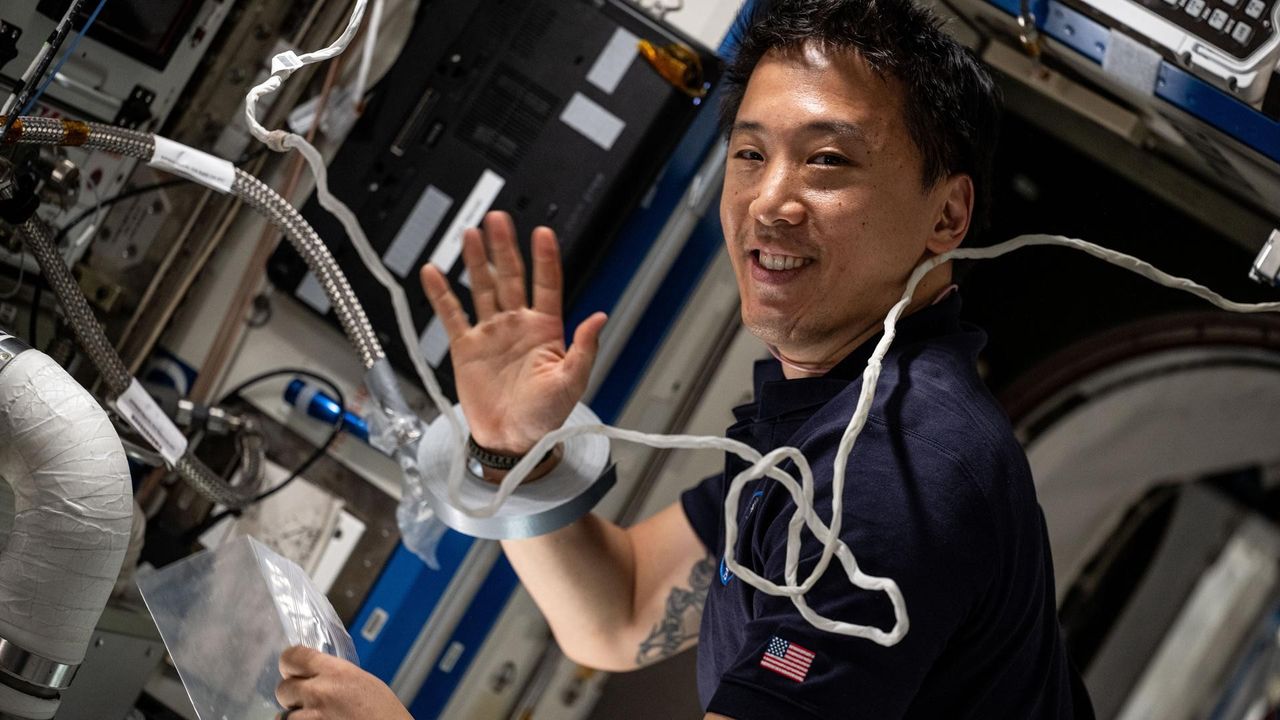
Jonny Kim, NASA astronaut and decorated military officer, is departing the space agency to resume active duty with the U.S. Navy. Kim's departure marks the end of his tenure with NASA's astronaut corps, a program he joined after an extraordinary career spanning medicine and military service.
Kim flew one spaceflight during his time at NASA. He served as a mission specialist aboard SpaceX's Crew-2 mission, which launched to the International Space Station in April 2021. That mission lasted roughly five months in orbit, during which Kim conducted microgravity research and participated in critical ISS operations alongside commander Shane Kimbrough, pilot Megan McArthur, and ESA astronaut Thomas Pesquet.
His background places Kim among NASA's most unconventional astronauts. Before joining the astronaut corps, he earned his medical degree from Harvard Medical School and served as a Naval Special Warfare Combat Medic. He deployed multiple times with SEAL Team Three and later transitioned to military medicine, eventually earning his MD while maintaining his naval commission. This combination of tactical combat experience, advanced medical training, and flight surgeon qualifications made him a rare asset for the space program.
Kim was selected for NASA's 2017 astronaut class, a group of twelve candidates chosen from over 18,000 applicants. His selection reflected NASA's continuing need for astronauts with diverse professional backgrounds. The agency values military pilots and engineers, but also seeks specialists in medicine, geology, robotics, and other scientific fields to support ISS operations and future deep-space exploration.
His departure underscores a broader pattern within NASA's astronaut program. Selection and retention present constant challenges. Astronauts train for years before flying, and not all selected candidates reach spaceflight. Of those who do, some leave for military advancement, commercial opportunities, or other pursuits. Between 2017 and 2024, several astronauts from Kim's class and others have departed NASA for various reasons, including pursuit of other careers.
Kim's return to active military duty reflects his primary professional identity as a Navy officer. Military personnel selected for NASA's program maintain their service obligations, and some eventually choose to prioritize their military careers over continued astronaut work. His transition back to Navy life removes him from the pool of active astronauts available for future ISS missions or potential lunar and deep-space flights.
NASA currently maintains approximately 43 active astronauts. The agency regularly selects new candidates to maintain operational capacity as current astronauts retire, leave, or transition to flight roles. Kim's departure creates an opening in the corps, though he leaves after fulfilling his flight assignment and contributing his unique skill set to human spaceflight operations.
His career path, from combat medic to physician-astronaut, remains exceptional within the space program. Future space missions will benefit from the foundation he helped establish through his work aboard Crew-2, even as his active participation in NASA's astronaut corps concludes.