# Nancy Grace Roman: The Architect Behind Humanity's Window to the Universe
Nancy Grace Roman shaped modern astronomy not through observation but through vision. The woman who earned the title "mother of Hubble" spent her career fighting for instruments that would transform our understanding of the cosmos, and the personal encounters with her reveal why her legacy transcends a single telescope.
Roman joined NASA in 1959, arriving at an agency that had barely begun its space program. She became the chief of astronomy at NASA Headquarters, a position that granted her influence over which missions would receive funding and support. Her mission: convince decision-makers that space telescopes deserved investment. This was not an obvious choice in the Cold War era, when rockets meant weapons and propaganda, not science.
The Hubble Space Telescope emerged directly from Roman's advocacy. Throughout the 1960s and 1970s, she championed the concept of a large orbital observatory. She understood what ground-based telescopes could not achieve. Planets and stars seen through Earth's atmosphere suffer from distortion. Only above the atmosphere could astronomers capture images with unprecedented clarity. Roman pushed this vision with relentless detail, arming herself with technical specifications and scientific rationales that satisfied both engineers and politicians.
Her work extended beyond Hubble. Roman pioneered NASA's astronomy program during its formative decades. She evaluated proposals, managed budgets, and connected astronomers with engineers who could build their instruments. She championed women in science at a time when the field remained overwhelmingly male. Her presence in leadership mattered. It signaled that women belonged in the rooms where decisions about the universe's exploration took place.
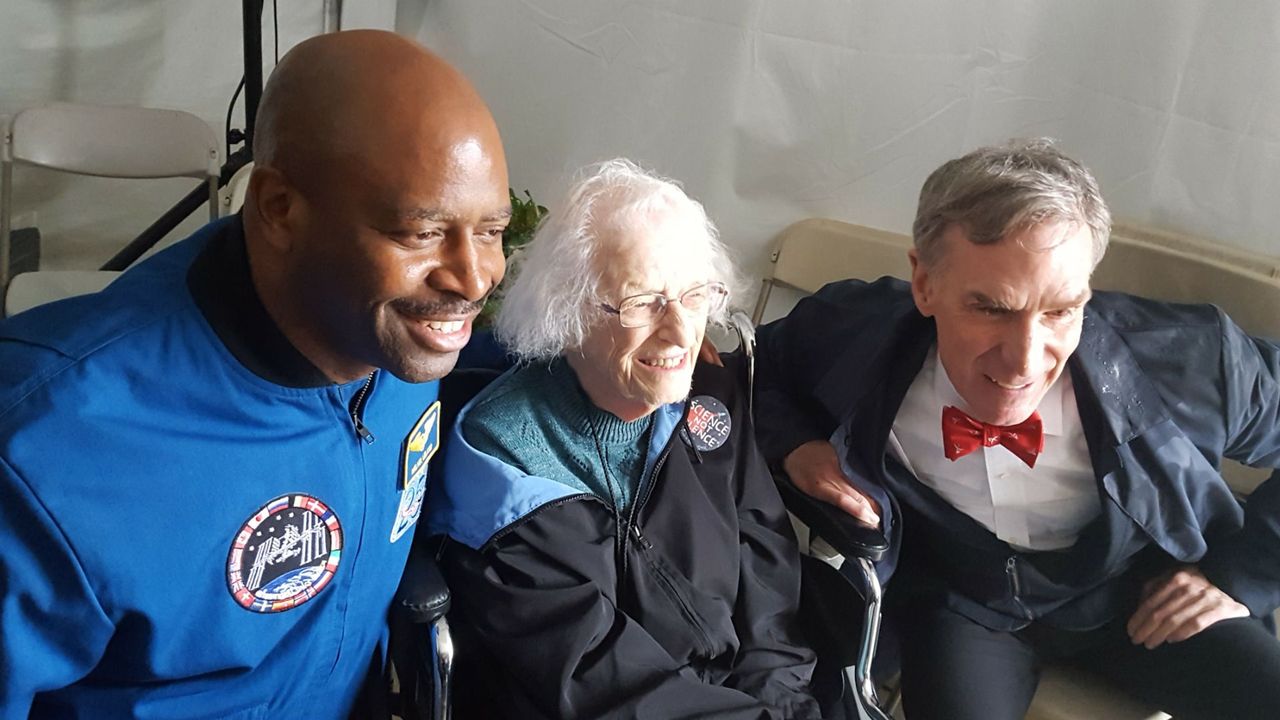
The personal recollections of those who met Roman paint a portrait of someone possessed of both scientific rigor and warmth. A journalist's encounter with her nearly a decade ago resulted in laughter. This detail speaks volumes. Roman did not distance herself behind credentials or formality. She engaged with genuine humor and humanity, qualities that made her an effective advocate for her vision.
Hubble's launch in 1990 vindicated everything Roman had fought for, though not immediately. The telescope's initial flawed mirror threatened to derail the entire mission. But its repair in 1993 unleashed transformative power. Images from Hubble have revealed the universe's true scale. They showed galaxies billions of light-years away. They measured the universe's expansion rate and suggested the presence of dark energy. They captured star-forming regions and nebulae with breathtaking detail. Every one of those discoveries rested on foundations Roman laid decades earlier.
Roman's influence extends to current missions. The James Webb Space Telescope, launched in 2021, follows principles and strategies Roman established. The Nancy Grace Roman Space Telescope, named in her honor and slated for launch in the coming years, will continue her legacy of space-based observation.
Roman passed away in 2016 at age 93. She witnessed Hubble's transformation from concept to the most productive scientific instrument humanity has ever built. She saw her convictions validated across three decades of discovery. The laughter shared with her in her later years reflected something deeper than casual warmth. It reflected gratitude for a lifetime spent expanding humanity's cosmic perspective.