Researchers have discovered that spaceflight does not weaken the contractile strength of heart muscle cells, offering reassuring news for long-duration missions and future deep-space exploration. The finding emerged from studies examining cardiac tissue exposed to microgravity conditions, revealing that despite profound physiological changes astronauts experience in orbit, the fundamental force-generating capacity of individual cardiomyocytes remains intact.
This research matters because cardiac health represents one of the most critical health concerns for astronauts on extended missions. The International Space Station (ISS) orbits Earth at approximately 17,500 miles per hour in a state of continuous freefall, creating the microgravity environment that triggers cascading changes throughout the human body. While astronauts experience well-documented effects including fluid redistribution to the upper body (producing the characteristic "puffy face"), spinal elongation from reduced gravity-induced compression, bone density loss, and muscular atrophy, the heart's fundamental ability to contract had remained incompletely understood.
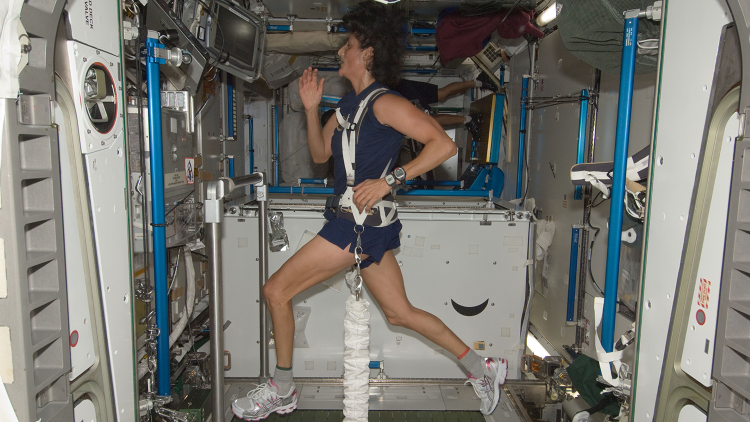
NASA and partner space agencies have monitored cardiovascular changes in astronauts for decades. Missions ranging from short Shuttle flights to year-long ISS expeditions have provided data on how microgravity affects cardiac function. Astronaut Sunita Williams and her crewmates regularly exercise on ISS treadmills and resistance equipment, part of standardized protocols designed to mitigate muscle and bone loss during spaceflight. The daily exercise regimen reflects the serious risks posed by prolonged weightlessness.
The cellular-level findings now indicate that heart muscle cells maintain their contractile force generation capacity despite microgravity exposure. This contrasts sharply with skeletal muscle, which deteriorates noticeably during spaceflight. Astronauts can lose one to two percent of muscle mass daily without exercise countermeasures. The heart, however, appears to preserve its fundamental mechanical capability at the cellular level, even as the overall cardiovascular system adapts to reduced gravity.
This distinction carries substantial implications for mission planning. Longer ISS expeditions and future missions to the Moon or Mars demand detailed understanding of how different tissues respond to extended microgravity. If cardiac muscle maintains contractile strength while skeletal muscle weakens, exercise countermeasures can prioritize maintaining skeletal integrity and function without necessarily addressing cardiac weakness at the cellular level. This allows mission physicians to develop more targeted protocols.
The research also informs pharmaceutical and biological research. Understanding why cardiomyocytes resist the deleterious effects that plague other muscle types may reveal fundamental mechanisms protecting cardiac tissue or may point to interventions that could preserve skeletal muscle more effectively. Studies conducted aboard the ISS, including experiments with cultured cells and tissue samples, continue to expand this knowledge base.
Radiation exposure remains the primary long-term health concern for deep-space missions beyond Earth's magnetic protection. Solar and cosmic radiation can cause genetic damage and increase cancer risk over months-long journeys. The heart's preserved contractile function in microgravity does not eliminate other spaceflight hazards, but it establishes that astronauts can undertake extended missions without fearing progressive cardiac muscle degradation at the cellular level. Combined with exercise countermeasures and continued monitoring, this finding strengthens the scientific foundation for human exploration beyond low Earth orbit.