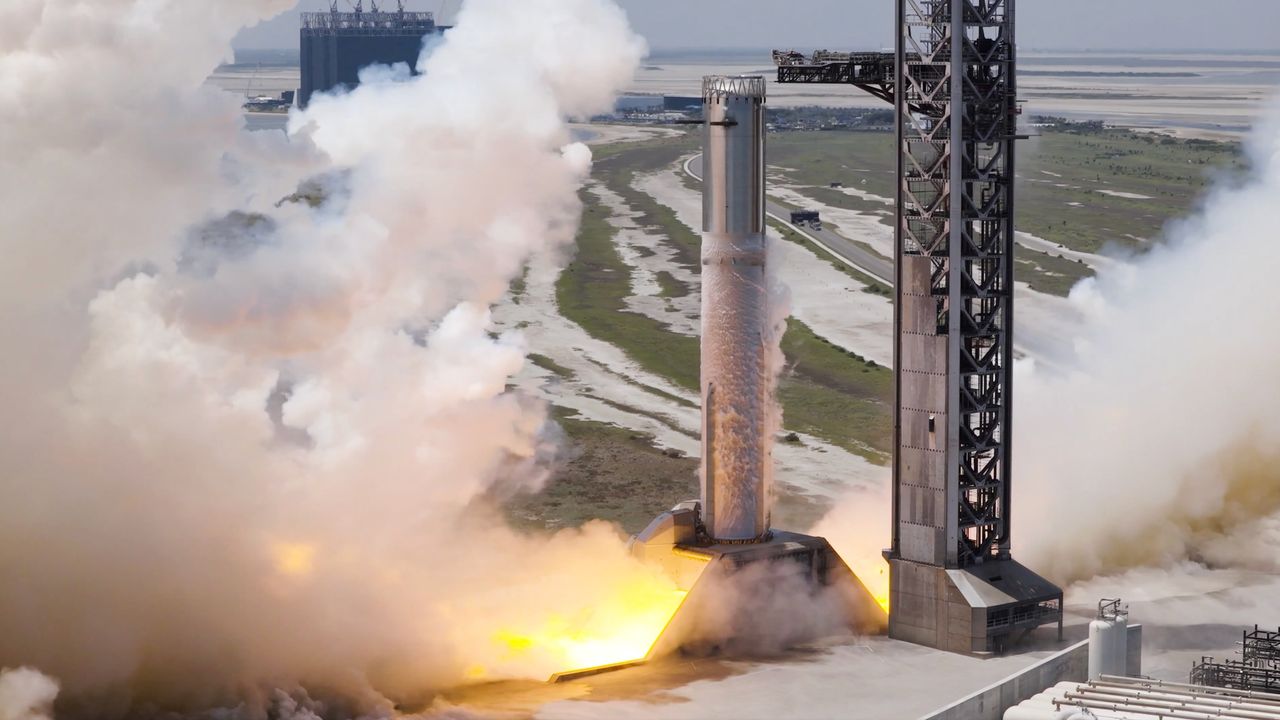
SpaceX conducted a full static fire test of the Super Heavy booster, igniting all 33 Raptor engines in preparation for Starship's Flight 14 mission. This test represents a crucial validation checkpoint before the integrated vehicle attempts its first fully orbital flight.
The Super Heavy booster serves as the first stage of the Starship launch system. At 233 feet tall and 30 feet in diameter, it generates 33 meganewtons of thrust from its cluster of 33 Raptor 3 engines, making it the most powerful operational rocket booster on Earth. Each successful static fire test confirms engine performance, fuel system integrity, and structural resilience under operational loads before an actual launch attempt.
Flight 14 marks a watershed moment in SpaceX's development timeline. Previous Starship test flights have demonstrated atmospheric flight, booster catch capabilities, and incremental ascent milestones. This mission will push the vehicle beyond suborbital trajectories into full orbital velocity, a fundamental transition in the program's progression toward crewed spaceflight and deep-space missions. Reaching orbit requires the booster and ship to separate cleanly, with the booster returning for a controlled landing while the Starship upper stage continues into space.
The 33-engine configuration demonstrates SpaceX's engineering approach to reliability through redundancy. If any engines fail during ascent, the remaining engines can compensate to complete the mission. This design philosophy reflects lessons learned from earlier Falcon 9 development and represents a calculated risk mitigation strategy for a vehicle operating at the edge of engineering limits.
The static fire test validates several critical systems simultaneously. Propellant flow through the turbopumps must deliver precisely controlled fuel and oxidizer at extreme pressures. The engines must ignite sequentially without shock waves that could damage adjacent units. Vibration loads stress the vehicle's structure in ways that flight simulation alone cannot replicate. The test harnesses real hardware in real conditions.
SpaceX's iterative testing cadence accelerates vehicle development compared to traditional aerospace approaches. Rather than extensive ground testing before any flight attempt, the company conducts tests, flies, captures data, identifies issues, and iterates rapidly. This methodology has compressed the timeline from concept to operational capability across the Falcon 9 and Falcon Heavy programs.
Flight 14 carries consequences beyond SpaceX's internal roadmap. NASA selected Starship as its Human Landing System for the Artemis program, meaning successful orbital flight tests directly support the agency's lunar return timeline. Commercial space stations and lunar landers depend on Starship's cargo capacity. The Department of Defense has awarded contracts for national security missions pending full vehicle maturity.
Weather, technical issues, or regulatory considerations could delay the Flight 14 attempt. FAA licensing requirements necessitate careful review of booster trajectory and potential landing zones. The Super Heavy, at maximum gross weight of 5,200 tons, represents a fundamentally new scale of reusable booster operations.
The static fire test itself produces minimal debris or environmental impact compared to actual flight tests. It provides engineers direct telemetry on engine performance, structural response, and system behavior under full throttle conditions. Data collected during this test will inform final decisions on Flight 14 readiness and any necessary hardware modifications.