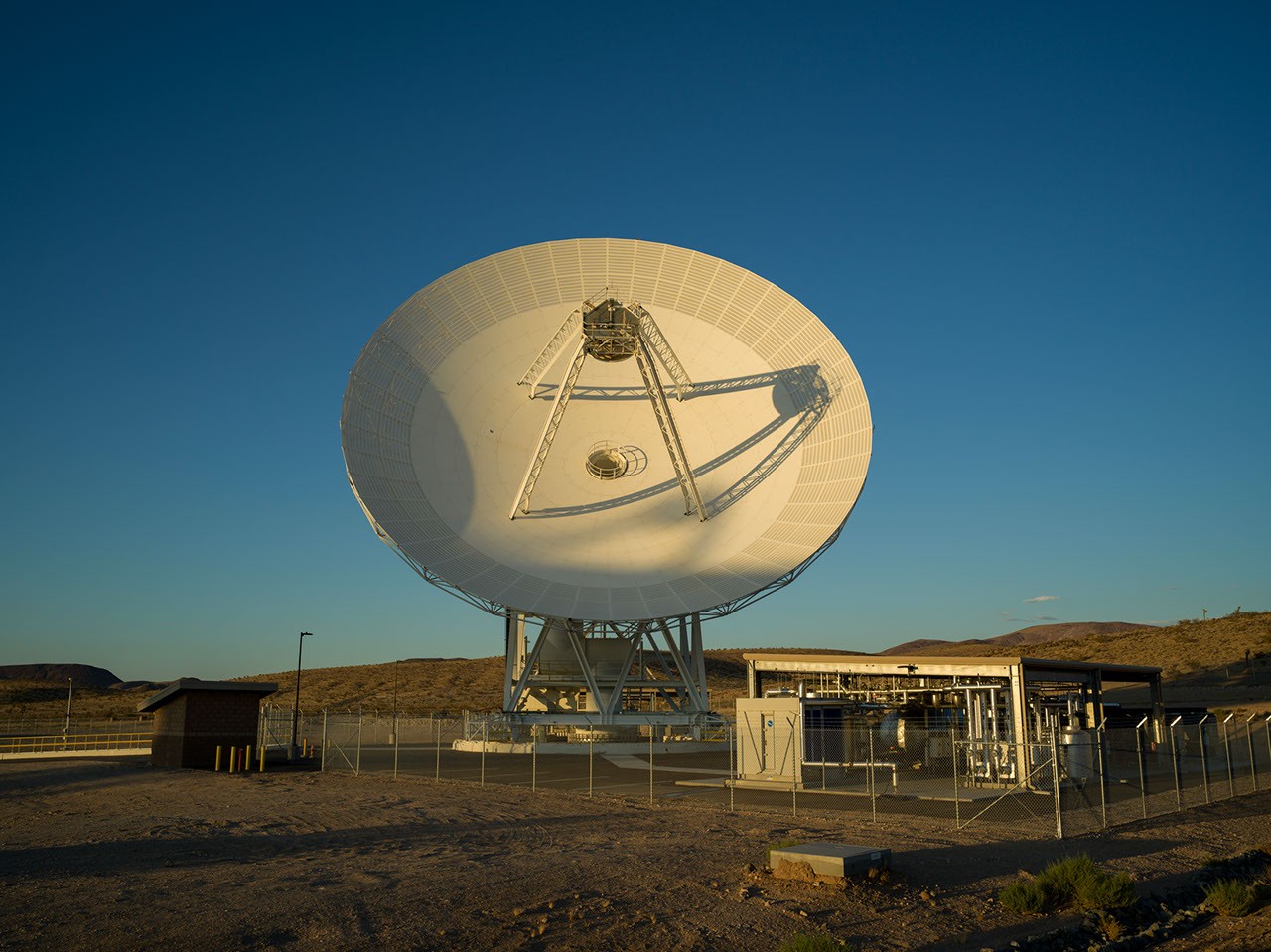
NASA has activated Deep Space Station 23, a new 34-meter antenna at the Goldstone Complex near Barstow, California. The multifrequency beam-waveguide antenna represents a major expansion of the Deep Space Network, the global communications infrastructure that maintains contact with robotic spacecraft exploring the solar system and beyond.
DSS-23 will operate alongside existing antennas at Goldstone, part of three DSN complexes positioned around Earth. The network maintains contact with over 40 spacecraft simultaneously, including the Voyager probes traveling through interstellar space, the Perseverance rover operating on Mars, and the James Webb Space Telescope observing the distant universe.
The new antenna addresses a critical bottleneck in deep space communications. As NASA launches more ambitious missions, existing DSN capacity has become increasingly strained. Older antennas cannot support the data rates required by modern instruments. Perseverance alone transmits gigabytes of data daily from Mars. Future missions to the Moon, Mars, and the outer planets will demand even greater bandwidth.
A 34-meter antenna operates at multiple frequencies simultaneously, allowing engineers to communicate with different spacecraft without switching between channels. The beam-waveguide design routes signals through a series of mirrors and waveguides rather than traditional coaxial cables, reducing signal loss and improving reception quality. This technology enables the DSN to receive fainter signals from spacecraft traveling at greater distances.
DSS-23 follows the successful deployment of DSS-24, another 34-meter antenna completed at Goldstone in 2020. Together, these newer stations complement the iconic 70-meter Goldstone antenna, which has operated since 1966 and remains one of the most powerful transmitters on Earth. The Goldstone complex now operates five primary antennas capable of supporting multiple simultaneous missions.
The Deep Space Network receives continuous demand from NASA's portfolio. The upcoming Artemis missions to lunar orbit will require reliable communication for crewed spacecraft and lunar landers. Planned Mars sample-return missions need high-capacity links to transmit data about potential biosignatures. Outer planet orbiters like the planned Europa Clipper mission depend on DSN contact at distances exceeding 600 million kilometers.
International partners also use DSN capacity. The European Space Agency, Japan's space agency JAXA, and India's ISRO coordinate with NASA to track their deep space probes. This shared infrastructure reduces redundancy while expanding humanity's reach beyond Earth.
The new antenna cost approximately $410 million and took over a decade to complete. NASA prioritized DSN modernization after recognizing that aging infrastructure threatened mission reliability. The agency plans additional upgrades at the Canberra and Madrid DSN complexes in coming years.
DSS-23 enters service as NASA prepares to return humans to the Moon and eventually launch crewed missions to Mars. These endeavors will generate unprecedented data volumes requiring robust, redundant communication paths. The new Goldstone antenna ensures that ground controllers can maintain constant contact with spacecraft traversing the void, translating raw electrical signals into scientific discovery.