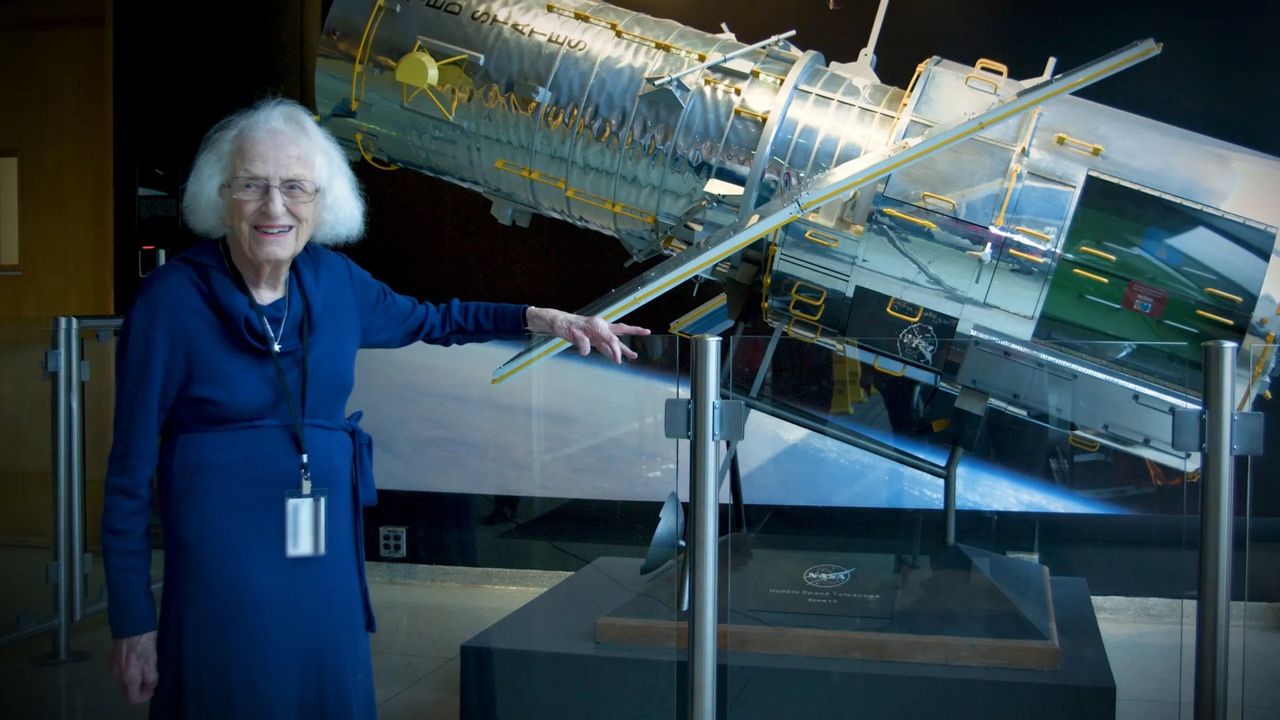
Nancy Grace Roman shaped modern astronomy from her desk at NASA Headquarters for decades, yet remained largely unknown to the public until the agency named its next flagship observatory in her honor. The Nancy Grace Roman Space Telescope, scheduled for launch in the mid-2020s, represents the culmination of her lifetime advocacy for space-based infrared imaging that transcended the limitations of ground-based telescopes.
Roman joined NASA in 1959, during the agency's earliest years, and became the first Chief of Astronomy in the agency's Office of Space Science. She arrived before the agency had launched a single telescope into orbit. Her role proved foundational. She championed the development of space-based observatories when the concept remained controversial among astronomers who trusted traditional ground-based instruments. Her persistence transformed institutional thinking.
Roman's most enduring legacy connects directly to the Hubble Space Telescope. She advocated relentlessly for a large orbital observatory during the 1960s, when skepticism ran deep. Her work established the scientific framework and budgetary justification that made Hubble possible decades later. Though engineers and politicians built Hubble, Roman's intellectual infrastructure supported every phase of its design and deployment. The nickname "Mother of Hubble" reflects this foundational role.
Beyond Hubble, Roman recognized that infrared astronomy represented astronomy's frontier. She understood that Earth's atmosphere blocks most infrared wavelengths, making space-based infrared observation essential for studying dust-shrouded star formation, distant galaxies, and the universe's earliest objects. This conviction drove her throughout her NASA career and beyond.
The Nancy Grace Roman Space Telescope embodies that vision. The observatory carries a 2.4-meter primary mirror, matching Hubble's dimensions but optimized for infrared wavelengths. Its Wide Field of View Instrument will survey the cosmos at unprecedented scales, capable of imaging areas of sky twenty-five times larger than Hubble's most powerful camera while maintaining comparable resolution. This capability addresses the central scientific challenge Roman identified: astronomers need both breadth and depth to map the universe's large-scale structure.
The telescope will tackle questions Roman would recognize immediately. Astronomers plan to use it for direct imaging of exoplanets around distant stars, studying the universe's earliest galaxies formed after the Big Bang, and mapping dark matter's distribution across cosmic structures. Each goal requires the infrared sensitivity and wide-field capability Roman championed decades ago.
Roman retired from NASA in 1981 but continued advocating for space astronomy throughout her later life. She witnessed Hubble's launch in 1990, saw it revolutionize astronomy despite initial optical flaws, and lived to see the space telescope community embrace infrared observation as essential. She died in 2016 at age ninety-three, having transformed the discipline from Earth-bound work into a space-based enterprise.
Naming the Roman Space Telescope represents NASA's acknowledgment of her role in that transformation. The observatory will operate in the 2030s and beyond, conducting observations Roman envisioned but never saw realized. Her advocacy ensured that astronomers possessed the tools to explore questions she knew mattered. The telescope's launch will fulfill that promise.