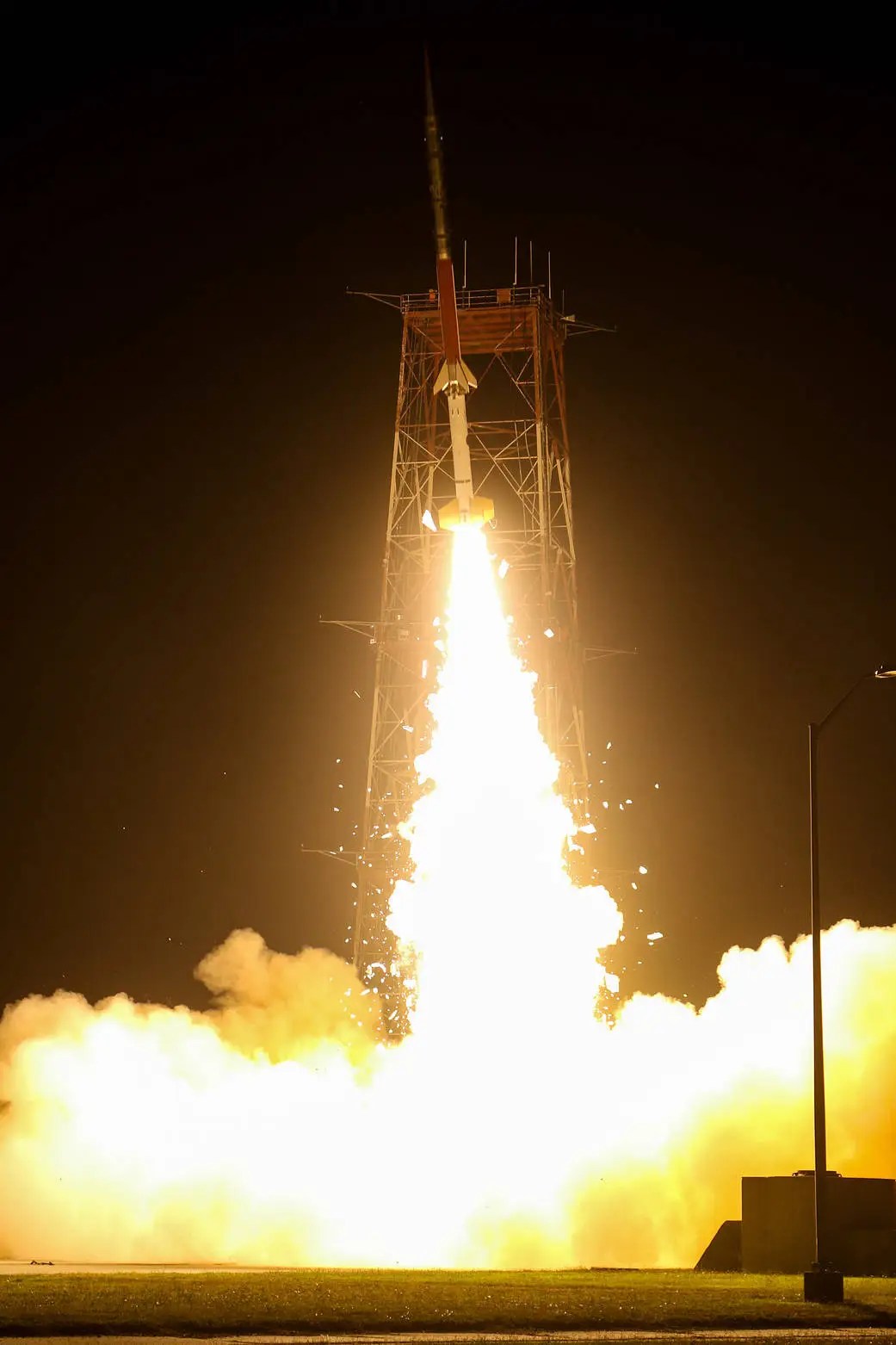
NASA's Terrier-Improved Malemute sounding rocket has captured the first detailed multi-point measurements of sporadic E layers, revealing how these thin veils of metallic particles form and disrupt radio communications across Earth's upper atmosphere.
The mission launched from NASA's Wallops Flight Facility in Virginia to directly sample these unpredictable atmospheric structures that form between 85 and 105 kilometers above the surface. Sporadic E layers consist of ionized particles created when meteor dust vaporizes during atmospheric entry. Unlike the more stable E layer that exists at these altitudes, sporadic E layers appear and vanish erratically, sometimes blocking radio signals used for aviation, maritime navigation, and amateur radio operations.
Previous observations of sporadic E relied primarily on ground-based radar and satellite data, which provided limited spatial resolution. The sounding rocket carries multiple instrumentation packages that measure electron density, electric fields, and neutral atmosphere composition at different altitudes simultaneously. This multipoint approach captures the three-dimensional structure of these layers with unprecedented detail.
The data reveals that sporadic E layers form through a combination of atmospheric wind shear and the vertical collection of metallic ions. Wind patterns at mesospheric altitudes compress and concentrate the vaporized meteor material into thin, dense sheets. Electric fields present in the ionosphere then organize these ions into narrow bands only a few hundred meters thick. When conditions align properly, these layers accumulate enough free electrons to block or reflect radio waves in the HF and VHF bands.
Understanding sporadic E formation carries practical implications for communication and navigation systems. Commercial aviation relies on HF radio for long-distance communication over polar routes where satellite coverage remains sparse. Maritime operations depend on similar systems for ship-to-shore contact. Solar activity modulates the ionospheric conditions that favor sporadic E formation, making this research relevant to space weather forecasting.
The Terrier-Improved Malemute rocket reached an apogee of 148 kilometers, briefly sampling the upper mesosphere and lower thermosphere before descending under parachute. Its instruments collected data during the ascent and descent phases, creating a vertical profile of atmospheric conditions through the sporadic E region. This direct sampling complements continuous ground-based measurements and provides the validation needed to improve theoretical models of ion dynamics.
NASA's sounding rocket program operates as a cost-effective platform for atmospheric science. These suborbital vehicles conduct targeted measurements of specific phenomena without the expense and complexity of orbital satellites. The Wallops Flight Facility, NASA's primary sounding rocket launch site, conducts dozens of such missions annually across diverse scientific disciplines.
The results will inform improvements to ionospheric models used by the National Oceanic and Atmospheric Administration for space weather prediction. More accurate representations of sporadic E layer formation feed into forecasting systems that warn communication operators about potential radio outages. Engineers designing next-generation communication systems for aviation and maritime use will benefit from refined understanding of how these layers form and persist.
Future missions may employ additional instrumentation or conduct coordinated measurements using multiple rockets to capture the temporal evolution of sporadic E layers during active formation events.