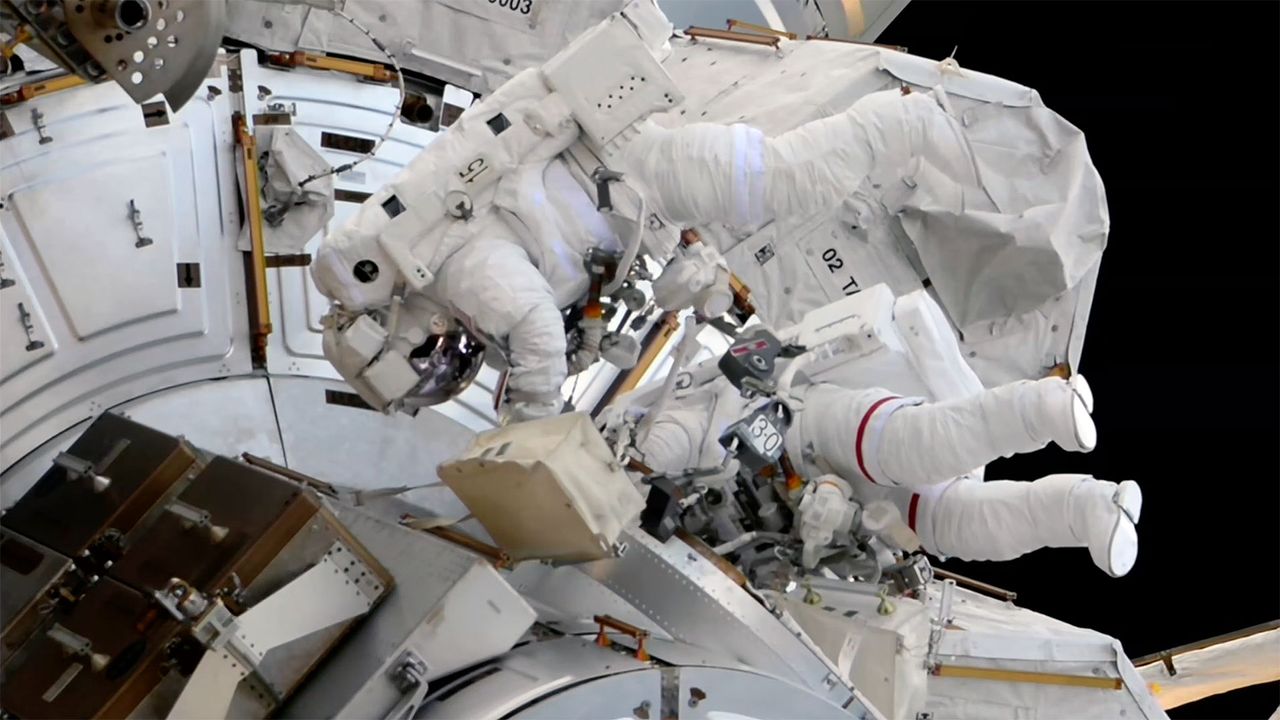
NASA astronaut Jessica Meir and European Space Agency astronaut Sophie Adenot completed the sixth all-female spacewalk in history on Tuesday, September 1, spending 6 hours and 49 minutes outside the International Space Station. The pair replaced a camera system and a docking mechanism during their excursion into the vacuum of space.
The spacewalk marks another milestone in the growing participation of women in extravehicular activity, or EVA. Since the first all-female spacewalk in October 2019, when NASA astronauts Christina Koch and Jessica Meir performed maintenance work on the station, these missions have become increasingly routine. The September 1 outing represents the continuation of a trend toward gender parity in one of spaceflight's most demanding and dangerous tasks.
Meir brings substantial experience to such operations. She previously conducted seven spacewalks, including that landmark 2019 excursion. Adenot, representing ESA, participates in the ongoing international collaboration that defines modern space exploration. The ISS itself operates as a partnership between NASA, ESA, Roscosmos, and other space agencies, requiring crews to work across organizational boundaries and national borders.
The replaced camera and docking aid serve essential functions for station operations. The camera system supports both routine monitoring and documentation of the exterior environment, while the docking mechanism facilitates safe arrival and departure of visiting spacecraft, including commercial cargo vehicles and crew rotation missions. Replacing these components requires precision work in extreme conditions. Spacewalkers face radiation exposure, temperature swings between sunlight and shadow, and the constant awareness that their suits represent the only barrier between them and the vacuum of space.
ISS camera systems undergo regular maintenance and replacement as part of the station's lifecycle management. These cameras provide critical views for operations, external inspections, and documentation of experiment performance. The docking aids fall under similar maintenance protocols, ensuring that the station's berthing ports remain fully operational for the steady stream of visiting vehicles that supply crew and cargo.
The timing of this spacewalk fits within NASA's broader operational schedule for the orbiting laboratory. As the ISS approaches the final years of its planned operational life, with potential extension discussions ongoing, maintaining its critical systems remains a priority. Each spacewalk tests the skills of the crew and validates the functionality of equipment and procedures.
The all-female spacewalk team composition reflects demographic shifts within astronaut ranks. NASA and ESA both maintain competitive astronaut selection programs that emphasize merit-based recruitment. The increasing visibility of women performing complex technical operations outside the station normalizes their participation in roles that require years of training and demonstrated expertise.
Meir and Adenot's operation on September 1 advanced the station's maintenance schedule while adding another chapter to the expanding history of women in spacewalking. The success of such missions demonstrates that technical capability in space exploration transcends gender, and that international cooperation produces capable crews ready to tackle the demands of orbital work.