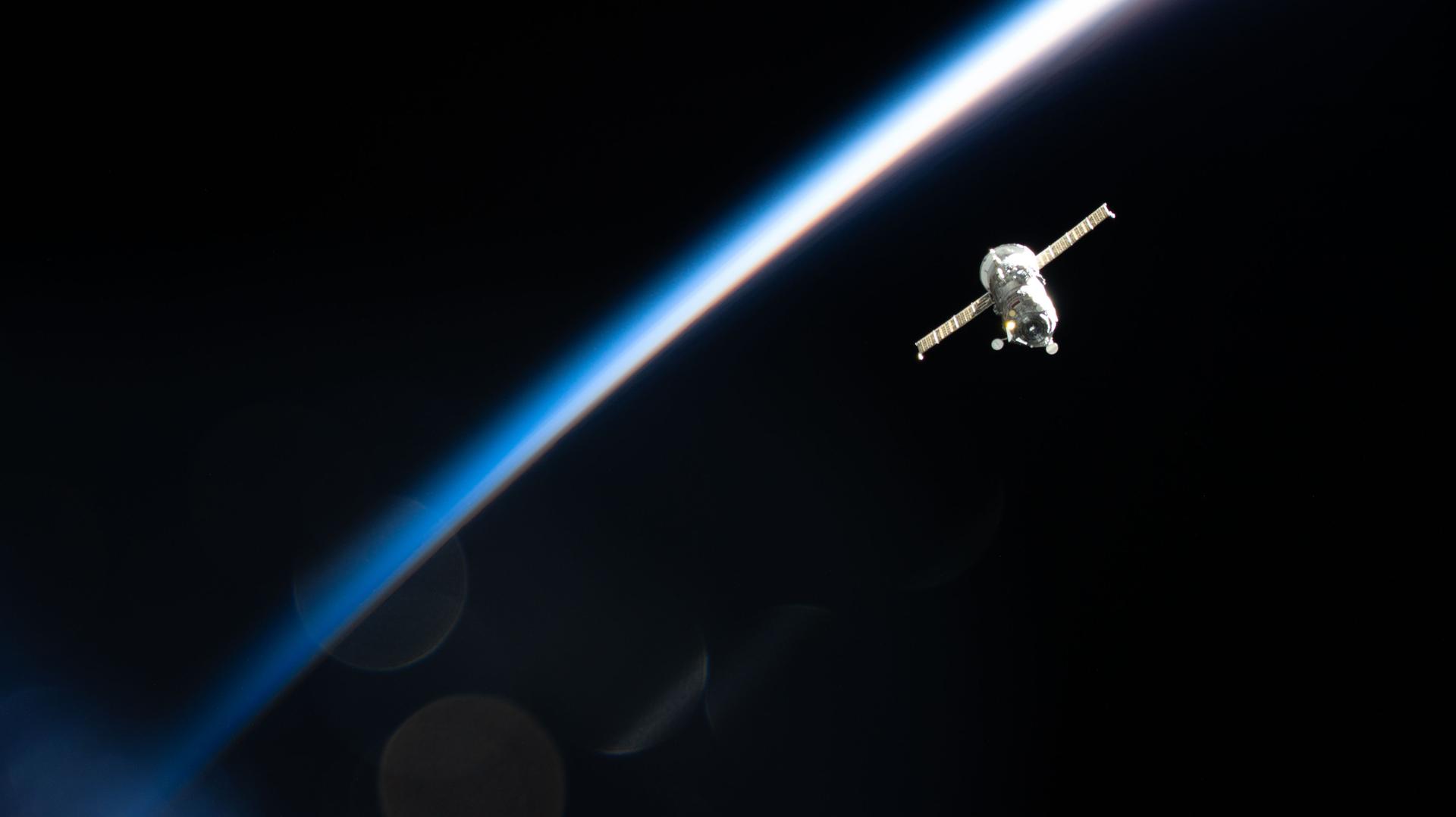
Roscosmos prepares to launch Progress 96, an unpiloted cargo resupply mission to the International Space Station. The spacecraft carries approximately three tons of food, fuel, and supplies for the six-person crew. Launch occurs Wednesday, September 9, at 12:15 p.m. EDT from the Baikonur Cosmodrome in Kazakhstan.
NASA will provide live coverage of both the launch and the subsequent docking sequence. This follows the established pattern of joint U.S.-Russian operations aboard the ISS, where Progress spacecraft deliver critical resources on regular intervals. The cargo vehicle operates independently, with ground controllers managing the rendezvous and docking procedures once the spacecraft achieves orbit.
Progress 96 continues a resupply chain that sustains continuous human habitation aboard the orbital outpost. The ISS orbits at approximately 17,500 miles per hour, requiring precision timing and navigation for cargo vehicles to dock successfully. Roscosmos operates the Progress line of spacecraft, which have logged hundreds of successful missions since their introduction in 1978. The design remains proven and reliable, though Russia has progressively upgraded systems across the fleet.
The spacecraft performs a critical function in station operations. Crew members rely on regular Progress deliveries for drinking water, oxygen generation supplies, scientific equipment, spare parts, and fuel for reboost maneuvers that maintain the ISS at proper orbital altitude. Without continuous resupply missions, the station cannot sustain long-duration human presence. Multiple spacecraft from different nations service the ISS, including SpaceX's Dragon capsule, Northrop Grumman's Cygnus vehicle, and Japan's HTV spacecraft. Roscosmos typically launches three to four Progress missions annually as the primary Russian cargo vehicle.
The docking sequence represents the most technically demanding portion of the mission. After launch, Progress 96 will execute several orbital burns to match the ISS trajectory. Ground controllers employ a phased approach, initially placing the spacecraft in a lower orbit before progressively raising its altitude across multiple orbits. This deliberate approach allows for contingency procedures if any systems malfunction during ascent or early orbital operations.
Once the spacecraft reaches the correct orbital plane, it will enter the ISS proximity operations zone. Russian systems guide the final approach, with automated rendezvous systems handling the terminal phase. Mission controllers monitor telemetry continuously throughout this sequence. The spacecraft docks to one of several available ports on the Russian segment of the station, typically the Pirs module or Poisk module, depending on current ISS configuration and crew scheduling requirements.
Upon docking, station residents will begin the multi-week process of unloading cargo and preparing garbage and obsolete equipment for return. Progress spacecraft burn up in Earth's atmosphere at mission end, destroying waste and preventing orbital debris accumulation.
This mission demonstrates the sustained cooperation between NASA and Roscosmos despite geopolitical tensions. The ISS remains a shared resource where U.S., Russian, European, Japanese, and Canadian personnel work collaboratively. Resupply operations form the backbone of this partnership, keeping the orbital laboratory operational and enabling the scientific research conducted daily aboard the station.