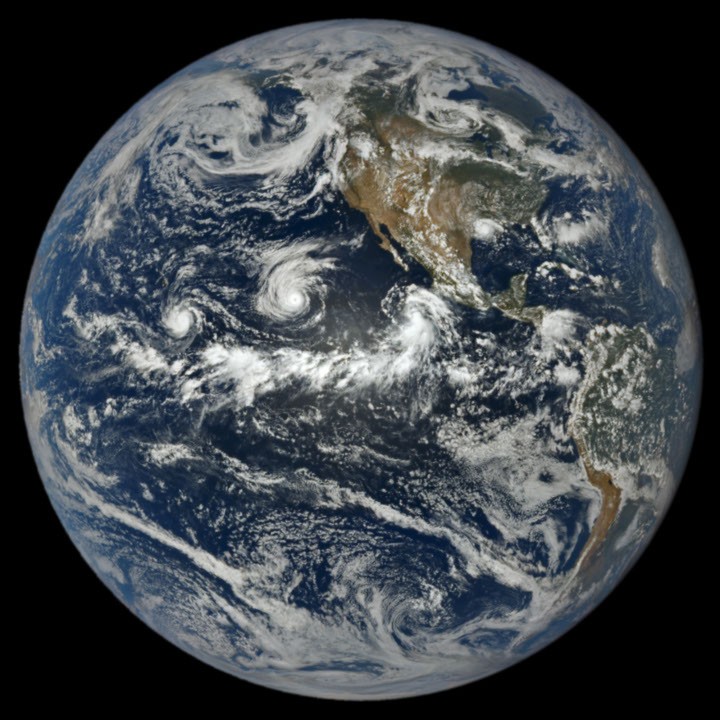
# Three Tropical Cyclones Churn Across the Pacific as Atlantic Remains Calm
NASA satellites detected an unusual concentration of tropical cyclones spinning simultaneously across the Pacific Ocean, a meteorological event that underscores the complex interplay of ocean temperatures, atmospheric pressure systems, and seasonal weather patterns that govern storm formation in Earth's tropical regions.
The trio of storms emerged during a period when the Atlantic basin remained conspicuously inactive, highlighting how cyclone activity distributes unevenly across Earth's oceans. This asymmetry reflects the distinct environmental conditions that prevail in each basin at any given moment. The Pacific's warmer sea surface temperatures and favorable wind shear patterns created the necessary ingredients for multiple cyclones to develop and persist simultaneously, while Atlantic conditions suppressed cyclogenesis.
NASA's Earth observation satellites, including instruments aboard the Aqua, Terra, and GOES satellites, captured detailed thermal and visible imagery of all three systems as they evolved. These satellites carry radiometers and spectrometers that detect sea surface temperature, cloud-top altitude, and atmospheric moisture content with unprecedented resolution. Such real-time data feeds directly into operational forecasting centers operated by the National Weather Service and the Central Pacific Hurricane Center, enabling meteorologists to track storm intensification and predict landfall scenarios with greater accuracy than satellite observations alone would allow.
Tropical cyclones serve as nature's heat engines, converting the thermal energy stored in warm ocean waters into kinetic energy expressed through powerful winds and heavy precipitation. When sea surface temperatures exceed 26.5 degrees Celsius and upper-level winds remain light, conditions favor cyclone development. The Pacific's warm pool, particularly the western section near the Philippines and Southeast Asia, routinely spawns some of Earth's most intense tropical cyclones. The emergence of three systems in a single basin reflects the vast energy reservoir that tropical oceans represent during peak cyclone season.
From a climate perspective, the distribution of tropical cyclones across ocean basins provides meteorologists with insights into broader atmospheric circulation patterns and ocean dynamics. Long-term changes in cyclone frequency, intensity, and seasonal timing serve as indicators of climate shifts. Scientists monitor these patterns to understand how warming ocean temperatures and changing wind patterns influence storm behavior under altered climate conditions.
The contrast between Pacific activity and Atlantic quiescence also demonstrates why cyclone forecasters must maintain vigilance across multiple regions. While the Atlantic remained quiet during this particular period, such calm phases are temporary. Seasonal transitions and the arrival of favorable environmental conditions can rapidly shift the balance, transforming a quiet basin into an active one within weeks.
NASA's continuous monitoring of tropical cyclones operates as both an immediate forecasting tool and a long-term climate archive. Each satellite image adds to a comprehensive database spanning decades, allowing researchers to identify trends, validate climate models, and refine predictions about future cyclone behavior. This observational infrastructure remains essential for protecting coastal communities and understanding how Earth's weather systems respond to ongoing environmental change.