Meteorite dust holds a record of magnetic conditions in the solar nebula 4.6 billion years ago, researchers have discovered. Analysis of pristine grains trapped inside ancient rocks reveals how the sun's birth unfolded through the lens of planetary magnetism.
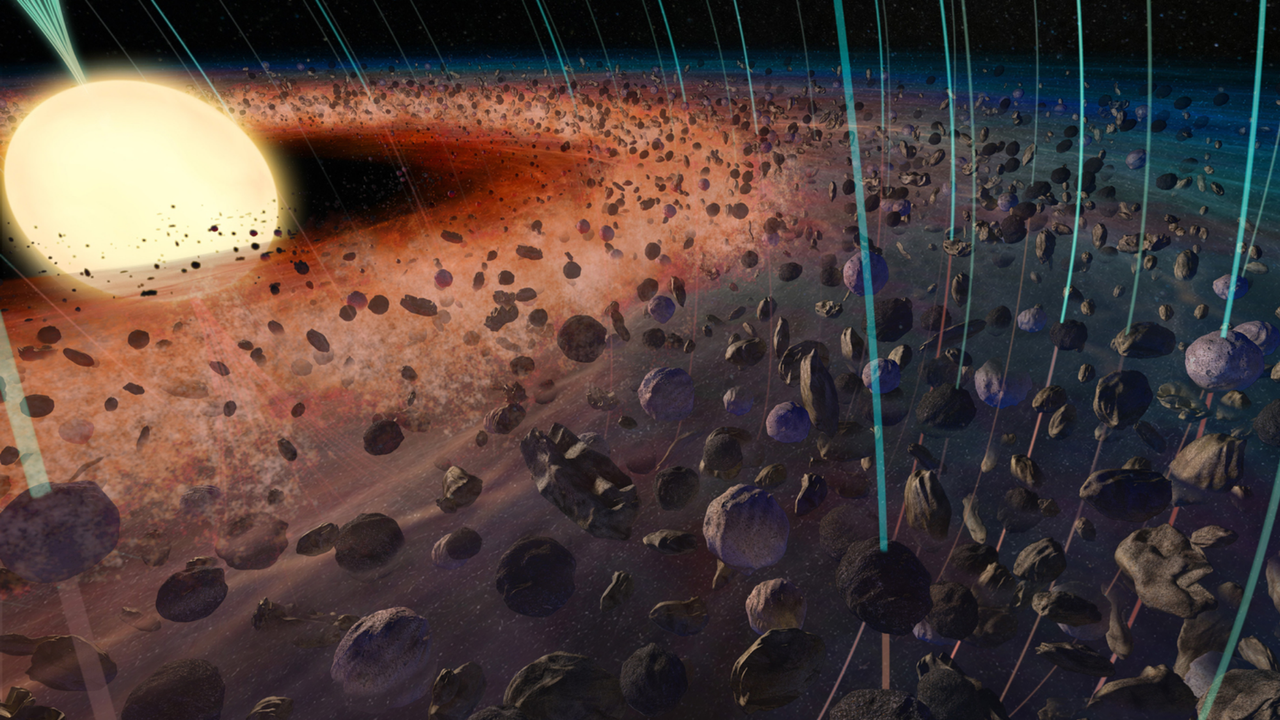
The study examined presolar grains, minerals that predate the sun itself. These particles formed in stellar environments billions of years before our solar system coalesced. When trapped inside meteorites that fell to Earth, they preserved a snapshot of the early solar nebula, the disk of gas and dust from which planets formed.
Scientists found that magnetic fields in the young solar nebula were far stronger than previously thought. The strength of these fields shaped how dust clumped together into larger bodies, fundamentally determining whether planetesimals could form. Magnetism acts as an invisible hand, exerting forces on charged dust particles and influencing their orbital dynamics.
The research team measured magnetic properties encoded in the grain structure itself. Certain minerals orient themselves in response to surrounding magnetic fields. Over millions of years, these orientations persist, creating a record readable by modern instruments. The technique bypasses the need for direct observation of an event that occurred before Earth existed.
This discovery refines models of planetary formation. Stronger magnetic fields in the early solar system would have accelerated dust aggregation into meter-sized objects called planetesimals. These bodies then collided and merged into planetary embryos, eventually becoming Mercury, Venus, Earth, and Mars. The strength and configuration of these ancient fields therefore directly influenced where planets formed and their eventual sizes.
The findings also carry implications for exoplanet research. Astronomers now detect hundreds of planetary systems orbiting distant stars. Understanding how magnetism shaped our own system's architecture provides a framework for interpreting what happens around other suns. Different stellar systems may produce planets at different rates depending on their magnetic field geometry during the protoplanetary disk phase.
Meteorites themselves represent a rare scientific resource. Samples like the Allende meteorite, which fell in Mexico in 1969, contain material virtually unchanged since the solar system's birth. NASA and other space agencies have prioritized collecting pristine meteorites from Antarctica and other remote locations, where weathering remains minimal and samples remain identifiable for decades.
The research underscores why sample return missions matter for planetary science. NASA's Perseverance rover collected Martian rocks designed for eventual return to Earth laboratories. JAXA's Hayabusa2 and NASA's OSIRIS-REx missions brought back samples from asteroids Ryugu and Bennu, respectively. These missions seek to answer similar questions about early solar system conditions by studying material from different objects across different timescales.
The magnetic field measurements from ancient dust grains add another layer to the story of planetary birth. The sun formed from a collapsing cloud of gas rich in heavier elements from prior stellar generations. As this cloud contracted and heated, magnetic fields intensified. These fields then regulated the turbulent dance of dust and gas that ultimately assembled into our planetary system. The dust itself became the messenger, encoding information that persists in laboratories today.