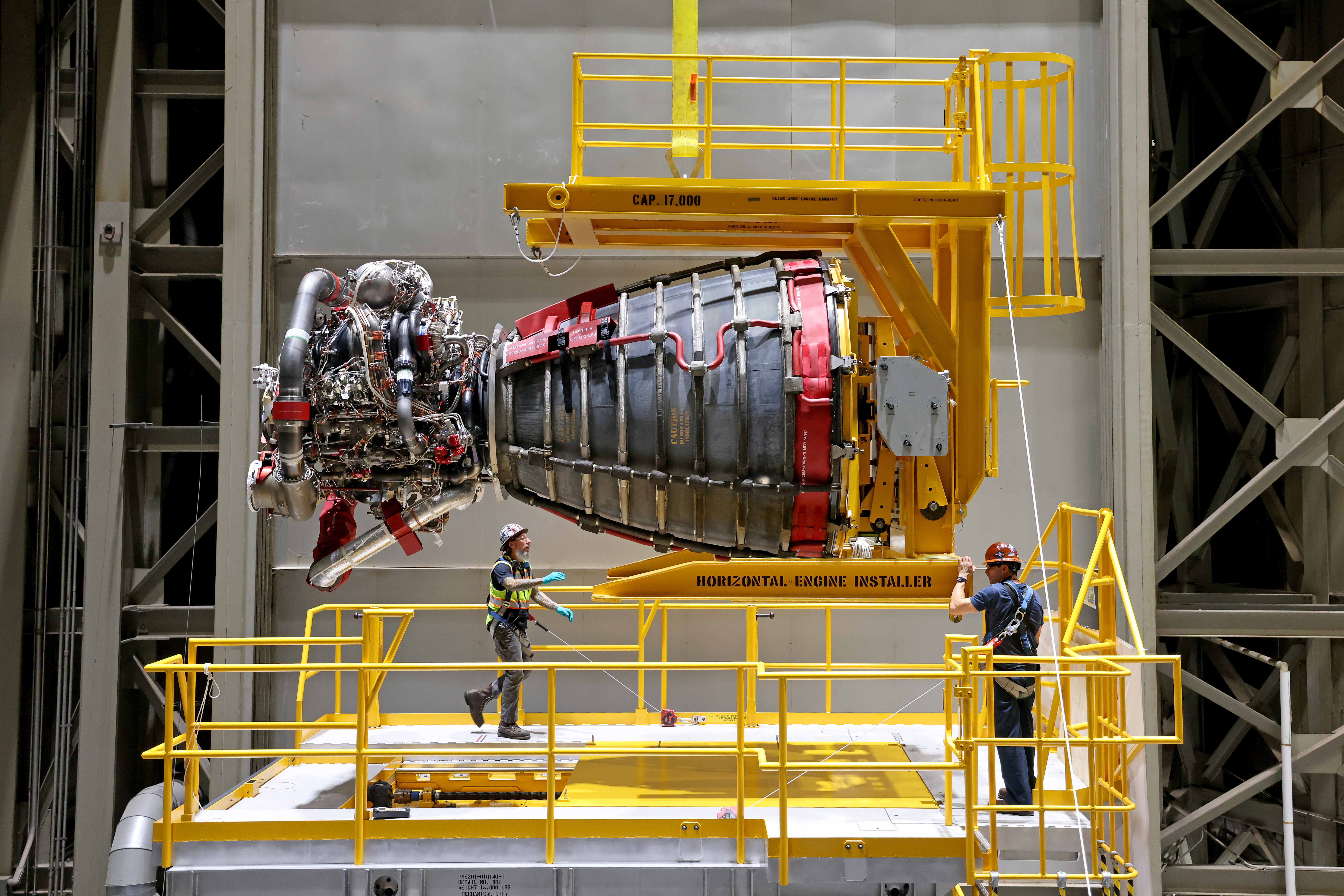
NASA is hosting a specialized virtual webinar on October 2 designed to make the Artemis program accessible to blind and low-vision audiences. The two-hour session, titled "The RS-25 Engine and the Future of Artemis Missions: An Accessible Webinar for the Blind and Low-Vision Community," launches at 2 p.m. and centers on the engine that powers NASA's Space Launch System rocket.
The RS-25 engine represents a critical technology for Artemis, NASA's program to return humans to the lunar surface and establish sustainable exploration infrastructure. These engines, five of which power the core stage of the Space Launch System, generate 418,000 pounds of thrust each and operate at temperatures that exceed 6,000 degrees Fahrenheit. The engine technology traces its ancestry to the Space Shuttle program, where RS-25s (then called Space Shuttle Main Engines) proved their reliability across 135 missions spanning three decades.
NASA's decision to tailor this webinar specifically for blind and low-vision participants reflects a broader commitment to inclusive science communication. Rather than retrofitting standard presentations with accessibility features, the agency designed this event from the ground up with accessibility as the core consideration. This approach ensures that descriptions of the RS-25's complex engineering, the Artemis mission architecture, and the future of human spaceflight reach audiences who might otherwise encounter barriers to engagement with NASA's programs.
The webinar content will explore how the RS-25 engine functions within the Space Launch System architecture and how these propulsion systems enable Artemis missions. The Space Launch System represents the most powerful rocket NASA has built since the Saturn V of the Apollo era. It carries the Orion spacecraft, which will transport astronauts to lunar orbit and beyond. Understanding the engines that make this journey possible connects directly to understanding NASA's exploration roadmap.
Artemis missions build toward multiple objectives. The initial crewed Artemis II mission will conduct a lunar flyby with astronauts aboard Orion, testing the spacecraft's systems in the deep space environment. Artemis III aims to land humans near the lunar south pole, where permanently shadowed craters hold water ice and represent scientifically rich exploration targets. Subsequent missions will expand the human presence on the Moon and prepare for eventual missions to Mars.
The RS-25 engine itself represents decades of engineering refinement. NASA began producing new RS-25 engines specifically for the Space Launch System, building on heritage designs while incorporating upgrades for the increased demands of heavy-lift spaceflight. Each engine undergoes rigorous testing at NASA's Stennis Space Center in Mississippi before integration into flight hardware.
Hosting this webinar acknowledges that scientific literacy and space exploration enthusiasm span all communities, regardless of vision ability. By providing detailed, descriptive information about Artemis hardware and mission plans in formats optimized for blind and low-vision participants, NASA expands who can engage meaningfully with its exploration programs. The session is open to the general public, allowing anyone interested in RS-25 engine technology and Artemis mission architecture to register and participate.