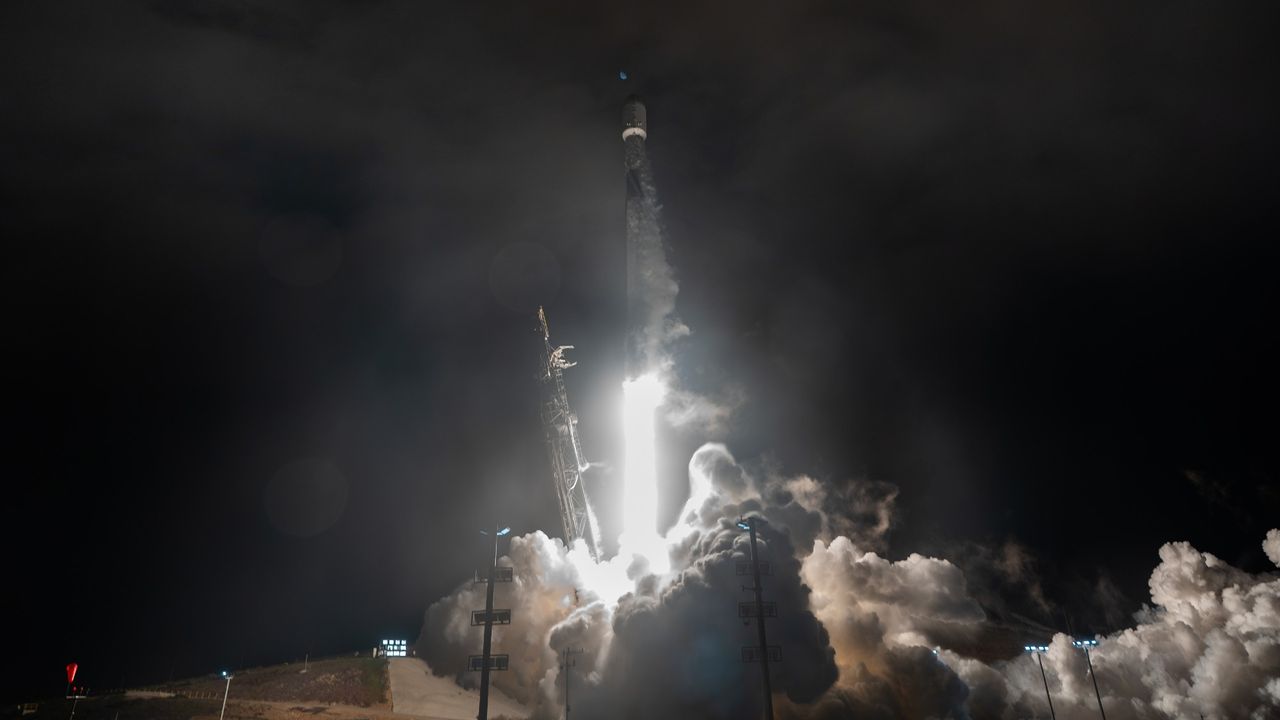
SpaceX launched 27 Starlink internet satellites to orbit on Monday from Vandenberg Space Force Base in California, marking the 35th flight for the Falcon 9 rocket's first stage booster. The launch underscores SpaceX's accelerating cadence of orbital missions and the company's strategy of maximizing hardware reusability to drive down launch costs.
The first stage booster landed successfully after release, continuing SpaceX's track record of routine booster recovery operations. This particular booster has now completed 35 orbital missions, a milestone reflecting the engineering maturity of the Falcon 9 design. SpaceX has pushed individual boosters to fly dozens of times, with some now exceeding 20 launches and several approaching 30. This operational tempo remains unmatched in the commercial launch industry.
Starlink, SpaceX's constellation of low-Earth orbit satellites, now numbers over 5,000 operational spacecraft in orbit. Each launch batch of 27 satellites represents incremental progress toward SpaceX's goal of a global broadband network accessible anywhere on Earth. The company currently operates the constellation to provide internet service in rural areas and regions with limited terrestrial infrastructure. Multiple Starlink satellites launched on this mission will eventually deorbit and burn up in Earth's atmosphere after their operational lifespan of approximately five to seven years.
The September 2 launch from Vandenberg marks continued commercial activity at the California Space Force installation, which SpaceX uses alongside its primary launch facility at Kennedy Space Center in Florida. Vandenberg's position on California's coast offers advantageous polar and sun-synchronous orbital trajectories that complement SpaceX's operations at Kennedy.
The 35-flight achievement for this particular booster reflects SpaceX's emphasis on flight-proven hardware. The company now conducts minimal refurbishment between flights for many boosters, reducing turnaround time from months to weeks. This operational efficiency translates directly into launch availability and cost structure that competitors have struggled to match.
SpaceX continues to develop the Falcon 9's successor, the Starship super-heavy launch system. Starship aims to achieve even greater reusability, with both the first-stage Super Heavy booster and the second-stage Ship vehicle designed for rapid reuse. However, Falcon 9 remains the backbone of SpaceX's commercial operations, supporting national security launches for the U.S. Space Force, NASA cargo resupply missions to the International Space Station, and commercial satellite deployments alongside the Starlink constellation build-out.
The Starlink constellation serves dual purposes for SpaceX. Public internet service generates revenue, while the network itself provides data and connectivity that could support future space operations. Some launches include additional payloads beyond Starlink satellites, allowing SpaceX to optimize launch manifests across multiple customers.
SpaceX currently maintains launch cadence of multiple missions per month from its ground facilities. This September mission represents routine operational activity within SpaceX's broader portfolio of national security launches, space station resupply missions, and commercial satellite deployments. The company has transformed launch frequency from an exceptional achievement to standard procedure, fundamentally altering the economics of spaceflight and orbital infrastructure deployment.