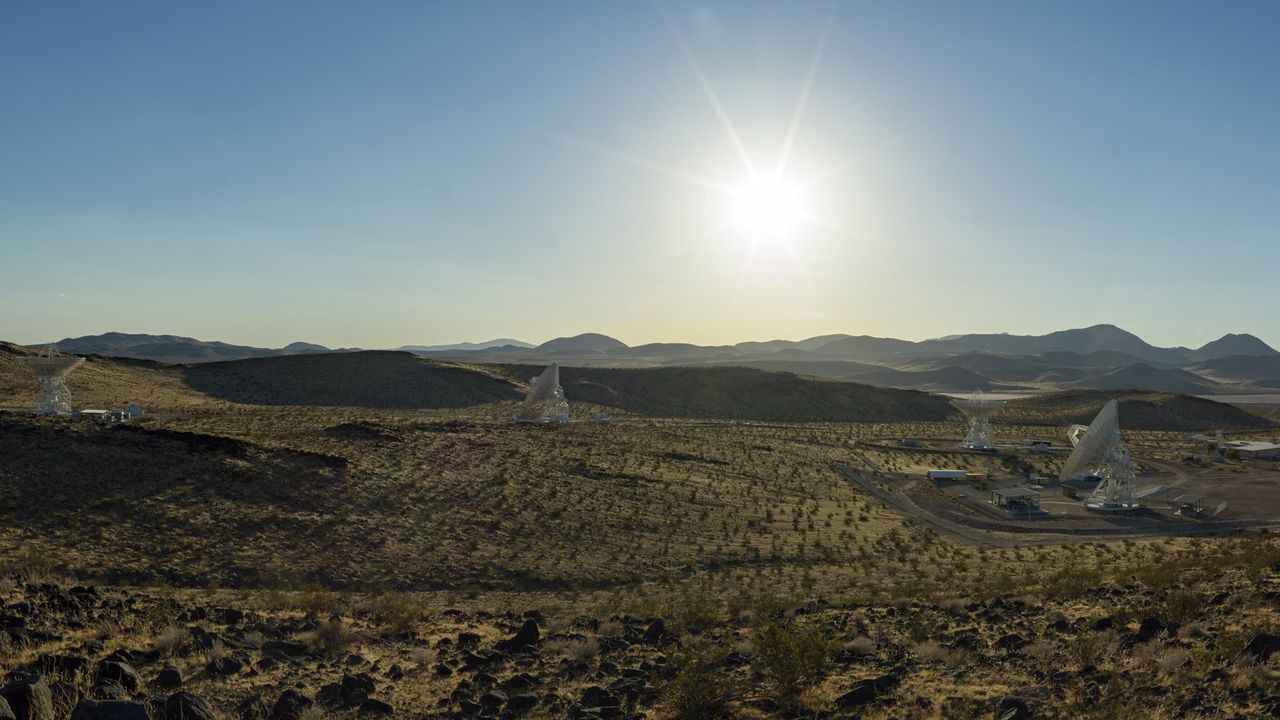
NASA has begun construction on a massive new antenna in the California desert to expand its Deep Space Network, the agency's critical infrastructure for communicating with spacecraft across the solar system and beyond. The new dish will dramatically increase communications capacity at a time when multiple ambitious missions compete for access to a limited resource.
The Deep Space Network operates three facilities spaced roughly 120 degrees apart around Earth. Located in Goldstone, California; Madrid, Spain; and Canberra, Australia, these stations maintain contact with missions including the Voyager probes, the Mars rovers, the James Webb Space Telescope, and numerous others currently in operation or en route to distant destinations. As more spacecraft launch, the network has become increasingly congested. NASA engineers must ration communication windows, prioritize which spacecraft get air time on which days, and coordinate globally to ensure no mission loses contact with Earth.
The Artemis program drives much of this demand. NASA's lunar exploration initiative requires constant communication during missions to the Moon and back. Artemis I flew without crew but maintained intensive contact protocols to test all systems. Artemis II will carry astronauts around the Moon, and Artemis III aims to land humans on the lunar surface. Each mission consumes thousands of hours of Deep Space Network time. Simultaneously, robotic rovers and orbital spacecraft operating on Mars, Jupiter, Saturn, and other destinations require continuous data transmission and command uplinks.
The new antenna in California will operate at higher frequencies than many existing dishes, allowing it to transmit and receive more data in parallel with other communications. This technological advancement addresses both capacity and bandwidth limitations that currently throttle network performance. Engineers can now process multiple spacecraft signals simultaneously rather than switching between them sequentially, reducing latency and allowing for more efficient mission operations.
NASA has invested billions in Deep Space Network infrastructure since its creation in the 1960s during the Apollo program. The network evolved from a handful of sites tracking lunar missions to a globe-spanning system capable of communicating across interplanetary distances measured in billions of miles. Modern spacecraft carry receivers sensitive enough to detect signals from those distant antennas despite the extreme distances and time delays involved.
The California expansion represents the first major antenna addition in decades. The new dish joins existing Goldstone antennas including the iconic 70-meter Deep Space Station 14, one of the most recognizable radio telescopes in the world. Construction timelines will determine when the new antenna enters operational service, but NASA has prioritized the project given launch schedules for upcoming missions.
Beyond Artemis, the Deep Space Network supports science missions to the outer planets and interstellar space. NASA's Juno spacecraft orbits Jupiter. The New Horizons probe continues transmitting data from the Kuiper Belt. The network remains humanity's only means of communicating with these distant ambassadors of exploration. Without adequate capacity, missions face restricted operations or incomplete data transmission.
The California expansion underscores a reality of modern space exploration: infrastructure must keep pace with ambition. As NASA and international partners launch more missions farther from Earth, the demand for reliable deep-space communications only intensifies.