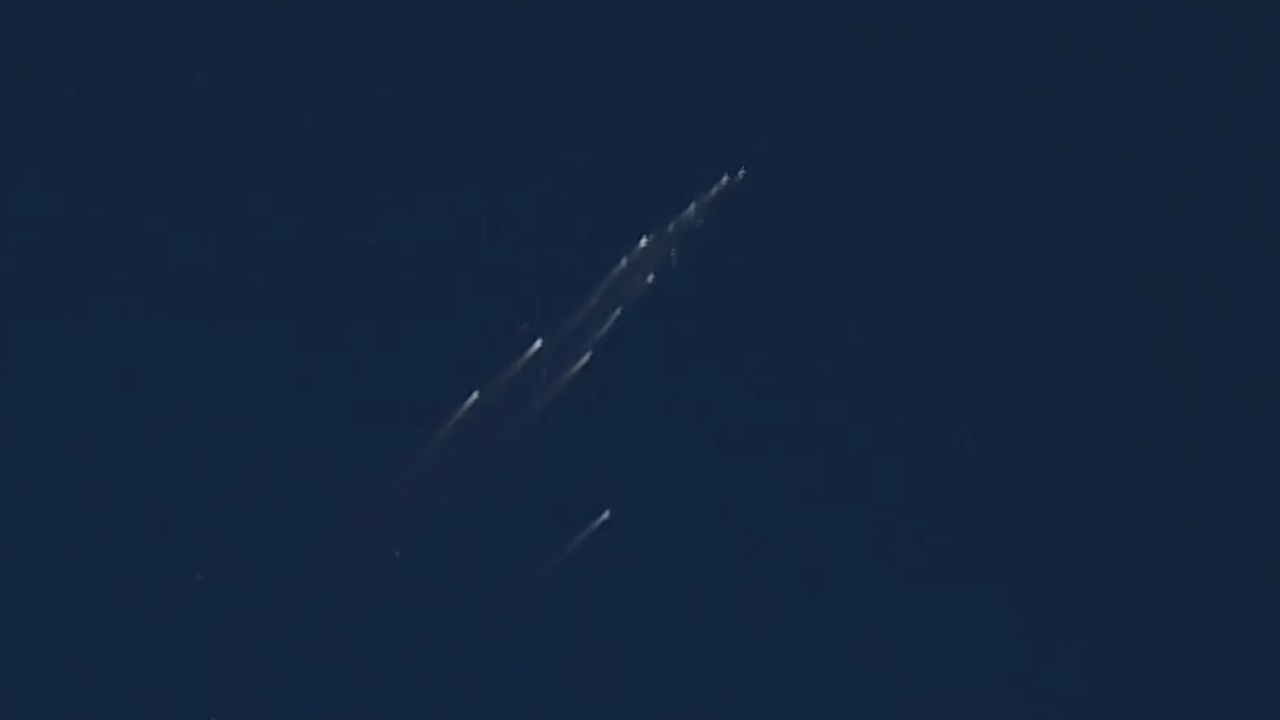
Two decommissioned satellites fell from orbit and burned up in Earth's atmosphere last month, and an international team of scientists intercepted their reentry by flying a modified private jet through the predicted debris path. The mission captured direct measurements of pollutants released when spacecraft disintegrate during atmospheric reentry, providing the first quantitative data on a growing environmental concern tied to escalating orbital debris.
The research team deployed a specially equipped Learjet that carried instruments designed to sample gases and particles released during satellite breakup. Scientists flew the aircraft directly beneath the reentry corridor, collecting real-time atmospheric samples as the satellites fragmented thousands of meters overhead. This direct observation approach yielded pollution data that ground-based instruments and computer models alone cannot capture.
The study addresses a widening gap in space sustainability knowledge. Hundreds of decommissioned satellites, spent rocket stages, and collision debris populate Earth's orbital zones. As orbital traffic intensifies—driven by mega-constellations like SpaceX's Starlink, Amazon's Project Kuiper, and Chinese systems—the number of uncontrolled reentering objects will multiply dramatically. Each reentry injects aluminum oxide particles, nitrogen oxides, and other chemical compounds into the upper atmosphere, yet scientists have lacked direct measurements of these emissions.
Most satellite reentry predictions concentrate on ground-impact risks. Operators calculate debris zones where fragments might survive ablation and strike Earth's surface. But the atmospheric chemistry aspect remains largely unmapped. Satellites and rocket stages carry hundreds to thousands of kilograms of material. Aluminum alloy structures dominate, along with fuel residues, batteries, and solar panels. When friction heats these materials to extreme temperatures during reentry, ablation converts them into aerosol particles and reactive molecules. These emissions potentially affect ozone chemistry, aerosol properties, and long-term atmospheric composition.
The airborne sampling mission employed a high-altitude research platform capable of reaching the upper troposphere and lower stratosphere, altitudes where most satellite reentry pollution concentrates. Instruments aboard measured particle size distributions, elemental composition, and chemical species in real time. Ground stations provided complementary data, creating a detailed profile of how different satellite components break apart and transform chemically during descent.
This work reflects growing international concern about space sustainability. The European Space Agency, NASA, and other space agencies now mandate deorbiting procedures for new satellites and spent stages. Operators must plan controlled, destructive reenters rather than leaving objects in orbit indefinitely. Yet the transition to active deorbiting still leaves decades of existing debris, and even controlled reenters produce atmospheric emissions.
Future satellite mega-constellations pose particular challenges. Tens of thousands of small satellites will eventually require deorbiting. Their collective atmospheric impact during mass-casualty reentry events remains unknown. Understanding pollutant release mechanisms helps policymakers weigh regulatory trade-offs and refine sustainability standards.
The research team's direct atmospheric sampling represents a proof-of-concept for monitoring reentry pollution. Such missions could establish baseline measurements for different satellite classes, propellant types, and structural materials. This data feeds into atmospheric chemistry models and environmental impact assessments. As orbital congestion worsens, characterizing the cost of debris reenters in chemical and environmental terms becomes essential to sustainable spaceflight operations.