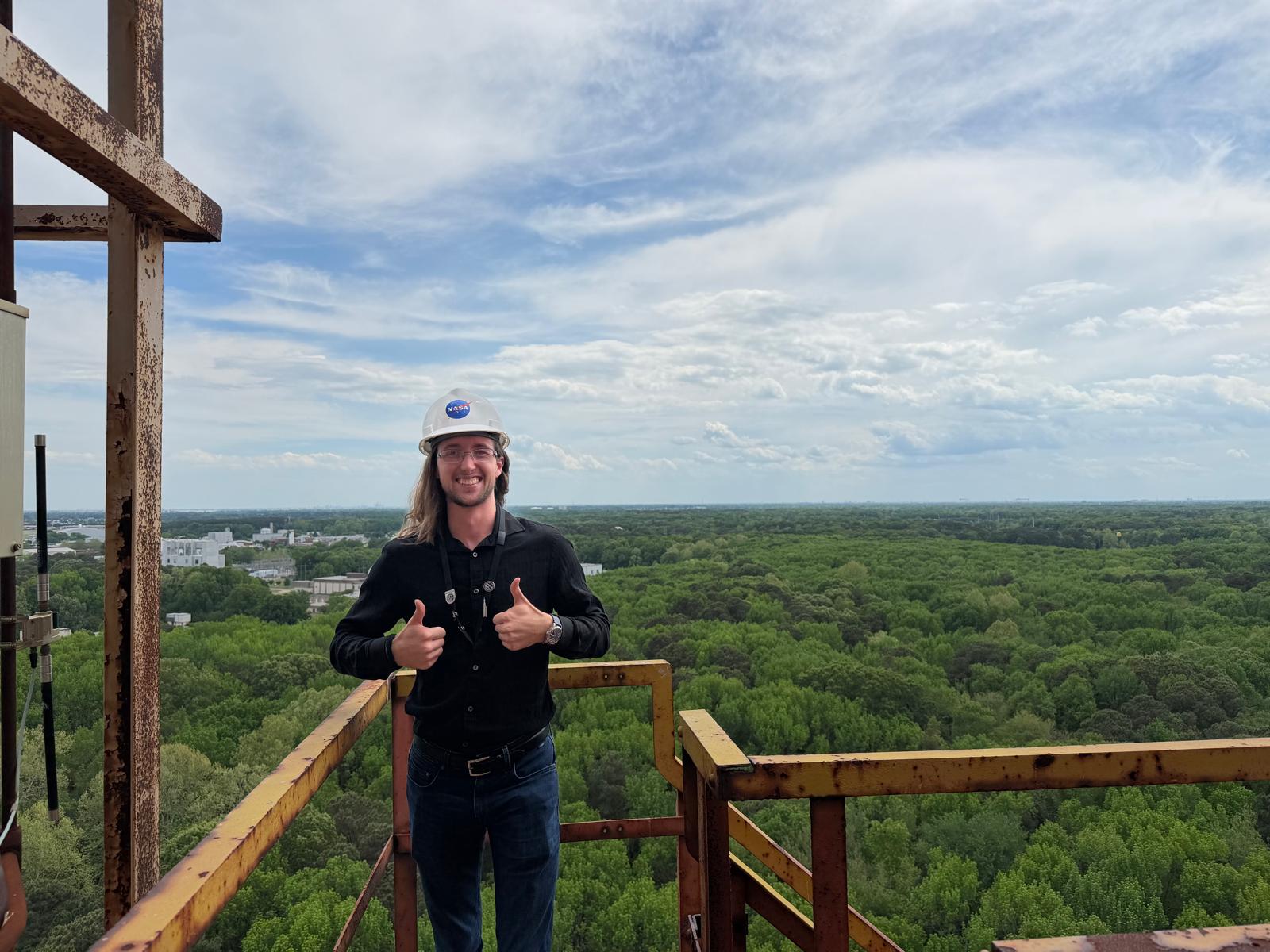
# From the Corps to the Cosmos: How Jaden Caradine Built a Path to NASA Engineering
Jaden Caradine's childhood dream of becoming an engineer took shape at eight years old, but the trajectory from that spark to a NASA internship at Langley Research Center followed an unconventional route. Caradine's journey reveals how military service, deliberate career planning, and institutional support combine to funnel talent into America's space program.
Caradine served in the U.S. Marine Corps before pursuing formal aerospace education. This background positioned him distinctly among engineering candidates. Military service instilled discipline and problem-solving capabilities that complement rigorous technical training. His enlistment reflected a commitment to national service that later translated into work on NASA's most demanding challenges.
After his military tenure ended, Caradine enrolled at Embry-Riddle Aeronautical University, the premier institution for aviation and aerospace engineering training. Embry-Riddle's curriculum emphasizes hands-on competency and direct pathways to aerospace employers. The university's location in Daytona Beach, Florida, and its partnerships with NASA centers make it a consistent pipeline for mission-critical talent.
NASA's Pathways Program operated the internship that brought Caradine to Langley Research Center in Hampton, Virginia. Langley, established in 1917, functions as NASA's oldest continuous research facility and hosts roughly 3,000 civil service employees and contractors. The center focuses on aeronautics research, atmospheric science, and advanced materials development. Langley's Pathways internships represent competitive federal positions that expose emerging engineers to real space technology development while offering conversion pathways to permanent employment.
The Langley assignment placed Caradine within an institution that has shaped spacecraft design, launch systems, and entry vehicle development for decades. The center contributed essential thermal protection systems to the Space Shuttle program, conducted structural testing for the James Webb Space Telescope, and continues developing technologies for artemis missions to the lunar surface. Interns at Langley work alongside engineers who directly influence NASA's strategic priorities.
Caradine's progression from military service to aerospace engineering education to NASA internship reflects a deliberate model of workforce development. The combination differs from the more common path of direct undergraduate-to-internship tracks, yet it demonstrates how military discipline complements technical mastery. Veterans bring operational thinking and systems-level perspective that enhance engineering teams.
NASA's Pathways Program specifically targets this kind of non-linear career development. The initiative recruits from community colleges, four-year universities, and military backgrounds. Pathways positions offer salary, benefits, and federal employment pathways unavailable in purely commercial internships. Successful completion often leads to conversion to excepted service positions or competitive civil service roles.
Caradine's story connects to broader STEM workforce challenges. The aerospace sector faces sustained talent shortages as experienced engineers retire and emerging aerospace programs at universities compete for enrollment. NASA centers like Langley identify potential early and provide exposure to actual mission work. An internship at Langley differs fundamentally from classroom simulation. Interns access classified briefings, work with flight hardware, and contribute to projects with direct connections to human spaceflight and scientific missions.
The pathway from military service through engineering education to NASA employment remains underutilized. Veterans possess maturity, security clearances, and results-oriented thinking. Institutional support through programs like Pathways removes friction from the transition. Caradine's progression demonstrates that unconventional routes produce capable engineers. His journey from the Marine Corps to Hampton, Virginia, reflects how national security and space exploration leverage talent across multiple backgrounds and institutional contexts.