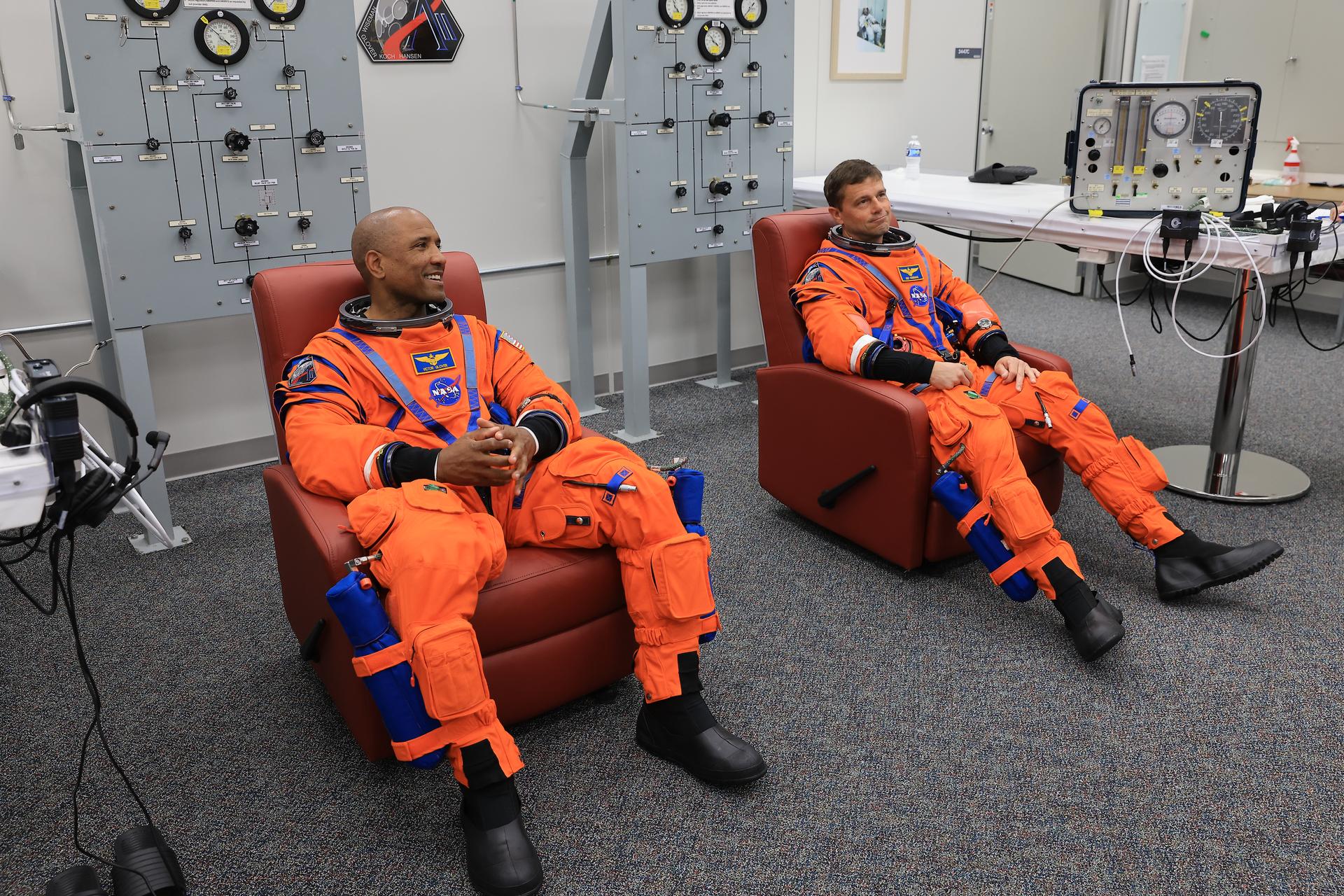
Victor Glover and Reid Wiseman are stepping into emeritus status at NASA's Johnson Space Center this September following their roles in the Artemis II mission. The two astronauts will retain their technical expertise and professional knowledge while transitioning away from active duty assignments.
Emeritus positions at NASA allow veteran astronauts to contribute their decades of experience to the agency in advisory and specialized capacities. Rather than commanding active flights or serving in operational roles, emeritus astronauts typically mentor younger crews, contribute to mission planning, support technical development programs, and participate in long-term strategic initiatives. This structure lets NASA retain institutional knowledge while creating advancement opportunities for the next generation of space explorers.
Glover and Wiseman both logged extensive spaceflight experience before Artemis II. Glover flew four Space Shuttle missions and served as a flight engineer on the International Space Station during Expedition 64/65, accumulating over 10,000 flight hours as a test pilot and astronaut. Wiseman previously commanded two ISS expeditions and flew on multiple Space Shuttle missions, bringing deep expertise in orbital operations and crew leadership.
The Artemis II mission represents a linchpin in NASA's lunar exploration roadmap. Scheduled for late 2025, this crewed flight will send astronauts on a lunar flyby using the Space Launch System rocket and Orion spacecraft, marking humanity's return to lunar space for the first time since the Apollo 17 mission in 1972. The mission validates critical systems and life support equipment before the Artemis III landing campaign sends crews to the lunar south pole. Glover and Wiseman's participation in this historic mission solidifies their place in space exploration history.
The transition to emeritus status reflects NASA's broader organizational strategy. As the agency expands operations across multiple domains—low Earth orbit commercial stations, lunar missions through Artemis, eventual Mars exploration—the astronaut corps requires both active flight crews and senior technical advisors. Emeritus astronauts provide continuity during program transitions and contribute to advanced planning for missions that may launch years into the future.
Johnson Space Center in Houston serves as NASA's mission control hub and primary training facility for astronauts. It houses the expertise required for human spaceflight operations. By formalizing emeritus roles, the center ensures that decades of accumulated knowledge from veteran explorers directly informs the development of next-generation spacecraft and operational protocols.
The move underscores NASA's confidence in both astronauts' future contributions to the agency. Emeritus positions typically involve selective consulting work, technical reviews, and advisory board participation rather than permanent departure. Many emeritus astronauts have gone on to shape NASA policy, contribute to aerospace industry development, or support educational initiatives centered on space exploration.
Glover and Wiseman join a respected lineage of astronauts who transitioned to emeritus roles while maintaining active connections to space programs. Their experiences from Artemis II, the most complex crewed space mission since the Space Shuttle era, position them as invaluable resources for the technical challenges NASA faces as it builds sustainable lunar operations.