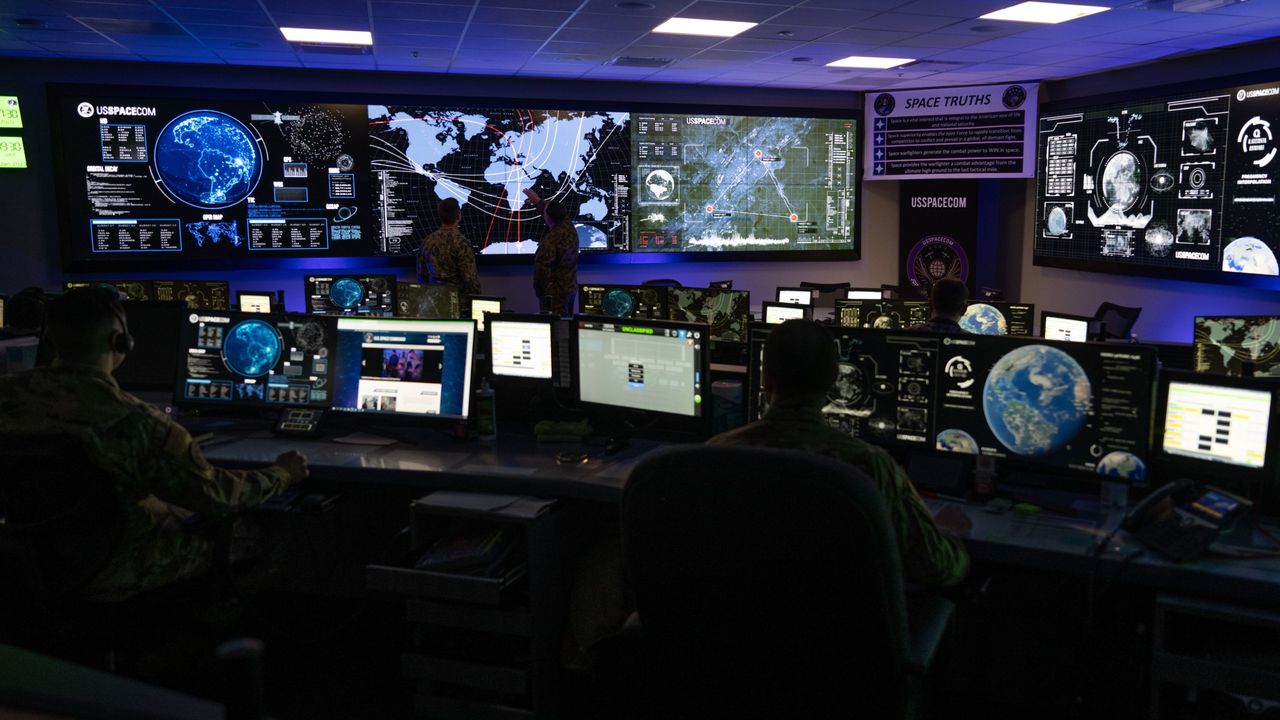
The United States Space Command conducted its inaugural "Apollo Maneuvers" exercise, marking the first time the military has practiced orbital dogfighting through live flight operations. The exercise involved spacecraft executing complex maneuvers in orbit while navigating simulated contested environments, a capability that reflects growing concerns about potential adversarial activity in space.
The drill represents a watershed moment in military space operations. Unlike previous exercises conducted through simulation or tabletop scenarios, Apollo Maneuvers deployed actual spacecraft to test evasive techniques, rapid repositioning, and tactical responses to threats in the orbital domain. Space Command officials view the exercise as essential preparation for a future conflict scenario where orbital assets face direct attack or interference from hostile forces.
The exercise addresses a strategic reality facing U.S. military planners. American military and intelligence operations depend heavily on satellites for communications, GPS navigation, early warning systems, and surveillance. A peer adversary capable of anti-satellite weapons or jamming technology could degrade these assets during a conflict, potentially crippling conventional military operations. Russia and China have both demonstrated anti-satellite capabilities in recent years, intensifying pressure on the Pentagon to develop countermeasures and operational protocols for contested space environments.
Apollo Maneuvers tests whether spacecraft can maneuver quickly enough to evade attack, change orbital patterns to confuse targeting systems, and maintain operational effectiveness under duress. The live-fly format allows military operators to validate procedures, test communication protocols, and refine decision-making processes in actual orbital conditions. Simulation cannot fully replicate the variables and delays inherent to real spaceflight operations.
The exercise name invokes the Apollo program, evoking the era when American astronauts demonstrated precise spacecraft control and maneuvering during lunar missions. Space Command appears to position orbital maneuvering as a core military skill set for the 21st century, comparable to air combat proficiency in previous generations of military operations.
Space Command has accelerated development of space control capabilities over the past several years. The service branch created the Space Force in 2019 as a dedicated military branch focused on space operations, signaling institutional commitment to orbital supremacy. Recent budgets have funded satellite inspection vehicles, orbital refueling platforms, and rapid-launch systems designed to replace damaged assets quickly.
The success of Apollo Maneuvers likely opens a pathway for expanded live-fly exercises. Space Command may conduct additional drills with increasing complexity, involving multiple spacecraft operating simultaneously or testing coordinated responses across different orbital altitudes. The exercise could also accelerate development timelines for operational systems designed to execute these maneuvers during actual contingencies.
International tensions surrounding space operations continue rising. The United Nations and several nations have proposed treaties banning anti-satellite weapons tests, but enforcement mechanisms remain weak and major spacefaring powers have not committed to restrictions. Military space operations remain largely unregulated by international law, creating a strategic domain where rules of engagement remain unclear.
Apollo Maneuvers demonstrates that the U.S. military now treats space as an active warfare domain requiring trained operators, tested procedures, and validated tactics. The shift from simulation to live operations signals confidence in current space systems and determination to maintain operational superiority above Earth's atmosphere.