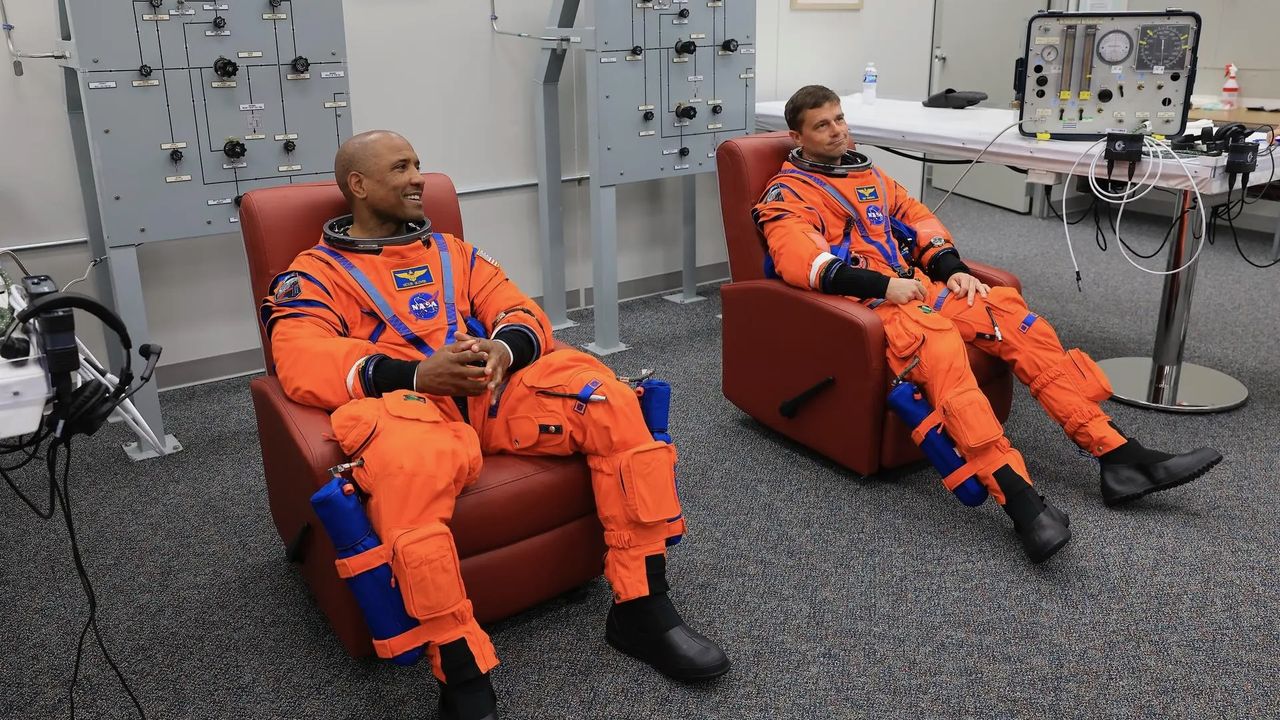
Reid Wiseman and Victor Glover, the commander and pilot of NASA's Artemis II lunar mission, have transitioned to emeritus status at the agency, marking a shift in their career trajectories as they prepare for their April 2026 crewed flight around the Moon.
Wiseman, a veteran of two Space Shuttle missions and two International Space Station expeditions, commands Artemis II alongside pilot Glover, who has logged three ISS expeditions and one Space Shuttle flight. Both astronauts have logged over 1,000 days in space combined. The crew also includes lunar module pilot Jeremy Hansen from the Canadian Space Agency, making him the first non-American to venture to the Moon.
The move to emeritus status reflects a broader evolution within NASA's astronaut corps. This transition typically allows experienced astronauts to pursue specialized roles, consulting work, or external opportunities while maintaining their connection to the agency. For Wiseman and Glover, the timing coincides with the intensive preparation phase for Artemis II, one of the most consequential human spaceflight missions of the decade.
Artemis II represents NASA's return to lunar-orbit crewed operations for the first time since Apollo 17 in 1972. The mission will test the Space Launch System heavy-lift rocket and Orion spacecraft with a crew of four during a 10-day journey that circles the Moon without landing. The flight validates systems and procedures that will support Artemis III, scheduled for 2026 or 2027, which will land astronauts on the lunar south pole region.
The south pole destination carries strategic importance for NASA's long-term lunar exploration goals. Water ice deposits and permanently shadowed craters in that region could support sustained human presence and fuel future deep-space missions to Mars. Artemis III will deploy advanced lunar landers, including technology from commercial providers like Axiom Space and Intuitive Machines.
Wiseman brings extensive experience managing complex space operations. His command of Artemis II positions him at the helm of a mission that will push beyond low Earth orbit in an era when multiple spacefaring nations and commercial entities compete for lunar access. Glover's background in ISS operations and his engineering expertise equip him to manage the technical demands of lunar transit and orbital operations around the Moon.
The emeritus designation allows NASA to structure its astronaut workforce flexibly as demand for crewed spaceflight expands. The agency operates multiple human spaceflight programs simultaneously: the ISS partnership, Commercial Crew Program contracts with SpaceX and Boeing, and now the deep-space Artemis architecture. Emeritus status provides a pathway for senior astronauts to contribute at specialized levels while creating opportunities for newer cadets in the 2021 and 2023 astronaut classes.
Artemis II's April 2026 launch date assumes continued progress on SLS and Orion readiness. The mission will generate data critical for crew safety systems, life support performance in deep space, and radiation exposure measurements that inform Artemis III lunar landing operations. Hansen's presence as the first Canadian lunar-bound astronaut also strengthens international cooperation within NASA's Artemis framework, building on the tradition of international participation established during the Apollo program.