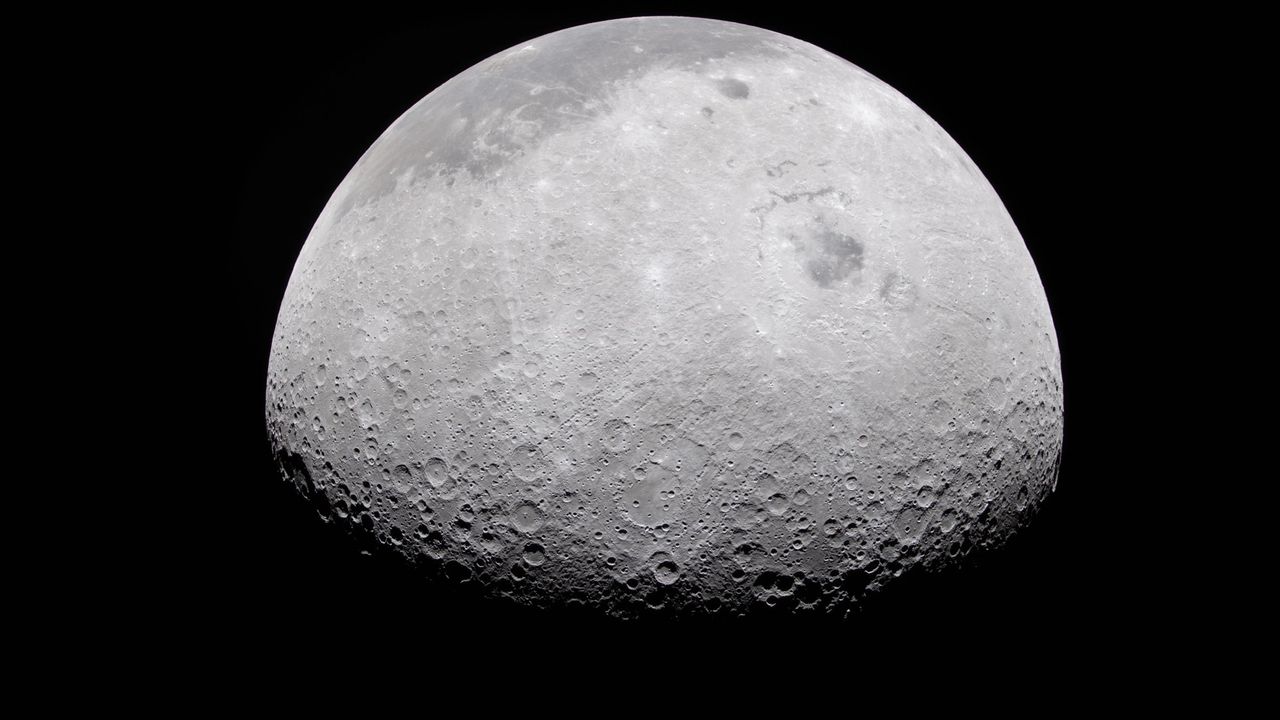
NASA and IBM have jointly developed an artificial intelligence model designed to process the vast archive of lunar data collected across decades of robotic and human exploration. The collaboration targets a fundamental challenge in planetary science: transforming raw observational data into actionable scientific insights.
The partnership leverages IBM's artificial intelligence expertise with NASA's extensive lunar datasets. NASA operates multiple active lunar observation programs, including the Lunar Reconnaissance Orbiter, which has captured detailed imagery of the lunar surface since 2009. The agency also maintains historical records from Apollo missions, Clementine, and numerous other spacecraft. This accumulated data spans imaging, spectroscopy, elevation maps, and thermal measurements. The volume exceeds what traditional analysis methods can efficiently process.
The new AI model automates the identification of lunar features, geological structures, and compositional variations across the moon's surface. Machine learning algorithms trained on validated samples can recognize craters, ridges, volcanic deposits, and mineral concentrations far faster than human analysts reviewing individual datasets. This acceleration matters for mission planning. Lunar Gateway, NASA's planned orbital outpost, requires detailed knowledge of resource distribution and terrain hazards. The Artemis program, which aims to return humans to the moon by 2025, depends on identifying safe landing sites and water ice deposits.
IBM's contribution centers on model architecture and computational infrastructure. The company has developed large-scale AI systems for scientific research, including tools for analyzing medical imaging and climate data. Applying similar frameworks to lunar research creates efficiency gains across NASA's research divisions. Scientists can pose queries about specific lunar regions and receive rapid analyses rather than manually searching archives.
The initiative also addresses data discovery. NASA maintains petabytes of lunar information across different repositories, sensors, and time periods. An integrated AI system helps researchers locate relevant datasets without requiring intimate knowledge of every archival system. This democratizes access to lunar science data and accelerates hypothesis testing.
The collaboration demonstrates how commercial AI expertise complements government space agencies. IBM benefits from association with NASA's prestigious research mission. NASA gains access to cutting-edge machine learning infrastructure without building capabilities entirely in-house. Similar public-private arrangements have shaped the modern space industry, from SpaceX's commercial crew contracts to Blue Origin's lunar lander development.
The timing aligns with expanding lunar priorities. The Artemis program requires unprecedented amounts of environmental data. The Artemis Base Camp concept includes surface operations lasting weeks, demanding detailed knowledge of radiation environments, terrain stability, and water ice accessibility. AI-driven analysis of existing data reduces the need for exploratory missions that consume time and resources.
This AI model also establishes methodology for future planetary exploration. Mars missions, Venus probes, and other planetary programs generate comparable data volumes. Successful lunar applications can be adapted for analyzing Martian geological surveys or Venusian atmospheric data. The framework becomes a reusable scientific tool rather than a one-off project.
The NASA-IBM collaboration enters operation as the agency finalizes Artemis I preparations and evaluates lunar lander proposals from commercial partners. Enhanced data analysis capabilities strengthen NASA's ability to make informed decisions about landing sites, resource extraction points, and habitat locations. The AI system represents infrastructure investment in long-term lunar presence rather than one-time exploration.