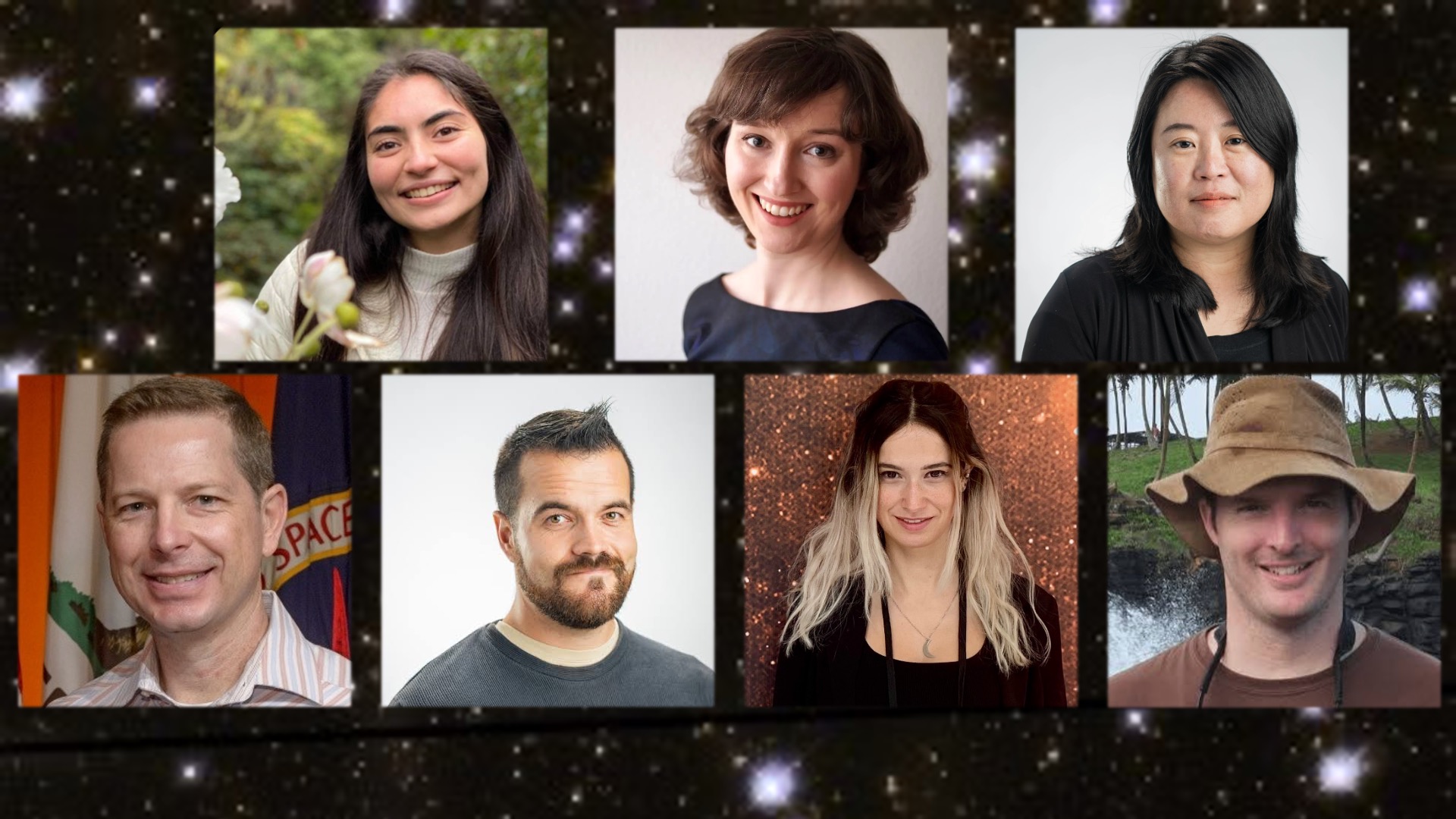
NASA Ames Research Center has recognized seven members of its Science Directorate as September 2026 Stars of the Month, honoring their contributions across multiple research domains critical to space exploration and Earth science.
The honorees include Steve Ormsby, Aphrodite Kostakis, Alejandro Borlaff, Sarah Nickerson, Martina Caussi, Keiko Nomura, and Stephen Broccardo. Their recognition reflects the breadth of work conducted at Ames, one of NASA's ten field centers and a hub for astrobiology, planetary science, and human spaceflight research.
Ormsby earned the Space Biosciences Star designation, recognizing his work in understanding how biological systems respond to spaceflight conditions. Space biosciences research directly informs NASA's long-duration human exploration programs, including missions to the lunar Gateway station and eventual Mars operations. This field examines how microgravity affects human physiology, bone density, muscle function, and immune response. Ormsby's contributions help NASA develop countermeasures that will protect astronauts during the extended missions required for deep space exploration.
Located in Silicon Valley's Moffett Field, NASA Ames serves as a bridge between fundamental research and applied engineering. The center employs over 2,600 civil servants and contractors working on projects ranging from astrobiology and exoplanet research to airborne astronomy and advanced computing systems. The monthly Stars of the Month program highlights individuals whose work embodies what NASA identifies as the core values needed for space exploration: entrepreneurial thinking, technical depth, and genuine collaboration across disciplinary lines.
The center's research priorities align with NASA's broader strategic objectives. Ames houses the SETI Institute office, advancing the search for technosignatures and biosignatures beyond Earth. The center also leads development of computational tools for analyzing data from the James Webb Space Telescope and manages NASA's Astrobiology Institute, which coordinates research on how life emerges, evolves, and might exist elsewhere in the universe.
Recognition programs like this serve multiple functions within federal research organizations. They reinforce institutional values and motivate personnel during extended research cycles where results may take years to materialize. For agencies like NASA, these acknowledgments also underscore the human dimension of space exploration. While rovers traverse Mars and spacecraft transmit data from the outer planets, individual scientists, engineers, and technicians at centers like Ames drive the innovation that makes exploration possible.
The interdisciplinary nature of the honorees' work reflects how modern space science operates. Questions about human health in space require biologists, engineers, physicians, and systems specialists collaborating across traditional departmental boundaries. Understanding exoplanet atmospheres requires astrophysicists, computer scientists, and instrument specialists working in tandem. The recognition of seven individuals across different specialties underscores that space exploration advances through coordinated human effort, not isolated genius.
NASA Ames continues to recruit and develop talent in fields where competition is fierce. Tech companies in Silicon Valley offer researchers substantial salaries and flexibility. Federal research positions demand commitment to long-term national objectives and operate within budgetary constraints. Recognizing outstanding contributions helps retain personnel whose work advances NASA's mission to push the boundaries of human knowledge and capability in space.