# Roman Space Telescope Will Revolutionize Moon Discoveries in Our Solar System
NASA's Nancy Grace Roman Space Telescope, scheduled to launch within the next few years, will fundamentally change how astronomers detect and catalog moons orbiting planets and other bodies throughout the Solar System. The mission promises to uncover far more natural satellites than current ground-based and space-based observatories can identify, fundamentally reshaping our understanding of planetary systems nearby.
Roman represents a technological leap in moon detection capability. The telescope's advanced infrared instruments and wide field of view enable it to spot small, faint moons orbiting distant planets. Current detection methods rely primarily on ground-based observatories and aging space telescopes, which struggle to image small bodies against the glare of much larger host planets. Roman's instruments overcome this limitation through superior contrast capability and sensitivity to infrared radiation.
The discovery potential extends across the entire Solar System. Jupiter harbors at least 95 known moons as of 2024, Saturn has 146, yet astronomers suspect many more orbit these gas giants without detection. Uranus and Neptune remain even less explored. Small bodies, particularly those in outer orbits, remain nearly impossible to spot with current technology. These undiscovered moons likely number in the hundreds.
Understanding moon populations matters for planetary science in multiple ways. Moons shape planetary systems through gravitational interactions. They influence ring structures, orbital stability, and the thermal history of parent bodies. For gas giants, moon inventories provide clues about system formation and evolution. Each new discovery refines models of how Solar System architecture developed 4.5 billion years ago.
Roman also targets other small body populations. The telescope will survey main-belt asteroids, detect exoplanetary systems, and monitor distant objects in the Kuiper Belt. Its infrared capabilities penetrate dust that obscures visible light, revealing structures hidden from optical telescopes. The mission operates as a general-purpose observatory designed for multiple scientific objectives, but moon discovery emerges as one of its most transformative applications.
The telescope carries a 2.4-meter primary mirror, matching the Hubble Space Telescope in size but employing entirely different optical architecture. Roman focuses on infrared wavelengths rather than visible light, providing complementary data to Hubble observations. The mission will operate at the Sun-Earth L2 Lagrange point, approximately one million miles from Earth, where stable orbital mechanics allow continuous observation of the Solar System.
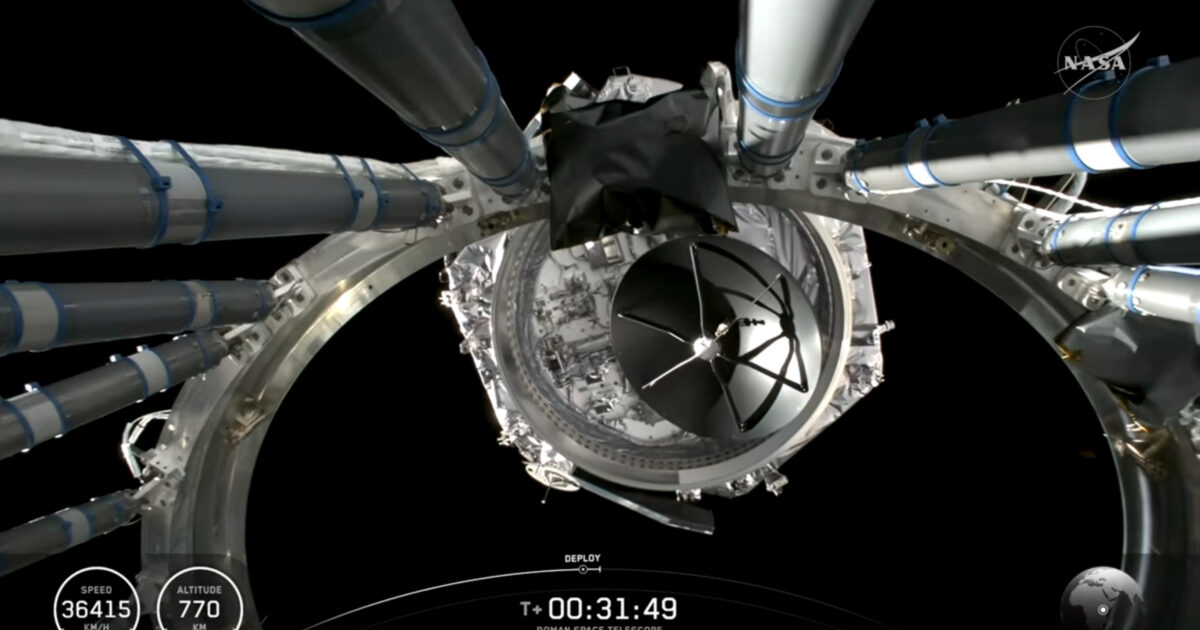
Launch timing remains flexible but NASA targets the mid-2020s for deployment. The Roman mission follows decades of planning and development. It emerged from the 2010 National Academy of Sciences decadal survey of astronomy and astrophysics, which ranked it among highest-priority space missions. The project received congressional authorization and sustained funding despite budget pressures affecting other NASA initiatives.
When Roman begins operations, astronomers will almost certainly discover dozens or hundreds of previously unknown moons. These discoveries will prompt follow-up observations with ground-based telescopes and other space observatories. The new moons will receive designations following the International Astronomical Union's naming protocols, typically referencing mythological traditions tied to their parent planets.
The implications extend beyond simple cataloging. Each new moon provides data points for understanding planetary formation, migration, and system stability. Roman's moon discoveries will generate research agendas for planetary scientists for decades. The telescope transforms moon discovery from a specialized niche activity into a systematic exploration program, ensuring that our Solar System holds more secrets than current inventories suggest.