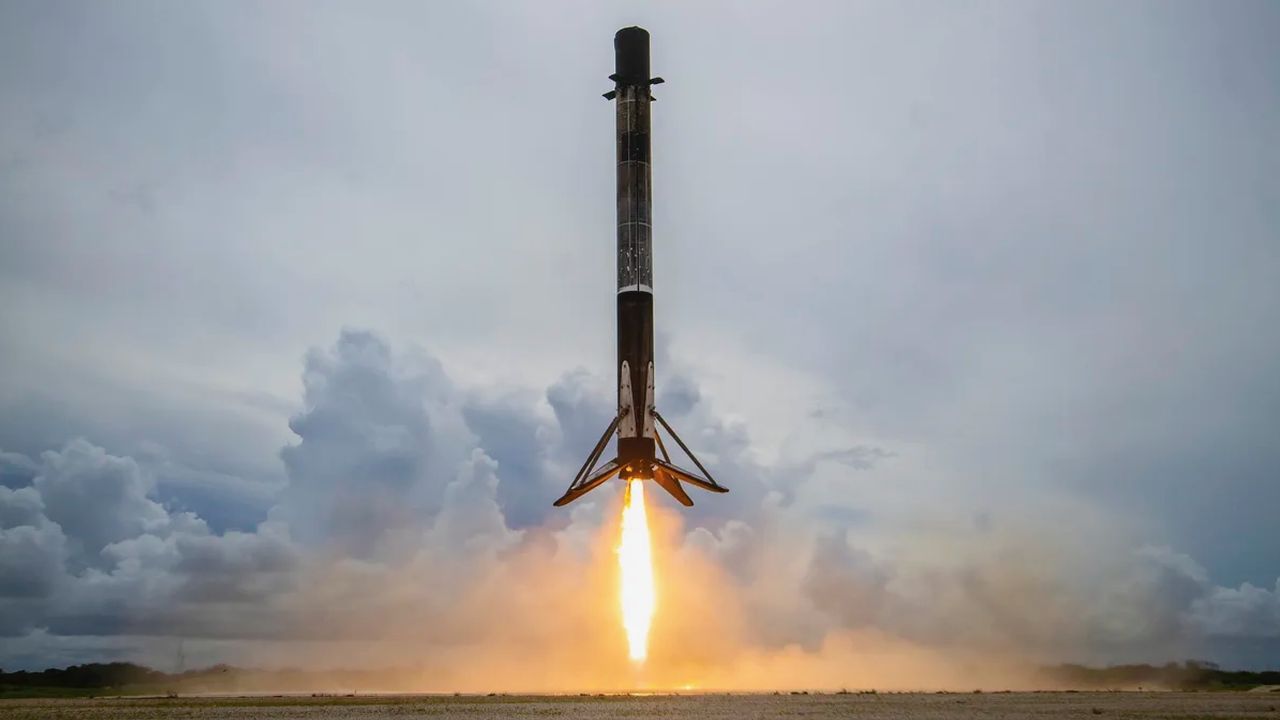
SpaceX's Falcon 9 Booster Landing Team has become the first recipient of the Neil Armstrong Space Prize, an honor awarded during a ceremony in Washington, D.C. on September 15. The achievement recognizes the team's pioneering work in developing and executing the controlled landing and reuse technology that has fundamentally reshaped how orbital rockets operate.
The Falcon 9's first-stage booster recovery program represents one of the most consequential engineering accomplishments in modern spaceflight. Beginning with the first successful landing of an orbital rocket booster in December 2015, SpaceX transformed booster reusability from theoretical concept into operational reality. That capability now forms the backbone of SpaceX's launch cadence, enabling the company to fly more missions at lower cost while reducing the environmental footprint of reaching orbit.
The booster landing system relies on autonomous guidance, grid fins for atmospheric control, and precision engine throttling to achieve gentle touchdowns on either drone ships at sea or land-based pads. Each booster can fly multiple missions, with some vehicles completing more than 20 flights to date. This operational tempo would have been impossible with expendable rockets.
The Neil Armstrong Space Prize carries the name of Apollo 11's commander, the first human to walk the Moon. Armstrong's legacy centers on achievement through technical innovation and human courage. The prize honors contributions to space exploration that embody those principles. By naming the inaugural award after Armstrong and presenting it to SpaceX's Booster Landing Team, the prize structure explicitly connects the Apollo era's pioneering spirit to contemporary advancement in space capability.
The establishment and first award of this prize reflects broader recognition within aerospace and government circles that booster reusability has moved beyond novelty into foundational infrastructure for the space industry. NASA relies on Falcon 9 for crew and cargo transport to the International Space Station through its Commercial Crew and Commercial Cargo programs. Other government agencies, commercial satellite operators, and international partners depend on Falcon 9 launch capacity.
The technology also influences rocket development worldwide. Other launch providers have begun or accelerated programs aimed at recovering and reusing boosters, acknowledging that expendable rocket operations represent an increasingly uncompetitive model. SpaceX's Falcon 9 success proves that booster reusability can work at operational scale while maintaining reliability margins required for human spaceflight and national security missions.
SpaceX continues advancing booster technology through iterations of the Falcon 9 design and development of the more powerful Falcon Heavy, which operates three boosters in parallel. The company's next-generation Starship system, currently undergoing orbital test flights, incorporates booster recovery as a core design principle, aiming to apply reusability at even larger scales.
The award validates a technical bet that many in the industry considered unproven when SpaceX first attempted booster landing in 2014. That persistence transformed spaceflight operations and created pathways for more ambitious missions to the Moon, Mars, and beyond. The Booster Landing Team's receipt of the Neil Armstrong Space Prize recognizes both the engineering excellence required to achieve controlled booster landing and the exploration possibilities that success unlocked.