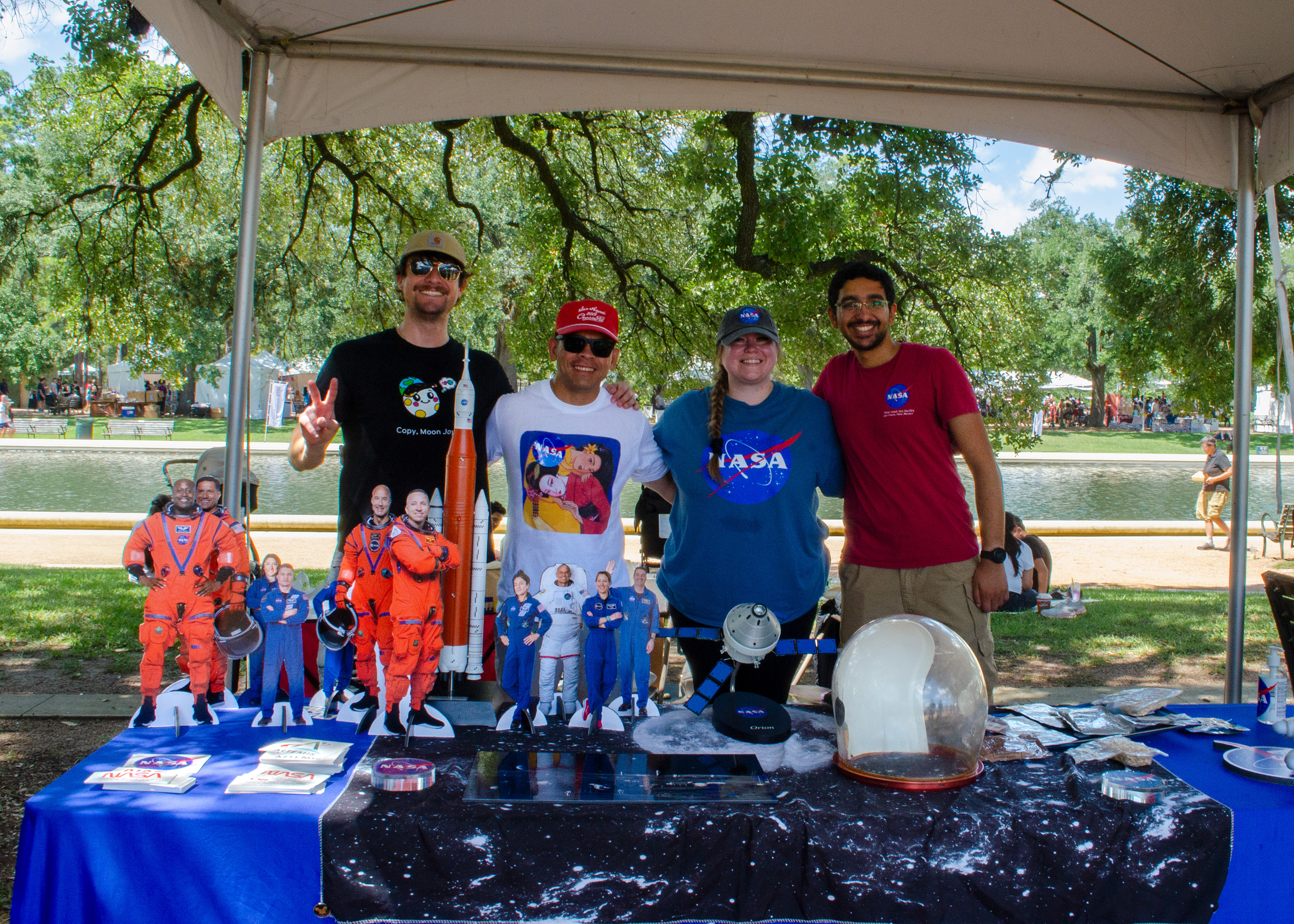
NASA's Johnson Space Center brought space exploration to Houston's cultural calendar this fall, participating as an exhibitor at the 33rd annual Japan Festival on September 12-13 at Hermann Park. The center's presence represented one of many years the agency has supported the festival, which draws thousands of visitors annually to experience traditional Japanese culture through food, dance, martial arts, and music.
The participation underscores how major NASA facilities engage with their host communities beyond their core mission work. Johnson Space Center, headquartered in Houston since the Apollo era, maintains deep roots in the city where Mission Control operated during humanity's first lunar landings. The center employs thousands and remains central to America's human spaceflight program.
Japan Festival attendees encountered Johnson's exhibition booth, where center employees demonstrated space hardware, discussed ongoing missions, and shared careers in aerospace. The festival draws families and cultural enthusiasts from across the Houston metropolitan area, making it an effective venue for NASA outreach. Hermann Park itself lies minutes from downtown Houston and hosts numerous community events annually.
Johnson Space Center manages several active programs that fascinate public audiences. The International Space Station program, where American astronauts conduct research aboard the orbiting laboratory in collaboration with international partners including Japan's space agency JAXA, represents one core focus. The Artemis program, which aims to return astronauts to the Moon by 2025-2026, drives another. Development of the Orion spacecraft and supporting ground systems occupies much of the center's technical workforce.
Japan maintains significant spaceflight partnerships with the United States. JAXA astronauts regularly launch to the ISS aboard commercial vehicles or Russian Soyuz rockets. Japanese technology and experiments fly on station modules and external platforms. The upcoming Artemis missions will include international partners, potentially opening pathways for Japanese astronaut participation in lunar exploration.
Community engagement through cultural festivals serves dual purposes for NASA. First, it normalizes space exploration within everyday public consciousness, positioning it alongside other cultural priorities rather than as an isolated government program. Second, it recruits future talent. Many young people discover aerospace careers after direct contact with NASA personnel at public events.
Houston's relationship with space exploration remains unique in America. The city earned its "Space City" nickname through the Apollo program's dominance of local economy and identity from the 1960s onward. Johnson Space Center's continued presence ensures that identity persists even as commercial spaceflight companies establish operations elsewhere.
The Japan Festival participation also reflects Houston's diverse demographic composition. The city hosts substantial Japanese business and cultural communities, particularly concentrated in areas surrounding the Johnson Space Center. Japanese corporations maintain significant operations in the greater Houston area, from petrochemical manufacturing to aerospace component production.
Such grassroots community engagement complements NASA's broader public relations efforts. While major announcements about new missions and discoveries capture media attention, sustained presence at local festivals builds sustained interest and understanding. Young people encountering NASA employees in person often pursue STEM education at higher rates than those exposed only to distant space news coverage.
Johnson Space Center's continuing participation in Houston's cultural institutions demonstrates how government agencies integrate into civilian life. The space program depends on public support and funding. Events like Japan Festival represent tangible reminders that space exploration belongs to communities, not isolated facilities. For Houston residents, seeing NASA at local celebrations reinforces that the city remains connected to humanity's efforts beyond Earth.