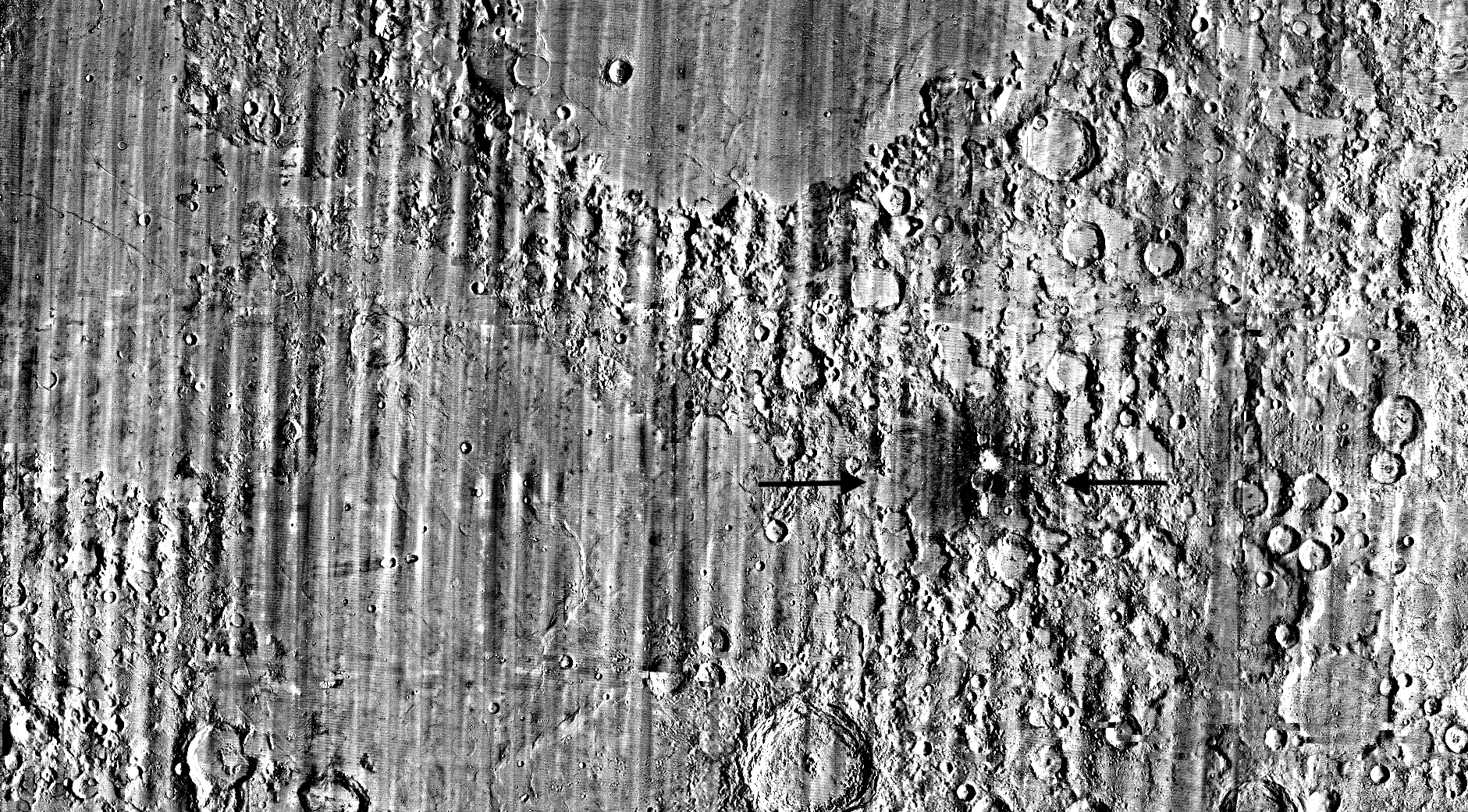
A freshly discovered crater on the Moon represents the largest impact feature identified in the modern era of lunar observation. Scientists publishing in Science Advances detail the massive crater, which fundamentally challenges assumptions about the Moon's current activity and bombardment rates.
The new crater, named McGetchin after pioneering lunar scientist Thomas A. McGetchin, emerged from comparative analysis of high-resolution imagery captured by NASA's Lunar Reconnaissance Orbiter and data from Intuitive Machines' lunar lander missions. Researchers spotted the impact by comparing before-and-after satellite photographs, a method that has become standard practice in tracking lunar surface changes over recent decades.
The discovery underscores a critical reality about our Moon that contradicts popular perception. While the lunar surface appears frozen in time to naked-eye observers, constant cosmic bombardment shapes the Moon's geology. Asteroids and meteoroids strike the lunar surface continuously, creating fresh craters that accumulate across billions of years. The McGetchin crater represents one of the largest such impact events captured during modern lunar surveillance, which began in earnest during the Apollo era and accelerated with the Lunar Reconnaissance Orbiter's deployment in 2009.
The significance extends beyond simple crater cataloging. Each fresh impact provides data about the current flux of impactors in the inner solar system. By measuring the frequency and size distribution of new craters, scientists refine models predicting asteroid and comet trajectories near Earth. The Moon serves as a laboratory for understanding planetary defense considerations that could affect human civilization.
The crater's discovery also demonstrates the value of sustained lunar observation. NASA's Lunar Reconnaissance Orbiter has maintained continuous operation for over fifteen years, photographing the Moon's surface at meter-scale resolution. This persistence created the baseline imagery necessary for detecting change. Intuitive Machines' commercial lander missions, part of NASA's Commercial Lunar Payload Services program, added another observational layer through direct imaging during surface operations.
The research methods employed reflect evolution in lunar science. Rather than relying solely on ground-based telescopes or requiring human astronauts to traverse the surface, contemporary crater discovery combines orbital imagery with machine learning algorithms that identify subtle surface changes. This approach accelerates the pace of discovery while reducing mission costs and risks.
The Moon's ongoing geological activity carries implications for future human exploration. Dust kicked up by impacts can accumulate in permanently shadowed regions near the lunar poles, where water ice deposits exist. Understanding current impact rates helps mission planners design equipment that can withstand the harsh lunar environment and predict hazards for established bases.
McGetchin crater joins a growing catalog of recently discovered lunar impacts that challenge the perception of a geologically static Moon. Each new crater identified through comparative imagery refines our understanding of solar system dynamics and informs strategies for sustained human presence on the lunar surface. The discovery validates decades of investment in high-resolution lunar reconnaissance and underscores why continuous observation matters for planetary science.