# Week in Space Brings Stunning Imagery, New Safety Concerns, and Explosive Events
Space exploration this week delivered breakthrough imagery, regulatory headwinds, and dramatic astronomical events that underscore both the promise and peril of humanity's expanding reach beyond Earth.
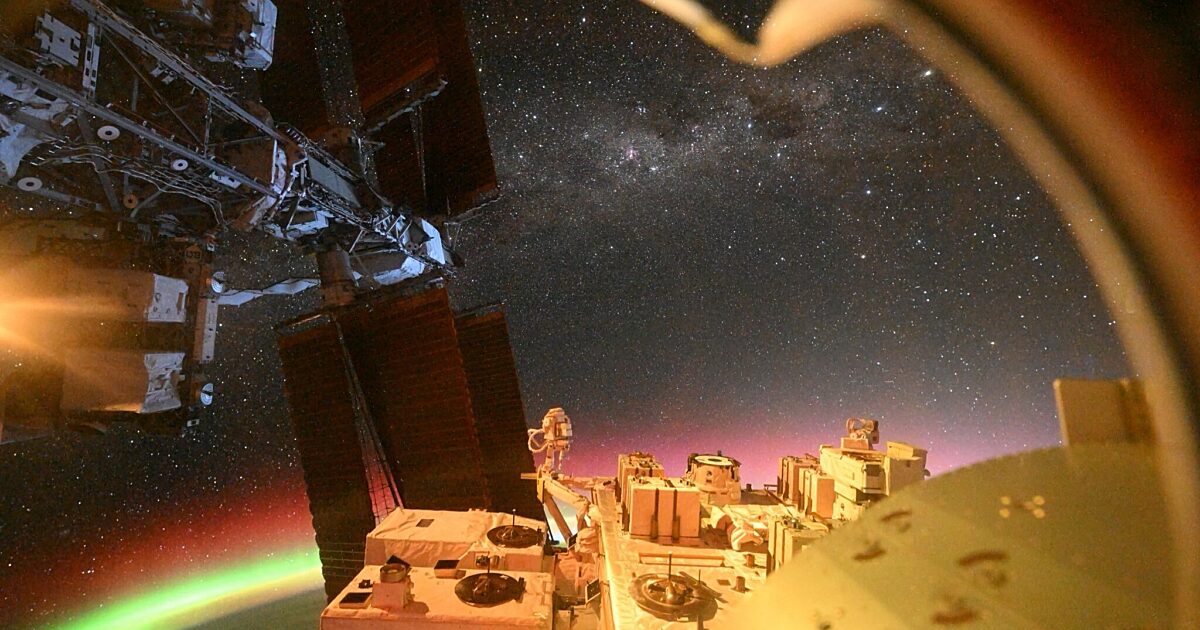
The Planetary Society reported an "astonishing, unprecedented" view from one of humanity's most powerful observatories. The specific image reflects continued success of next-generation space telescopes in capturing cosmic phenomena at scales and resolutions previously impossible. These observations advance our understanding of stellar birth, galaxy formation, or planetary atmospheres. Each breakthrough builds the scientific case for sustained investment in orbital astronomy and pushes the boundaries of what we can resolve at cosmic distances.
Simultaneously, the space sector faces new regulatory constraints. A "dangerous new rule" emerged this week with implications for future missions. Space traffic management and debris mitigation rules have grown more stringent across multiple jurisdictions. The Federal Communications Commission, the Space Force, and international bodies continue tightening standards for orbital operations. These regulations aim to prevent collisions and manage the growing population of defunct satellites and spent rocket stages cluttering low Earth orbit. Stricter rules protect long-term access to space but can delay launches and increase operational costs for commercial providers and government agencies alike.
An "enormous explosion" also marked the week's space news. Whether from a stellar event, a controlled detonation in orbit, or an astrophysical phenomenon, large-scale explosions capture public imagination and drive scientific inquiry. Supernovae, gamma-ray bursts, and other transient events help astronomers test models of stellar death, black hole behavior, and extreme physics. Ground and space-based observatories coordinate rapid-response observations to capture these rare events across multiple wavelengths.
The convergence of these three elements—advancing observation, tightening rules, and dramatic cosmic events—reflects the current state of space exploration. Scientific capability accelerates. Regulatory frameworks struggle to keep pace with commercial ambition and orbital congestion. Meanwhile, the universe continues generating phenomena that remind us how much remains unknown.
The Planetary Society, founded by Carl Sagan and Bruce Murray, continues advocating for robust space exploration funding and science-driven priorities. Its weekly briefings synthesize developments across NASA, SpaceX, emerging private companies, and international space agencies. This week's report emphasizes that space exploration operates within multiple dimensions: the scientific discoveries themselves, the technological systems enabling those discoveries, and the governance structures determining who can operate where and how.
Looking ahead, the regulatory environment will shape which missions launch and which remain grounded. The breakthrough imagery provides fuel for continued public support. The explosive events remind us that the cosmos operates on scales and timescales that dwarf human activity. Together, these forces drive space exploration forward into new territory.