# What's Actually New About NASA's Artemis Missions
NASA's Artemis program returns humans to the Moon using hardware that sits at the intersection of proven spaceflight legacy and genuine technological innovation. Artemis II, currently scheduled for 2025, demonstrates this mix with particular clarity.
The Space Launch System (SLS) rocket powering Artemis missions combines decades of shuttle program engineering with newly developed heavy-lift architecture. NASA built the SLS core stage drawing on liquid hydrogen engine technology perfected during the shuttle era. The RS-25 engines that power the core stage flew hundreds of times on the Space Shuttle. But the SLS itself is new. It generates 8.8 million pounds of thrust at launch, making it the most powerful rocket NASA has ever flown.
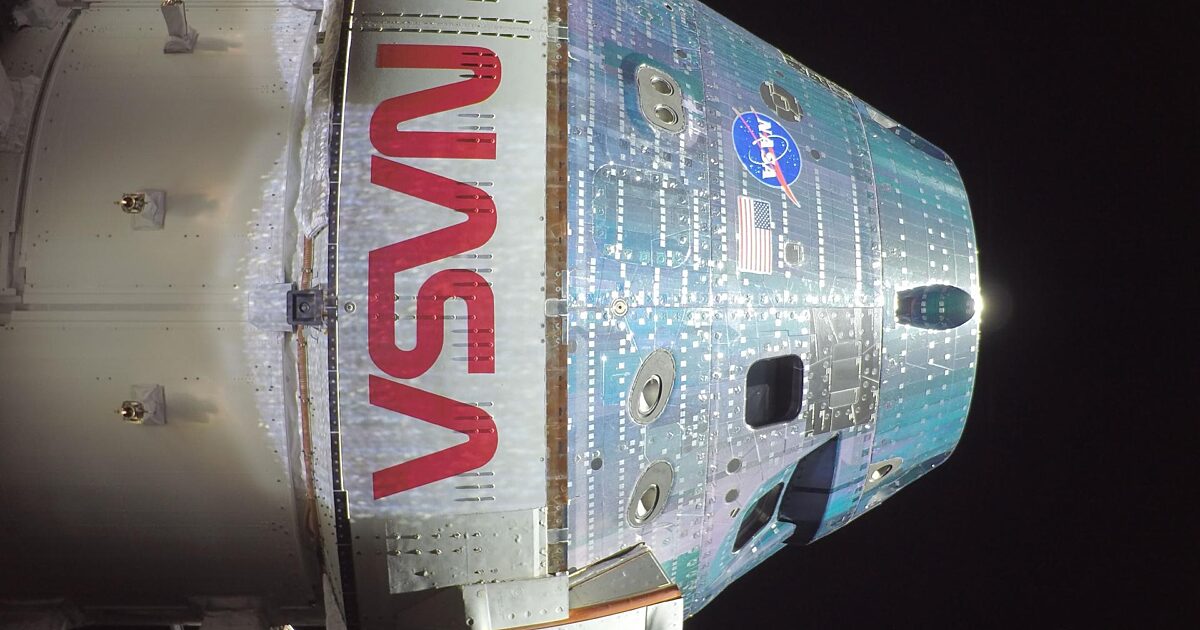
The Orion spacecraft capsule represents the other half of this equation. Orion's thermal protection system uses materials and designs developed for previous spacecraft, yet its scale and configuration differ markedly from the Apollo command module. The vehicle must protect four astronauts during trans-lunar trajectories, not three traveling to low Earth orbit. Orion's service module, built by the European Space Agency, provides propulsion and life support for deep space missions in ways no previous spacecraft required.
Artemis II itself is a crewed test flight. Four astronauts will travel to lunar orbit aboard Orion without landing. This mission validates launch systems, spacecraft performance, life support, radiation shielding, and crew procedures in the actual environment where they will operate. NASA views Artemis II as essential validation before committing to Artemis III, the lunar landing mission.
What distinguishes Artemis from Apollo lies in systems architecture and mission design. The Lunar Gateway, a small space station orbiting the Moon, will serve as staging point for Artemis III landers. This represents operational thinking Apollo never employed. Astronauts will transfer from Orion to a specialized lunar lander rather than descending directly from orbit, as Apollo missions did.
The hardware builds on Apollo's achievements while addressing its limitations. Apollo sent twelve astronauts to the lunar surface across six landing missions between 1969 and 1972. The program was a sprint. Artemis is constructed as sustained exploration infrastructure. The lunar lander development contracts awarded to companies like SpaceX and Blue Origin reflect this philosophy. Commercial partners build vehicles for routine use, not one-time missions.
NASA also incorporated lessons from the International Space Station program, which demonstrated the value of long-term crewed spaceflight operations and international partnership. Artemis includes cooperation with Canadian, European, and Japanese space agencies.
The SLS and Orion represent years of development following the cancellation of Constellation, an earlier Moon program. Engineers took subsystems that proved reliable, retired architectures that showed limitations, and built new combinations. The RS-25 engines themselves flew first in 1981. The tank designs reference shuttle external tank heritage. But integration into a heavy-lift architecture that must leave Earth's surface reliably, repeatedly, and safely represents continuous technological refinement.
Artemis II's 2025 launch will test whether this combination of proven components and new systems operates as designed. It validates the foundation for sustained lunar operations that neither Apollo nor any previous program established.