# Amoebas and Anniversaries: A Month of Discovery Above and Below
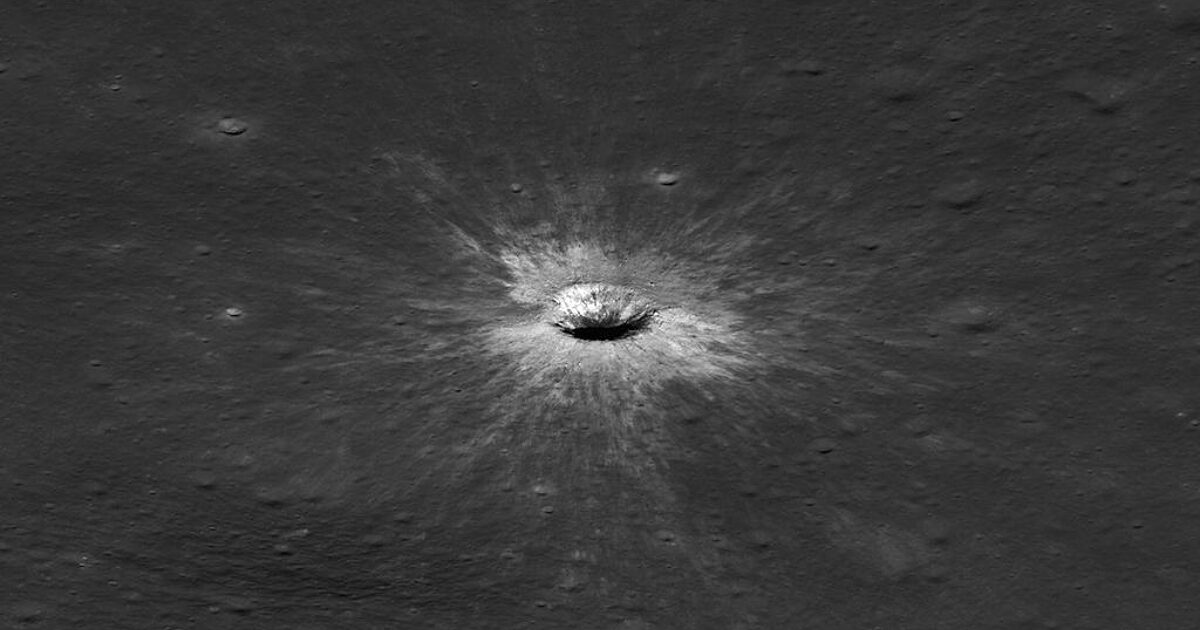
The Moon gained a fresh crater this month, joining thousands of impact scars that chronicle billions of years of cosmic bombardment. The Lunar Reconnaissance Orbiter, NASA's workhorse satellite circling the Moon since 2009, detected the new impact site. These crater discoveries matter because each one reveals something about the Moon's current geological activity and the stream of meteoroids continuously striking its surface. Fresh craters help scientists refine their understanding of impact rates and the energy required to gouge the lunar regolith, knowledge essential for planning future human missions and understanding planetary protection requirements.
Meanwhile, on Earth, researchers working with extremophile organisms have been studying super-heated amoebas that thrive in conditions hostile to nearly all other life. These single-celled organisms survive temperatures that would destroy most terrestrial biology. The significance extends beyond Earth. Understanding how life persists in extreme environments informs the search for extraterrestrial life on worlds like Europa or Enceladus, where subsurface oceans might harbor organisms adapted to crushing pressures and chemical conditions radically different from Earth's surface. Amoeba research in extreme conditions provides a window into the outer limits of habitability.
Orbiting far above these terrestrial pursuits, the Hubble Space Telescope crossed a major milestone. NASA's flagship observatory, launched aboard Space Shuttle Discovery in April 1990, marked three decades of revolutionary astronomy. For 30 years, Hubble has transformed humanity's understanding of the cosmos, from measuring the universe's expansion rate to photographing the most distant galaxies ever observed. The Hubble Deep Field image, captured in 1995, showed thousands of galaxies in a patch of sky smaller than a grain of sand. It rewrote our comprehension of cosmic scale.
Hubble's longevity defied predictions. Engineers designed it for roughly 15 years of operation. Five servicing missions by Space Shuttle astronauts repaired optical flaws, replaced aging instruments, and upgraded its capabilities. Without those repairs, particularly the 1993 mission that corrected Hubble's spherical aberration, the telescope would have produced distorted images rather than its iconic sharp photographs. The instrument now works alongside the James Webb Space Telescope, launched in 2021, which observes primarily in infrared wavelengths where Hubble focuses on visible and ultraviolet light. Together they provide complementary views of the universe across the electromagnetic spectrum.
As Hubble enters its fourth decade, engineers continue maintaining critical systems. The telescope's gyroscopes, which orient it toward targets, occasionally fail, but operators have developed workarounds. Power systems remain stable. The mission operates on an extended timeline with no firm end date, though the laws of physics guarantee eventual decline. When Hubble finally ceases operations, it will remain in orbit, eventually decaying into the atmosphere decades hence.
These three stories capture the breadth of space exploration and planetary science. The Moon's fresh crater tells of ongoing cosmic violence. Extremophile amoebas expand the boundaries of life's resilience. Hubble's 30 years represent humanity's sustained commitment to understanding the universe through observation and technology. Each discovery connects us to the cosmos and to each other in the shared endeavor of scientific exploration.