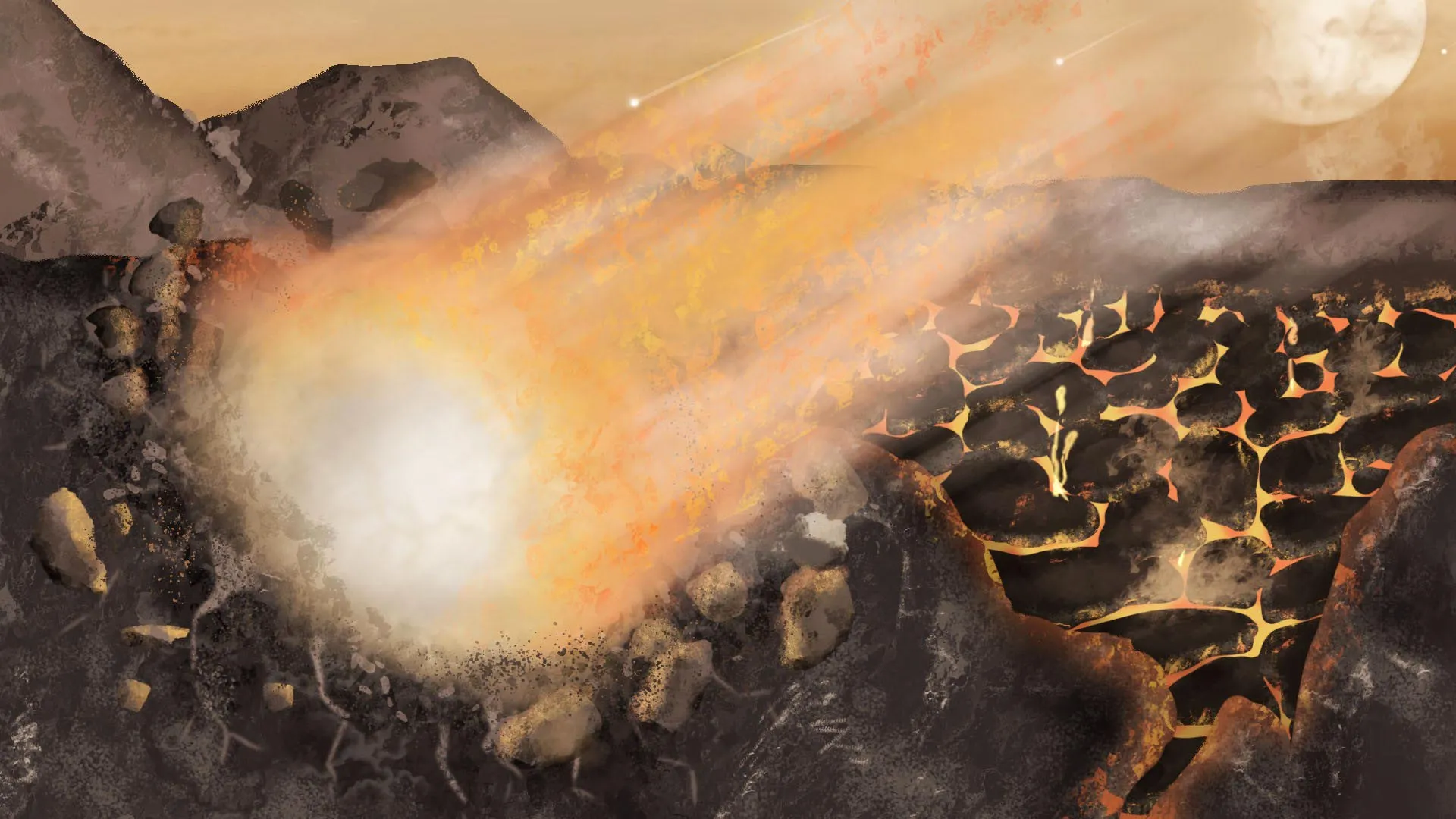
Researchers at the University of Cambridge used computer simulations to test whether comets could have delivered life's building blocks to early Earth. The study, published in Scientific Reports, found that comets typically approach planets at speeds and angles that destroy delicate organic molecules during impact, making successful delivery extraordinarily rare.
The team modeled comet interactions with planetary atmospheres and traced comet populations as the Solar System formed. They focused on hydrogen cyanide (HCN), a carbon and nitrogen-bearing molecule detected in comets throughout the Solar System and relevant to research on life's origins. Even when HCN survived impact, the simulations showed that deposits would need to occur at just the right speed and angle, leave sufficient concentration in one location, and happen before molecules dispersed. "It would really have to be a one-in-a-million occurrence," said lead author Dr. Richard Anslow from Cambridge's Institute of Astronomy.
Comet impacts declined sharply over Earth's first 500 million years. According to the researchers, only a handful of opportunities may have existed for comets to deliver hydrogen cyanide under favorable conditions during that early period.
The findings redirect attention to alternatives. Asteroid impacts, which struck early Earth far more frequently than comets, could have created conditions for prebiotic molecules to form through collision-associated chemistry. Earth itself may have generated these compounds through natural chemical processes on the young planet.
The simulations also suggested Mars could have been better positioned than Earth to receive cometary organic molecules, given its smaller size and thinner atmosphere. However, the researchers note that successful delivery to Mars remains unlikely as well.