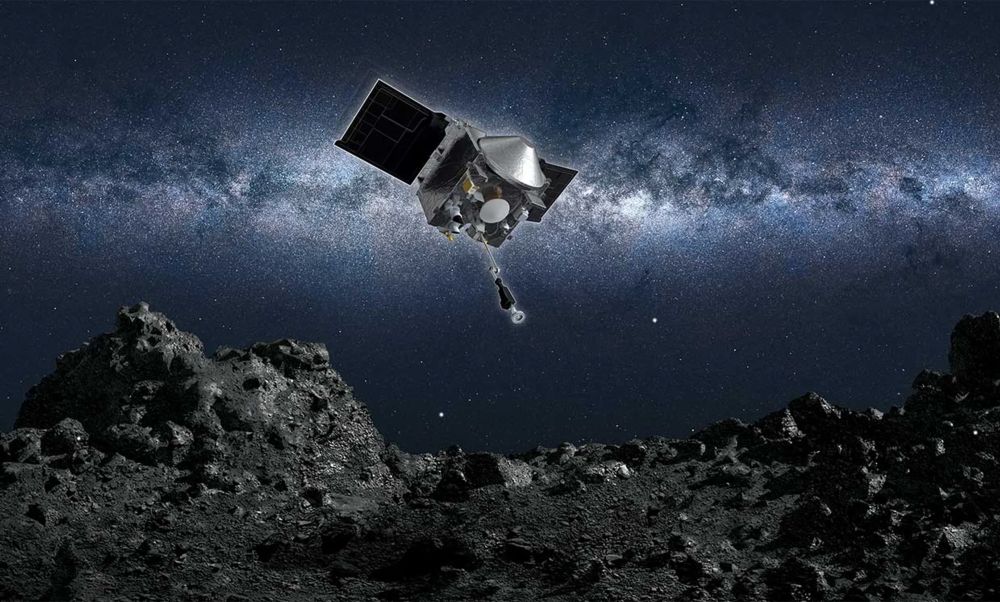
NASA's OSIRIS-REx mission returned a sample from asteroid Bennu in 2023. Researchers at Penn State University have now analyzed β-alanine, a molecule in the sample, and compared it with the same molecule from the Murchison meteorite. The work appears in Nature Communications Earth and Environment.
The team measured isotopic composition at the atomic level within individual β-alanine molecules. They used two instruments, including pico-CSIA, a device unique to Penn State for measuring isotopic averages in extremely small samples, and a modified GC-Orbitrap mass spectrometer. This level of detail in measuring isotopic differences between specific carbon and nitrogen atoms within the same molecule is new.
The isotopic values from atom to atom within the β-alanine molecules showed enormous differences between the Bennu sample and the Murchison meteorite. "I was genuinely gobsmacked by the enormous isotope difference between two neighboring atom positions within the same molecule," said Katherine Freeman, Professor of Geosciences at Penn State and project principal investigator.
The researchers found that β-alanine molecules in the two samples, while following the same formation pathways, formed in different environments or batches. The Bennu sample showed substantially greater carbon-13 enrichment in certain positions. This suggests the protoplanetary disk was spatially heterogeneous, with the same prebiotic chemistry molecules forming in multiple distinct environments.
Freeman noted that the preservation of such large isotopic differences indicates "the primordial nature of these molecules. We are working with molecules formed at the very dawn of the solar system, possibly even before the formation of Earth."