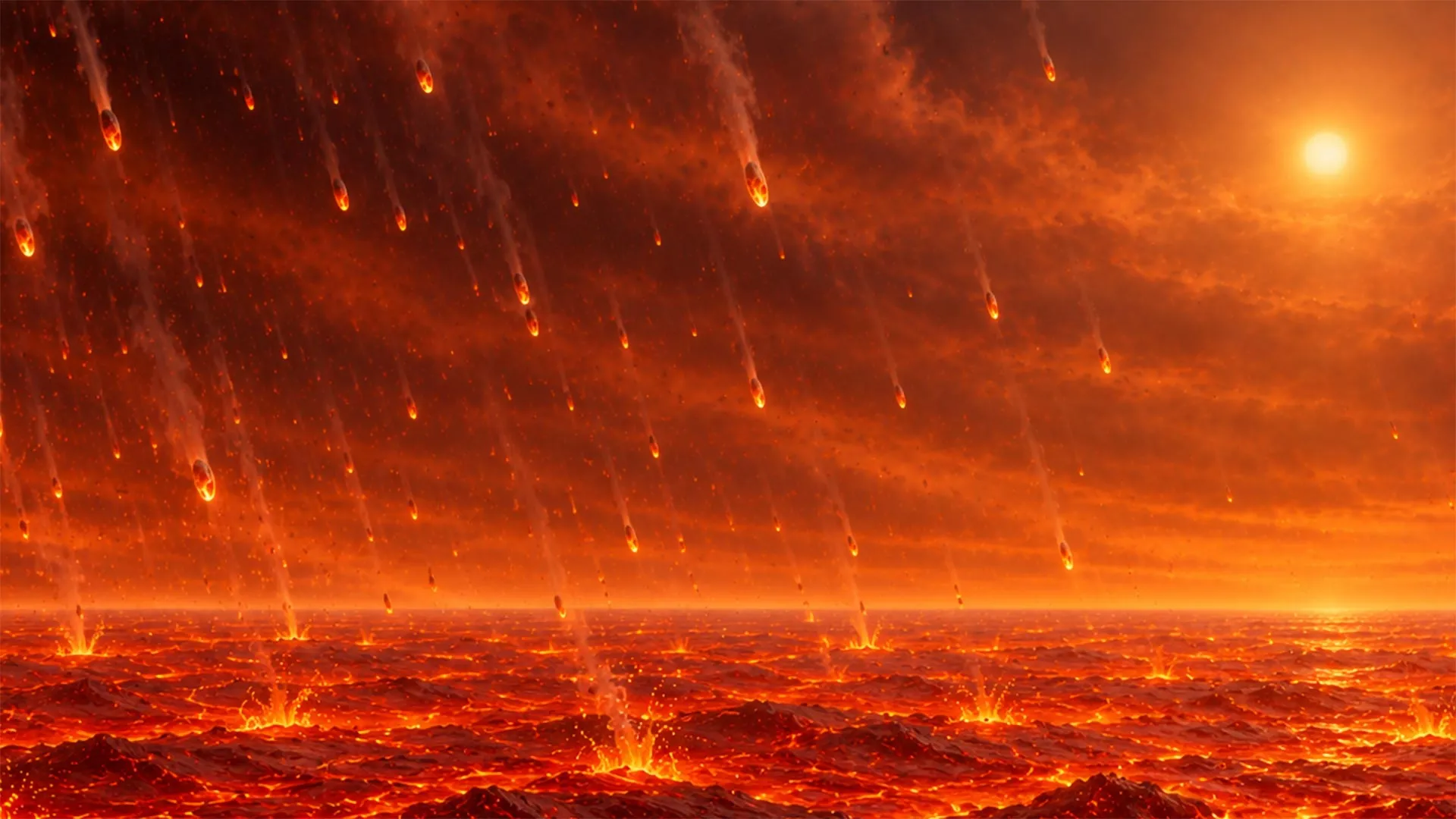
Researchers at the University of New Mexico have demonstrated that Earth may have generated substantial amounts of its own water during planetary formation, rather than relying solely on delivery from comets and meteorites. The study, published in Nature Geoscience and led by graduate student Susmita Garai with professor Zachary Sharp and Peter Olson, recreated conditions from Earth's early atmosphere by exposing silicate rock samples to temperatures between 1,200 and 1,400 degrees Celsius in flowing hydrogen gas.
When heated in hydrogen, nearly 80% of the iron oxide in the rocks transformed into metallic iron while releasing water vapor. The reaction occurred within minutes to hours. No comparable reaction happened when the team used helium instead of hydrogen, confirming hydrogen's role in water production.
Extrapolating their experimental results to early Earth conditions, the researchers calculated that this mechanism could have generated hundreds of oceans' worth of water. The process would have worked as rocky pebbles fell through Earth's hydrogen-rich atmosphere during pebble accretion, the gradual accumulation of small rock pieces that built the planet.
"Previous ideas about the source of water to Earth rely on an external source, such as comets or meteorites. Here we show that virtually any Earth-sized planet should have water by this newly identified mechanism," Sharp explained.
The findings suggest that water generation may be inherent to how rocky planets form around other stars. If exoplanets develop similar hot, hydrogen-rich atmospheres during formation, they could also produce water through the same chemical process, potentially making habitable worlds more common throughout the universe.
The team acknowledged that additional research is needed to determine what fraction of Earth's current water supply actually came from this mechanism versus external delivery sources.