# UAP? In this Case, It's Only a Model
A Mars capsule prototype captured on video near Earth's surface has sparked online speculation about unidentified aerial phenomena, or UAPs. The object, however, represents a straightforward engineering test rather than evidence of extraterrestrial visitors.
The Mars Sample Return capsule, a collaborative project between NASA and the European Space Agency, completed a test flight that generated unclear footage. Observers unfamiliar with the program mistook the vehicle for something unexplained. The Planetary Society clarified the sighting, identifying the object as a developmental version of hardware designed to bring Martian soil and rock samples back to Earth.
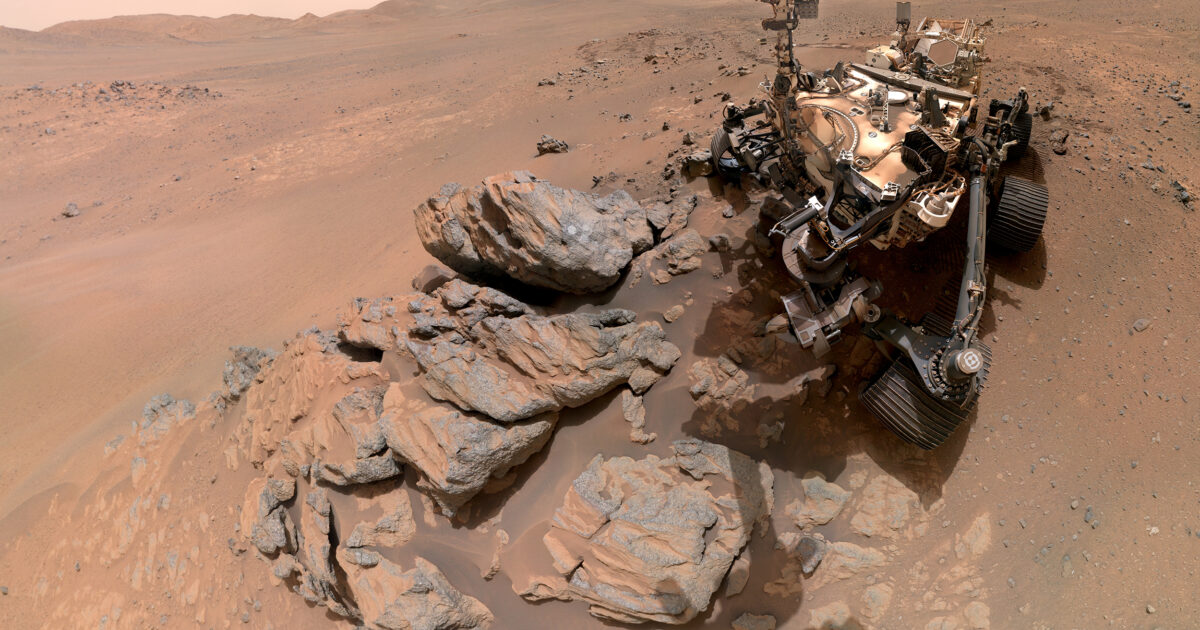
This Mars Sample Return mission stands as one of the most complex space endeavors ever attempted. NASA's Perseverance rover, which landed in Jezero Crater in February 2021, collects samples of Martian geology. Those samples will be sealed into the Mars Sample Return capsule, launched from the Martian surface by a small rocket. The capsule then travels through interplanetary space and re-enters Earth's atmosphere at speeds exceeding 34,000 miles per hour, roughly ten times faster than a commercial aircraft.
Engineers must test every component of this system on Earth before trusting it with irreplaceable samples from another planet. Test flights confirm that thermal protection systems withstand re-entry heating, that parachute deployment mechanisms function correctly, and that navigation systems guide the capsule to the correct landing zone. Video documentation provides data engineers use to refine designs and validate computer models.
The confusion surrounding this particular test flight highlights a persistent gap between space development activities and public awareness. Military, government, and commercial space organizations conduct hundreds of launches, test flights, and orbital maneuvers annually. Most generate no public documentation. A few capture video or photographs that circulate online without context, inviting speculation about their origins.
UAP sightings reported to government agencies have increased substantially in recent years, particularly following military acknowledgment that certain incidents remain unexplained. This has elevated public interest in aerial objects and their origins. The result cuts both ways. Legitimate unidentified sightings receive appropriate investigation. Ordinary aerospace activities become tabloid fodder.
Mars Sample Return remains scheduled for launch in the early 2030s, with sample arrival on Earth targeted for approximately 2035. The mission answers fundamental questions about Martian habitability, past climate, and the potential for ancient microbial life. It represents the first round-trip mission to another planet. No spacecraft has yet returned anything of scientific substance from Mars to Earth for laboratory analysis.
Test flights like the one that sparked recent speculation constitute essential preparation. Engineers learn where designs perform as predicted and where unexpected challenges emerge. Each test accelerates the timeline to actual sample collection and return.
The capsule's public appearance serves another purpose. Space exploration depends on sustained public interest and political will. When people understand what space agencies accomplish and why, support for ambitious missions strengthens. A test video circulating on social media, even when misidentified as something mysterious, ultimately directs attention toward genuine achievements in planetary science and human spaceflight.