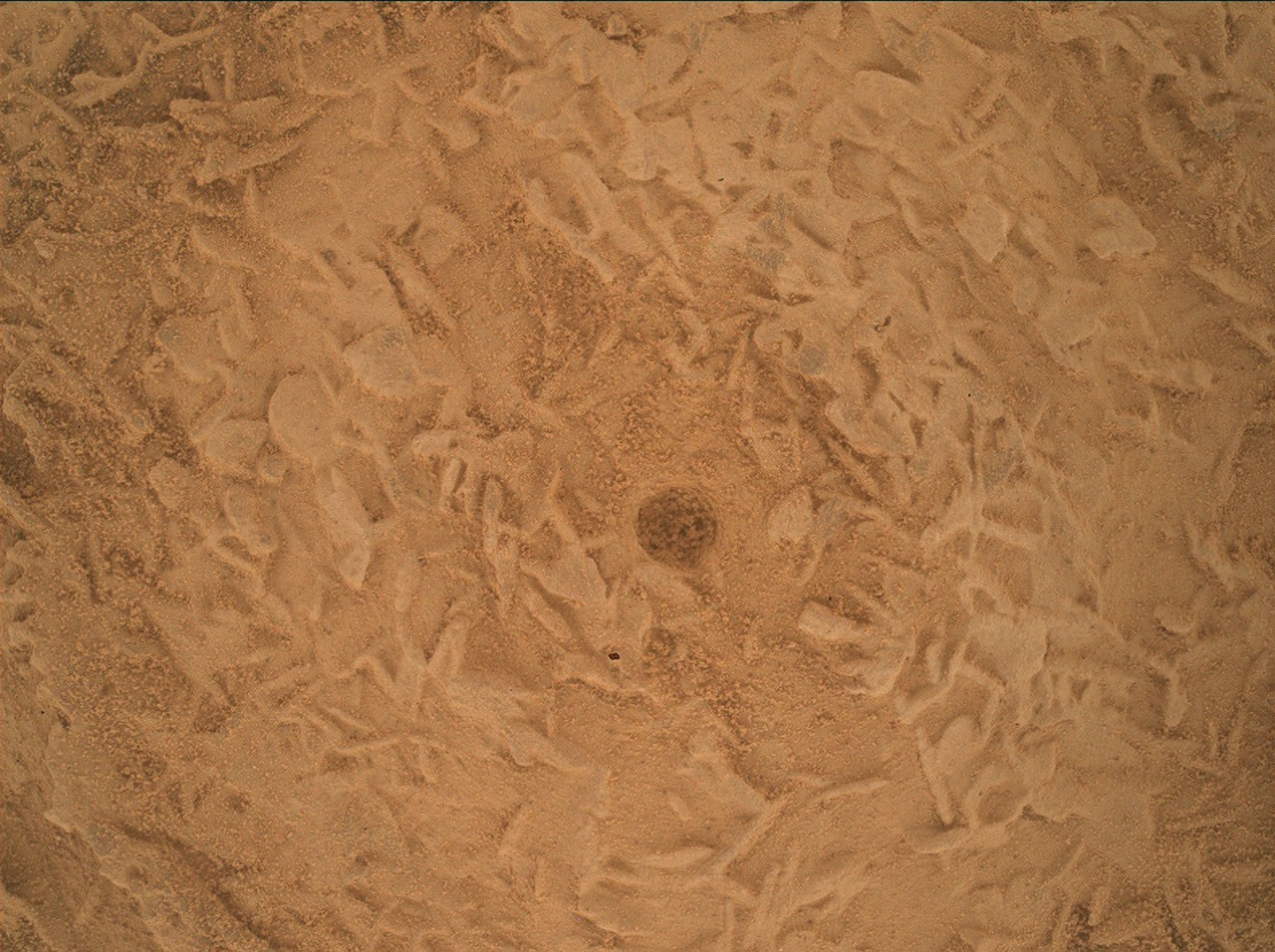
NASA's Curiosity rover encountered an unexpected geological transition during its latest exploration phase on Mars, discovering a shift in rock composition that reveals new details about the planet's ancient mineral history.
Between sols 5016 and 5021, Curiosity identified a dramatic change in surface texture while navigating the sulfate unit in Gale Crater. The rover's instruments detected minerals distinct from the finely layered bedrock that characterized its previous survey area. Lucy Lim, a planetary scientist at NASA Goddard Space Flight Center, documented the discovery, noting that the textural transition provided valuable data about Mars' geological evolution.
The shift from layered bedrock to different mineral compositions tells a story written in rock. Each layer and mineral assemblage represents a different chapter in Mars' climate history. The sulfate minerals Curiosity had been studying indicate ancient water interaction with the Martian surface. Sulfates form when water rich in sulfuric acid or sulfates interacts with rock. Their presence proves that liquid water once flowed across regions now dry and barren.
Curiosity's arrival at this new mineral zone presents an opportunity to understand how Mars transitioned from a potentially habitable environment to today's arid conditions. The rover carries several instruments designed to identify and analyze mineral composition, including the ChemCam laser spectrometer, which can vaporize rock from up to seven meters away and analyze the resulting plasma. The Rover Environmental Monitoring Station tracks atmospheric conditions, while onboard cameras provide high-resolution imaging of geological features.
The discovery compounds what Curiosity has learned over more than a decade of operation. Launched in November 2011, the rover has traveled nearly 30 kilometers within Gale Crater, ascending Mount Sharp's lower slopes while documenting the transition from ancient wet environments to the dry planet of today. Each mineral found and analyzed adds another data point to the narrative of Mars' atmospheric loss and surface evolution.
This latest mineral detection carries implications for future human exploration. Understanding which minerals formed under which conditions helps scientists identify the best locations for seeking biosignatures, the chemical fingerprints of past microbial life. If life ever emerged on Mars during its wetter period, evidence might persist within mineral deposits formed in ancient hot springs or subsurface aquifers. Curiosity's findings guide where subsequent rovers should investigate.
The rover continues operating years beyond its original two-year mission design, demonstrating the durability of NASA's engineering. However, Curiosity's power source, a radioisotope thermoelectric generator fueled by plutonium-238, slowly diminishes. Each sol brings the rover closer to the end of its operational lifespan, making every discovery and sample analysis time-sensitive.
The mineral transition identified on sols 5016 through 5021 reflects the dynamic processes that shaped Mars over billions of years. Water chemistry changed. Atmospheric pressure dropped. Surface temperatures fell. Each geological layer records these transformations. Curiosity's instruments decode these records, providing Earth scientists with an unparalleled window into planetary-scale climate change on a world that once orbited closer to habitability than it does today.